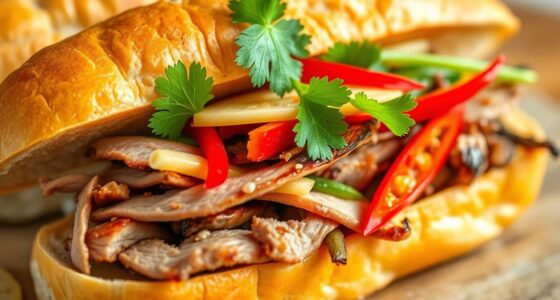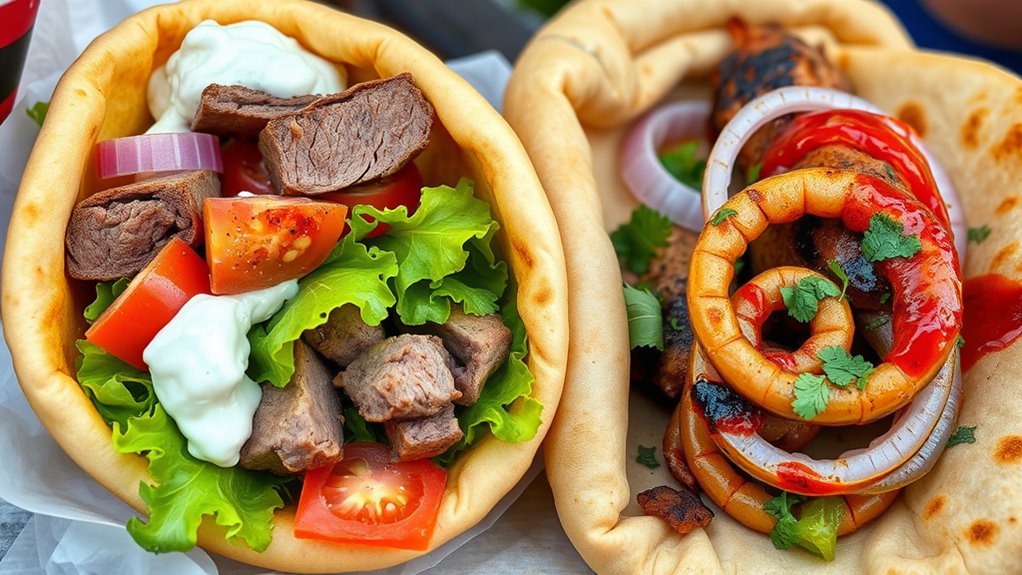

Greek gyros and Turkish döner are both popular street foods cooked on vertical rotisseries, but they differ in flavor and style. Gyros features tender pork, chicken, or lamb with bright herbs like oregano and lemon, wrapped in pita with tzatziki. Döner often uses beef or veal, seasoned with spices like cumin and paprika, served with salads or rice. Exploring these differences reveals the rich culinary histories behind each dish, offering more than just a quick snack.
Key Takeaways
- Gyros originates from Greek cuisine with Mediterranean herbs, while döner has Turkish roots with spiced Middle Eastern seasonings.
- Both dishes use vertical rotisserie cooking but differ in preferred meats and seasoning profiles.
- Gyros typically features pork or chicken with oregano, lemon, and garlic; döner often uses beef or veal with cumin and paprika.
- Gyros is commonly served with tzatziki, tomatoes, and onions in pita; döner pairs with salads, rice, and garlic sauces.
- Each wrap reflects its cultural heritage—gyros emphasizes fresh, bright flavors; döner offers rich, aromatic spices.
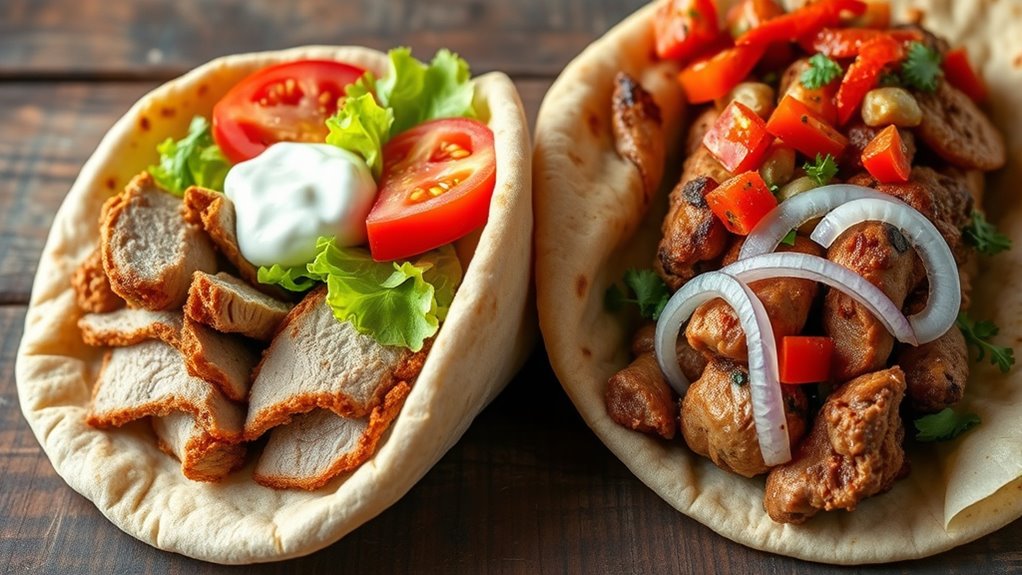
Have you ever wondered what sets Greek gyros apart from Turkish döner? Both are beloved street foods, but their differences lie in their cooking techniques and cultural origins. When you consider these aspects, you’ll see how each reflects its unique history and culinary traditions. Greek gyros traces its roots back to the ancient Mediterranean, with influences from Ottoman and Middle Eastern cuisines. The name “gyros” means “circle” or “turn” in Greek, referencing the way the meat is cooked on a vertical rotisserie. Turkish döner, on the other hand, has its origins in the Ottoman Empire, with a name that means “turning” in Turkish, also highlighting its cooking method. Both dishes use a vertical rotisserie, but their preparation and seasoning reveal their cultural distinctions.
The key difference lies in their cooking techniques and seasoning profiles. Greek gyros typically involves marinating pork, chicken, or lamb with herbs like oregano, garlic, and lemon, then layering the meat onto a vertical spit. As it turns slowly, the meat cooks evenly, developing a flavorful crust. The process emphasizes a balance of tenderness and crispy edges, which is how you get that perfect bite. Turkish döner shares a similar cooking method but often uses beef or veal, seasoned with spices like cumin, paprika, and sometimes mint. The meat is also layered on a vertical spit and cooked slowly, but the seasoning tends to be more aromatic and spicy, reflecting its Middle Eastern influences.
Culturally, gyros and döner serve as fast and accessible street foods that represent their respective peoples’ tastes and histories. Greek gyros are often served with tzatziki, tomatoes, onions, and wrapped in pita bread, emphasizing fresh, bright flavors that echo Mediterranean culinary traditions. Turkish döner is commonly accompanied by salads, rice, or bread, with sauces like yogurt or garlic-based spreads, showcasing the rich, savory flavors characteristic of Turkish cuisine. Both dishes showcase their cultural origins through their seasoning choices, accompaniments, and presentation styles.
In essence, your experience of these foods depends on appreciating their cooking techniques and cultural origins. Gyros and döner are more than just wraps; they’re culinary expressions of history and tradition, crafted through similar yet distinct methods. When you bite into a gyro, you taste the Mediterranean’s bright herbs and tender meat. When you enjoy döner, you experience the spicy, aromatic flavors of Turkish culinary heritage. Recognizing these differences allows you to better appreciate what makes each dish unique, even as they share a common technique.
Top picks for "greek gyro turkish"
As an affiliate, we earn on qualifying purchases.
Frequently Asked Questions
What Are the Historical Origins of Greek Gyro and Turkish Döner?
You may not realize it, but both Greek gyro and Turkish döner stem from ancient culinary traditions that blend cultural influences over centuries. Gyro’s origins trace back to ancient Greece, evolving through Ottoman influence, while döner’s roots lie in the Ottoman Empire’s culinary history. These dishes reflect a rich history of shared techniques and flavors, showcasing how cultural exchanges shape iconic foods you enjoy today.
How Do Cooking Techniques Differ Between Gyro and Döner?
You’ll notice that gyro and döner differ in cooking techniques mainly due to marinade differences and cooking temperature. Gyro typically uses a seasoned marinade with herbs, cooked at moderate temperatures on a vertical rotisserie. Döner often involves a spiced marinade and is cooked at higher temperatures, sometimes with a slightly different rotation speed. These variations give each its unique flavor and texture, making each experience distinct.
Are There Regional Variations Within Greece and Turkey for These Dishes?
Think of Greece and Turkey as vibrant tapestries, each woven with unique regional flavor profiles. In Greece, gyro recipes vary with local ingredients like different herbs and meats, reflecting coastal or mountain influences. Similarly, Turkey’s döner showcases regional nuances, from spice blends to meat choices, shaped by local ingredient variations. These differences symbolize the rich culinary diversity within each country, making each bite a journey through local traditions.
Which Dish Is More Popular Internationally?
You’ll find that Turkish Döner has a broader international reach compared to Greek Gyro. Its popularity comparison shows Döner’s widespread presence in many countries, especially in fast-food chains and street vendors. Gyro is well-loved, too, but Döner’s global appeal and availability make it more popular internationally. You’ll notice Döner’s influence in diverse cuisines, while Gyro remains a favorite mainly within Greece and nearby regions.
What Are Typical Side Dishes Served With Gyro and Döner?
Picture a perfect pairing, like peanut butter and jelly. With gyro and döner, traditional accompaniments shine. You’ll typically see sides like crispy fries, fresh salads, and tangy tzatziki or spicy red pepper sauces. These sides complement the savory meats and warm pita, creating a balanced meal. So, when enjoying these wraps, don’t forget to explore the sides pairing—they’re the finishing touch that makes each bite memorable.
Conclusion
So, whether you choose the Greek gyro or the Turkish döner, you’re about to set out on a flavor adventure that’ll blow your taste buds into another dimension. These wraps aren’t just lunch; they’re culinary superheroes fighting hunger with every bite. One’s juicy, the other’s smoky, but both will leave you craving more like a hungry lion chasing its prey. Get ready to fall in love — your stomach will thank you forever!