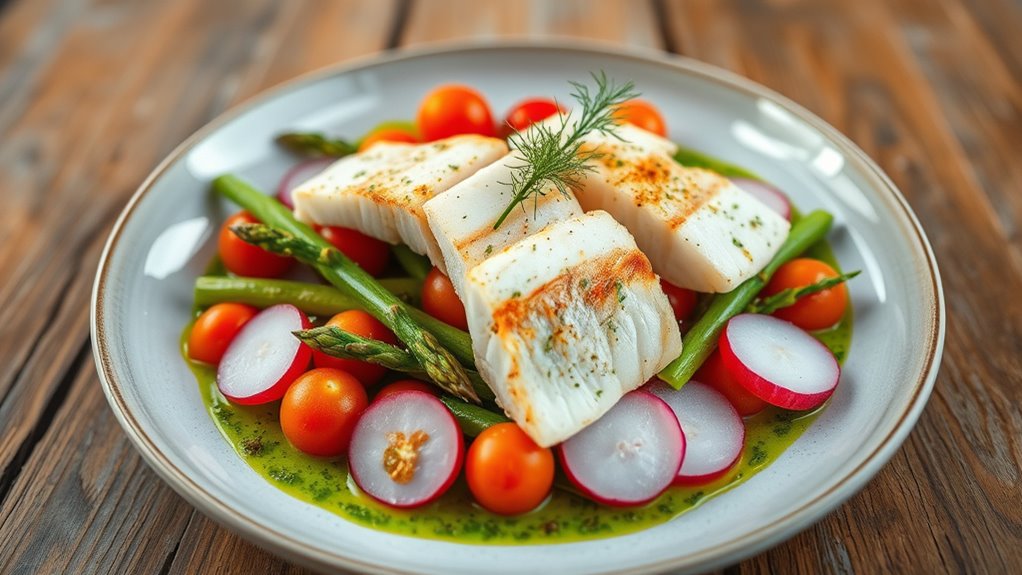

When choosing low-impact, sustainable fish recipes, focus on species like Alaskan salmon and Pacific sardines, which are well-managed and responsibly sourced. Look for eco labels such as MSC or ASC to verify you’re supporting responsible fishing practices that prevent overfishing and protect marine ecosystems. Eating fish in season and supporting local fisheries further reduces environmental impact. Keep exploring to discover more about making eco-friendly seafood choices that benefit our oceans.
Key Takeaways
- Choose seafood labeled with eco certifications like MSC or ASC to ensure sustainable, low-impact sourcing.
- Opt for species such as sardines and Alaskan salmon, which are well-managed and abundant.
- Prepare fish in season to reduce ecological impact and avoid overfished species.
- Support local fisheries to minimize transportation emissions and promote regional sustainability.
- Incorporate low-impact cooking methods, like grilling or steaming, to preserve fish quality and reduce environmental footprint.

Choosing sustainable seafood means making informed decisions that protect our oceans and guarantee future generations can enjoy healthy fish populations. One of the most effective ways to do this is by paying attention to eco labeling importance. Labels like the Marine Stewardship Council (MSC) or Aquaculture Stewardship Council (ASC) provide assurance that the seafood you purchase comes from responsible sources. These labels signify that the fish was caught or farmed using sustainable practices, helping you avoid contributing to overfishing and environmental degradation. Recognizing and trusting these labels is essential because they serve as a quick, reliable guide amid a sea of options, making it easier to select fish that align with conservation goals.
Prevention of overfishing plays a critical role in maintaining the balance of marine ecosystems. When fish populations are overexploited, it disrupts the food chain, harms biodiversity, and jeopardizes the livelihoods of communities dependent on fishing. By choosing fish that are certified or sourced from well-managed fisheries, you actively support efforts to prevent overfishing. This means steering clear of species known for being overfished and opting instead for those abundant and sustainably managed. For example, selecting species like Alaskan salmon or Pacific sardines, which are generally well-regulated and sustainably harvested, helps reduce pressure on vulnerable populations. Your choices directly influence fishing practices worldwide, encouraging more responsible management and supporting policies aimed at preventing overfishing.
In addition to focusing on eco labels and overfishing prevention, it helps to educate yourself about seasonal availability and regional fisheries. Eating fish that are in season reduces the need for intensive fishing methods that often damage ecosystems or cause bycatch. Furthermore, supporting local fisheries can minimize the carbon footprint associated with transportation and often aligns with sustainable practices more readily than imported options. Incorporating knowledge of marine conservation strategies into your decision-making process can further amplify your positive impact. When you combine awareness of eco labeling importance with a commitment to preventing overfishing, you create a powerful impact. Your everyday seafood choices become acts of conservation, helping to sustain marine biodiversity and ensure the health of our oceans.

Fishwife Cantabrian Anchovies 3-Pack (1.73 Ounce) | Wild-Caught & Hand-Packed with Spanish Extra Virgin Olive Oil | MSC-Certified Sustainable Seafood, High Protein, Gluten Free, Paleo Friendly, Omega-3s
Our Cantabrian Anchovies: Say hello to the richest, butteriest anchovies that have ever met your lips. It’s tinned…
As an affiliate, we earn on qualifying purchases.
As an affiliate, we earn on qualifying purchases.
Frequently Asked Questions
How Can I Tell if a Fish Is Sustainably Sourced?
You can tell if a fish is sustainably sourced by checking labels or certifications like the Marine Stewardship Council (MSC). Look for fish caught using responsible fishing methods that avoid overfishing, supported by fishing quotas, or from fish farms that follow eco-friendly practices. Avoid species known for overfishing and prefer those with transparent supply chains. Staying informed helps you make eco-conscious choices for low-impact, sustainable seafood.
Are Farmed Fish More Eco-Friendly Than Wild-Caught?
Did you know that nearly half of the seafood we eat is farmed? Farmed fish can be eco-friendly if you choose species raised with sustainable aquaculture practices and responsible fish farm management. These methods reduce environmental impact, prevent overfishing, and often use less wild habitat. So, when selecting farmed fish, look for certifications and transparent sourcing to guarantee you’re supporting environmentally conscious aquaculture practices.
What Certifications Indicate Sustainable Seafood?
You should look for certifications like the Marine Stewardship Council (MSC) and Aquaculture Stewardship Council (ASC). These indicate sustainable seafood, ensuring responsible fishing and aquaculture practices, including the use of Marine Protected Areas and eco-friendly aquaculture practices. By choosing certified seafood, you support efforts to protect marine ecosystems, minimize overfishing, and promote healthier oceans. Always check labels for these certifications to make eco-conscious choices effortlessly.
How Does Overfishing Impact Marine Ecosystems?
Overfishing damages marine ecosystems by depleting fish populations faster than they can recover. You might not realize it, but it also leads to bycatch, harming other species and disrupting food chains. When overfishing occurs, habitats like coral reefs and seabeds suffer, making habitat preservation difficult. To protect ocean health, it is crucial to support sustainable practices that focus on bycatch reduction and responsible fishing methods, ensuring marine ecosystems remain balanced and resilient.
Can Sustainable Seafood Choices Help Conserve Ocean Biodiversity?
Yes, your sustainable seafood choices can help safeguard ocean biodiversity. By choosing fish from marine protected areas and supporting brands that use fishing gear innovations, you reduce bycatch and habitat damage. These actions promote healthier ecosystems and ensure fish populations remain sustainable. When you prioritize responsible options, you’re actively contributing to the preservation of marine life and maintaining the ocean’s delicate balance for future generations.

The Complete Diabetes Cookbook: The Healthy Way to Eat the Foods You Love (The Complete ATK Cookbook Series)
As an affiliate, we earn on qualifying purchases.
As an affiliate, we earn on qualifying purchases.
Conclusion
By choosing sustainable seafood, you support healthy oceans, protect marine life, and guarantee future generations can enjoy the bounty of the sea. By making informed choices, by embracing low-impact recipes, and by committing to responsible consumption, you become part of the solution. Every meal becomes an opportunity—to preserve, to respect, to make a difference. So, choose wisely, cook consciously, and savor the taste of sustainability in every bite.

Iron Fish Cooking Tool, Natural Cooking Tool to Add Iron to Food & Water, Safe & Effective Aid for Vegans, Athletes, Pregnant Women and Children (Silver 2Pack)
Natural iron Source: Crafted from high-purity iron, the Iron Fish gently releases natural iron when boiling soups, porridge,…
As an affiliate, we earn on qualifying purchases.
As an affiliate, we earn on qualifying purchases.

The Blue Food Cookbook: Delicious Seafood Recipes for a Sustainable Future (A Comprehensive Guide, from Buying and Preparing to Cooking Delicious Nutritious Blue Food Recipes)
As an affiliate, we earn on qualifying purchases.
As an affiliate, we earn on qualifying purchases.