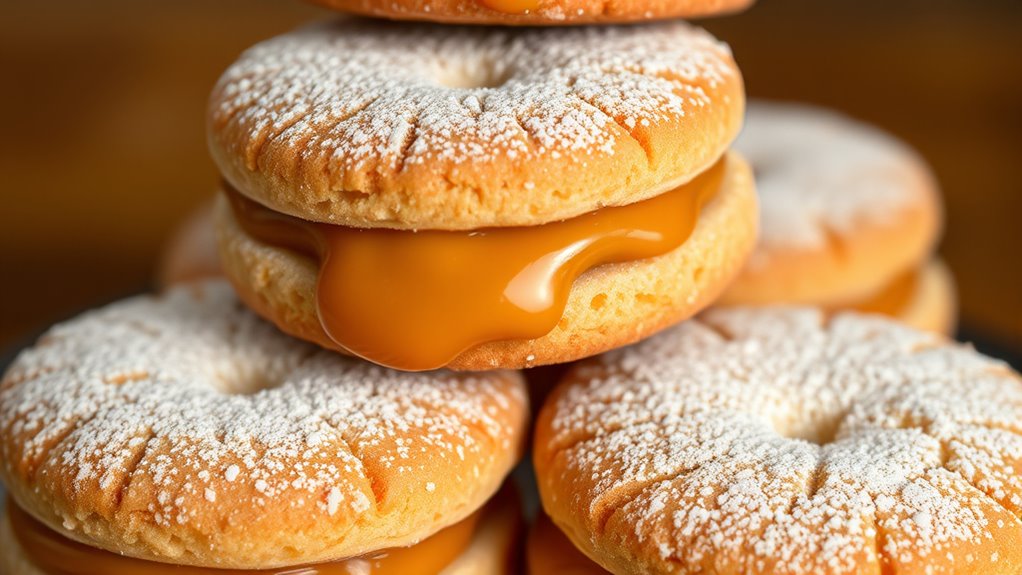

Argentine alfajores are delightful dulce de leche sandwich cookies that capture the country’s rich culinary heritage. You’ll find varieties with different cookie textures—crumbly, soft, or dense—and fillings mostly of smooth, creamy dulce de leche. Some are dipped in chocolate or dusted with powdered sugar, reflecting regional tastes. Each one tells a story of tradition, family, and regional pride. Keep exploring to discover the diverse flavors and cultural significance behind these beloved treats.
Key Takeaways
- Argentine alfajores are traditional sandwich cookies filled with rich, smooth dulce de leche.
- They feature various regional cookie bases, from crumbly to biscuit-like textures.
- Often dipped in chocolate or coated with powdered sugar for added flavor and presentation.
- These treats symbolize Argentine culture, celebration, and regional pride.
- Variations include different sizes, fillings, and toppings, reflecting local ingredients and tastes.
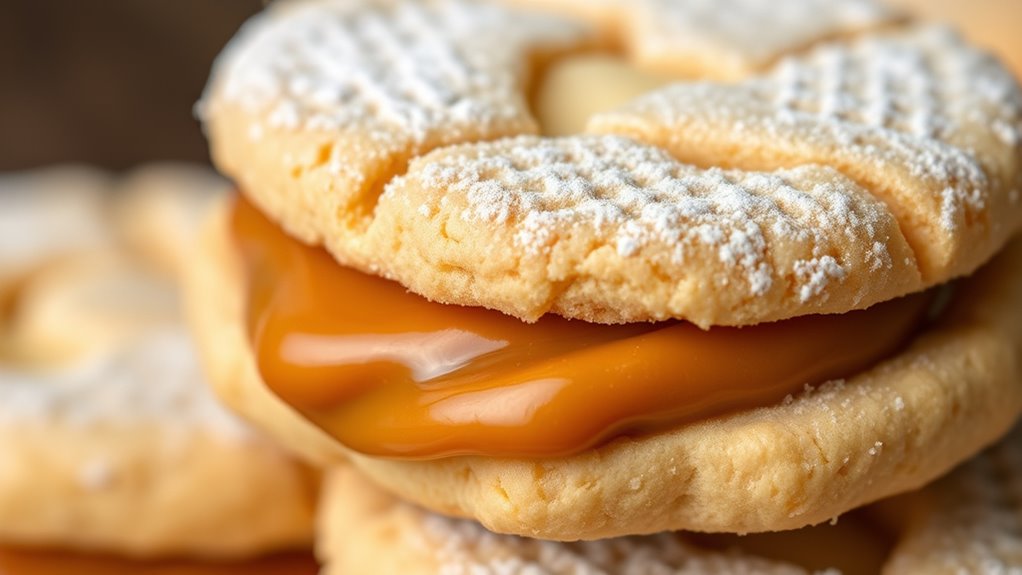
Have you ever tasted a truly delicious alfajor? If not, you’re missing out on a sweet piece of Argentine culture. Alfajores are more than just cookies; they’re a symbol of tradition, celebration, and regional pride. These treats have deep cultural significance in Argentina, often appearing during holidays, festivals, and family gatherings. They evoke nostalgia and bring people together, making them an essential part of the country’s culinary identity. When you bite into an alfajor, you’re not just tasting a sweet snack—you’re experiencing a piece of Argentine heritage.
Alfajores are a sweet symbol of Argentine tradition, celebration, and cultural pride.
What makes alfajores particularly fascinating are the regional variations that exist across the country. In some areas, you’ll find them with a soft, crumbly cookie base, while in others, the cookies are denser and more biscuit-like. The filling, usually dulce de leche, is almost always present, but some regions add a twist by incorporating chocolate, fruit preserves, or even a dusting of powdered sugar on top. These differences showcase how local ingredients and tastes influence the recipes, giving each region its unique spin on this beloved treat. For example, in the northern provinces, you might come across alfajores with a more robust, spiced flavor, whereas in the south, they tend to be sweeter and more decadent.
As you explore Argentina, you’ll notice that each family, bakery, and city has its personal take on the classic alfajor. Some are small and delicate, perfect for a quick snack, while others are larger and more indulgent, meant to be savored slowly. The variety also extends to the type of cookie used—some are made with meringue, others with shortbread or biscuit-like bases. The dulce de leche filling is almost always smooth, creamy, and rich, balancing the cookie’s texture perfectly. Many alfajores are dipped in chocolate or coated with a layer of sugar, adding extra layers of flavor and texture. Additionally, regional differences influence the cookie types, further showcasing the diversity of this beloved treat. These regional variations highlight how adaptable and cherished this treat is across Argentina.
In short, tasting an Argentine alfajor offers more than just a burst of sweetness. It provides a glimpse into Argentina’s diverse regional flavors and the cultural importance placed on sharing traditional foods. Whether you prefer a simple, classic version or one with elaborate toppings, each alfajor carries a story—of history, family, and regional pride. So, next time you indulge in one, remember you’re partaking in a tradition that’s woven into the fabric of Argentine life, a delicious symbol of its rich cultural tapestry.
Frequently Asked Questions
What Is the History Behind Argentine Alfajores?
You’ll find that Argentine alfajores have rich cultural origins, dating back to Moorish influences in Spain and the Middle East. Over time, they evolved into a beloved traditional recipe in Argentina, blending local ingredients and flavors. Today, these cookies symbolize Argentine hospitality and heritage, often featuring dulce de leche as a filling. Their history highlights a delightful fusion of historical culinary traditions and modern tastes you can enjoy today.
How Do You Store Alfajores to Keep Them Fresh?
To keep your alfajores fresh, store them in an airtight container at room temperature, away from direct sunlight. This cookie preservation method helps retain their flavor and prevents them from becoming stale or soggy. For longer storage, you can refrigerate them, but make sure to bring them to room temperature before enjoying. Proper storage guarantees your alfajores stay delicious, maintaining their soft texture and sweet flavor.
Are There Vegan or Gluten-Free Alfajores Available?
Yes, you can find vegan alternatives and gluten-free options for alfajores. Many specialty stores and online shops offer these variations made with plant-based ingredients and gluten-free flours. When shopping, check labels carefully to verify they meet your dietary needs. You might also consider making your own using vegan dulce de leche and gluten-free cookies. This way, you get fresh, tasty alfajores tailored to your preferences.
What Variations of Dulce De Leche Are Used?
You’ll find various Dulce de leche varieties used in alfajores, from classic creamy styles to caramelized, thicker options. Some incorporate flavor infusions like vanilla, cinnamon, or even hints of citrus, enhancing the richness. You might also encounter unique twists, such as chocolate or coffee-infused dulce de leche, offering diverse tastes. These variations let bakers create personalized, flavorful alfajores that cater to different preferences and add exciting new flavors.
Can Homemade Alfajores Be Frozen for Later Use?
Imagine you’ve just made perfect homemade alfajores and want to enjoy them later. You can freeze them using proper techniques—wrap each cookie tightly in plastic wrap and place them in an airtight container. This prevents freezer burn and preserves freshness. For best results, store them in the cold for up to three months, and when ready to eat, thaw at room temperature. Freezing techniques and storage tips guarantee your alfajores stay delicious.
Conclusion
As you savor the delicate harmony of Argentine alfajores, you’ll find yourself gently drawn into a world of sweet nostalgia. These charming cookies, softly whispering tales of tradition and warmth, invite you to indulge without guilt. With every bite, you’re subtly transported, experiencing a tender moment of bliss that lingers just enough to leave you longing for more. Embrace the subtle magic of alfajores—where every crumb hints at a delightful, everlasting comfort.