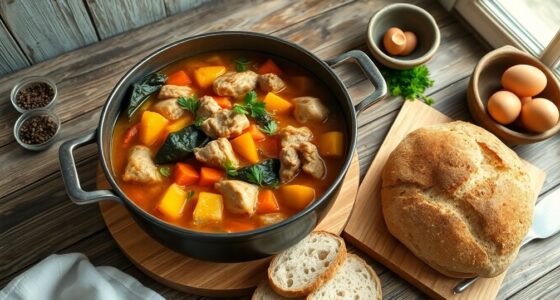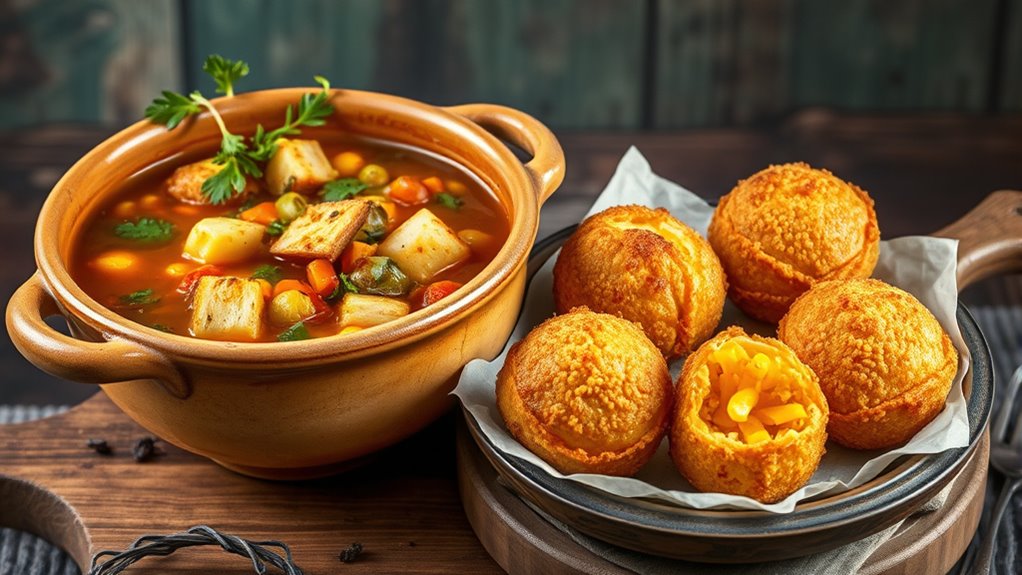

Italy’s regional dishes showcase the country’s rich culinary diversity, where each area reflects its land, climate, and history. From the hearty Tuscan ribollita, a bread and vegetable soup, to Sicilian arancini, fried rice balls with bold flavors, you get an authentic taste of local traditions. These dishes are often paired with regional wines that enhance their unique flavors. Stay with us, and you’ll uncover even more delicious stories behind Italy’s vibrant culinary landscape.
Key Takeaways
- Italian regional dishes reflect local ingredients, climate, and cultural influences, creating diverse culinary traditions.
- Tuscan ribollita is a hearty vegetable and bread soup paired with Chianti wine, showcasing Tuscany’s rustic flavors.
- Sicilian arancini are fried rice balls infused with regional spices and often served with local wines like Marsala.
- Alpine and Central Italy feature hearty foods like polenta and game meats, complemented by crisp whites and robust reds from nearby wine regions.
- The pairing of regional dishes with local wines enhances flavors and tells a story of Italy’s land, history, and culinary identity.
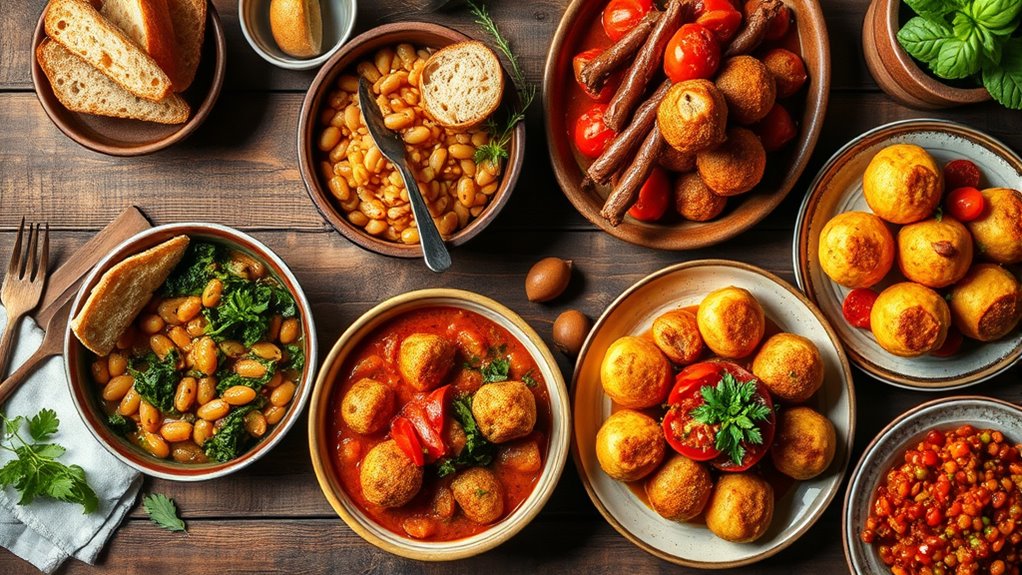
Have you ever wondered how Italy’s diverse regions each boast their own unique culinary traditions? It’s a fascinating tapestry woven from local ingredients, historical influences, and distinct cultural practices. Traveling through Italy means experiencing a rich variety of dishes that reflect the character of each area. For example, in the north, you’ll find hearty, creamy dishes paired with renowned wine regions that produce some of Italy’s best reds and whites. These wine regions aren’t just about beverages; they’re integral to the local culinary traditions, influencing everything from sauces to desserts. In Tuscany, for instance, a glass of Chianti complements traditional ribollita, a hearty vegetable and bread soup that embodies rustic simplicity. In Piedmont, barolo wines enhance the rich, slow-cooked tajarin pasta, highlighting how wine and food are intertwined in regional identity.
Italy’s regions blend local ingredients and wines into rich, traditional culinary stories.
Moving south, the culinary traditions shift to a more vibrant, Mediterranean palette. The flavors become bolder, often featuring fresh herbs, citrus, and seafood. Sicily stands out with its unique mix of Arab, Greek, and Spanish influences, which is evident in dishes like arancini—crispy rice balls filled with meat or cheese. These regional specialties are often paired with local wines that balance the intense flavors, showcasing the importance of wine regions in elevating the local cuisine. The island’s wine regions, such as Marsala, add a distinctive touch to both cooking and dining, with fortified wines that have become staples in traditional recipes.
In the Italian Alps and the central regions, you’ll notice a focus on rich, comforting foods like polenta, game meats, and cheeses. These dishes mirror the cooler climate and mountainous terrain, shaping culinary traditions that emphasize preservation and hearty flavors. The wine regions here, such as Trentino-Alto Adige or Veneto, produce crisp whites and robust reds that perfectly complement these rich dishes. As you explore Italy, you realize that each region’s culinary traditions are deeply rooted in their local wine regions, making the experience not just about taste but also about understanding the land and history behind each bite.
Ultimately, Italy’s regional dishes are a tribute to its culinary diversity. Whether it’s the simple elegance of Tuscan ribollita or the spirited flavors of Sicilian arancini, each dish tells a story. The connection with local wine regions amplifies this narrative, creating a harmonious blend of flavors that define Italy’s gastronomic identity. So, as you indulge in these regional delicacies, remember that you’re tasting centuries of tradition, shaped by the land, the climate, and the people who have perfected them over generations.
Frequently Asked Questions
How Do Regional Ingredients Influence Dish Variations Across Italy?
Regional ingredients shape dish variations across Italy by reflecting local herb influences and available produce. You’ll notice coastal areas emphasize seafood flavors, while inland regions rely more on hearty vegetables and meats. These local ingredients influence how dishes are prepared, seasoned, and presented, creating distinct regional identities. This variation makes Italian cuisine rich and diverse, allowing you to experience unique flavors that showcase each area’s natural resources and culinary traditions.
What Are Lesser-Known Regional Dishes Worth Trying?
Imagine unearthing Italy’s hidden culinary gems. You should try Puglian Orecchiette, a pasta shaped like small ears, often paired with local wine at regional food festivals. Also, sample Ligurian Farinata, a crispy chickpea flatbread, best enjoyed with regional wine pairings. These lesser-known dishes offer authentic tastes and stories, revealing Italy’s rich tapestry of regional flavors waiting to be explored beyond the famous dishes.
How Do Traditional Cooking Methods Differ by Region?
Regional cooking in Italy varies greatly, reflecting local ingredients and history. You’ll notice that culinary techniques differ—Tuscany emphasizes slow simmering and bread-based dishes, while Sicily uses frying and citrus flavors. In the north, you might find more steaming and roasting methods, whereas the south favors grilling and frying. These regional techniques shape authentic dishes, giving each area its unique taste and texture that you can truly experience when you cook or dine there.
Are Regional Dishes Suitable for Modern Dietary Restrictions?
Think of regional dishes as a rich tapestry, adaptable to your modern needs. Yes, many dishes now feature gluten-free adaptations and vegan regional options, making them suitable for your dietary restrictions. You can enjoy classic flavors while respecting your lifestyle. Chefs are creatively modifying traditional recipes, so you don’t have to sacrifice authenticity or taste. Embrace these culinary innovations and savor Italy’s regional heritage in a way that fits you perfectly.
How Have Regional Dishes Evolved Over Italy’s History?
You see that regional dishes have evolved through history influence and cultural fusion, blending local ingredients with outside culinary traditions. Over time, recipes adapt to changing tastes, available resources, and societal shifts, creating diverse and dynamic cuisines across Italy. This evolution keeps dishes relevant, allowing you to experience a rich tapestry of flavors that reflect Italy’s historical interactions and regional identities, making each dish uniquely tied to its cultural story.
Conclusion
Exploring Italian regional dishes is like taking a flavorful journey through a vibrant mosaic. Each dish, from the hearty Tuscan ribollita to the savory Sicilian arancini, offers a unique taste of local tradition and passion. By trying these dishes, you’ll savor Italy’s rich culinary heritage, much like discovering hidden treasures in a colorful tapestry. So, embrace the flavors and let each bite transport you to Italy’s charming, diverse regions.