To understand halal cuisine, you’ll find it’s based on strict religious principles that govern how animals are slaughtered, ensuring humane treatment and invocation of Allah’s name. The focus is on permissible ingredients, avoiding pork, alcohol, and cross-contamination, with special care in food preparation and cooking methods. Popular dishes like kebabs, biryanis, and grilled meats follow these guidelines, emphasizing cleanliness and ethics. Continuing your exploration will uncover even more about the rich traditions behind halal culinary practices.

Get kitchen staples and gadgets delivered free with Prime
- Fast, free delivery on millions of items
- Prime Video, Amazon Music and more included
- Member-only deals all year
Key Takeaways
- Halal cuisine follows strict animal slaughtering methods ensuring meat is lawful and free from blood contamination.
- It excludes pork, alcohol, and non-halal ingredients, emphasizing purity and religious compliance.
- Proper slaughtering, handling, and preparation reflect ethical principles like compassion and cleanliness.
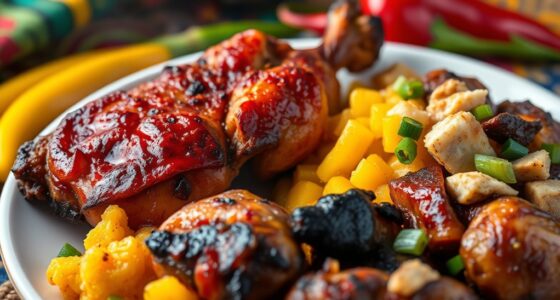
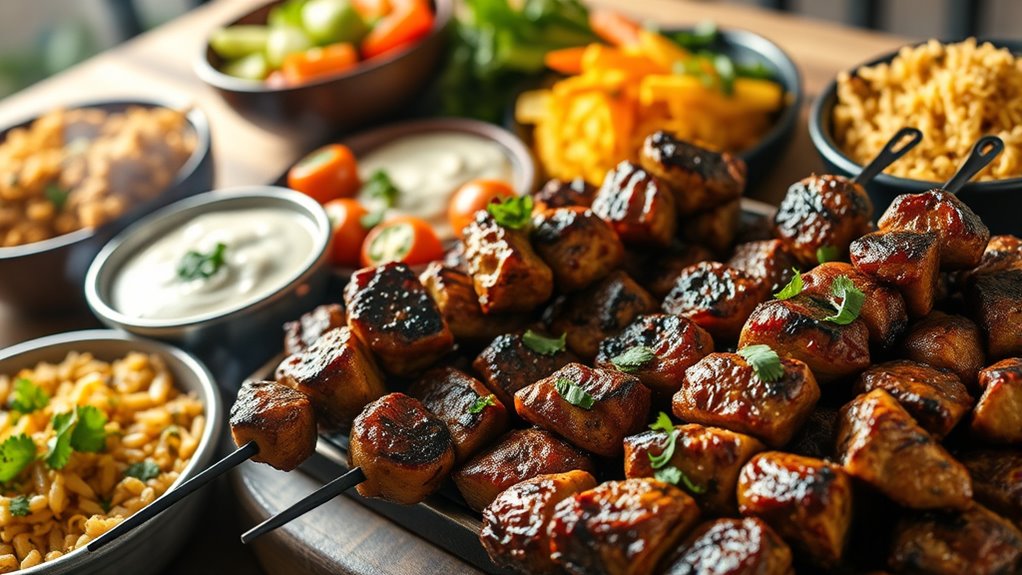
- Popular dishes include grilled kebabs, biryani, and halal-certified fried chicken, prepared with halal ingredients.
- Attention to detail in ingredient sourcing and cooking methods preserves the authenticity and religious integrity of halal dishes.
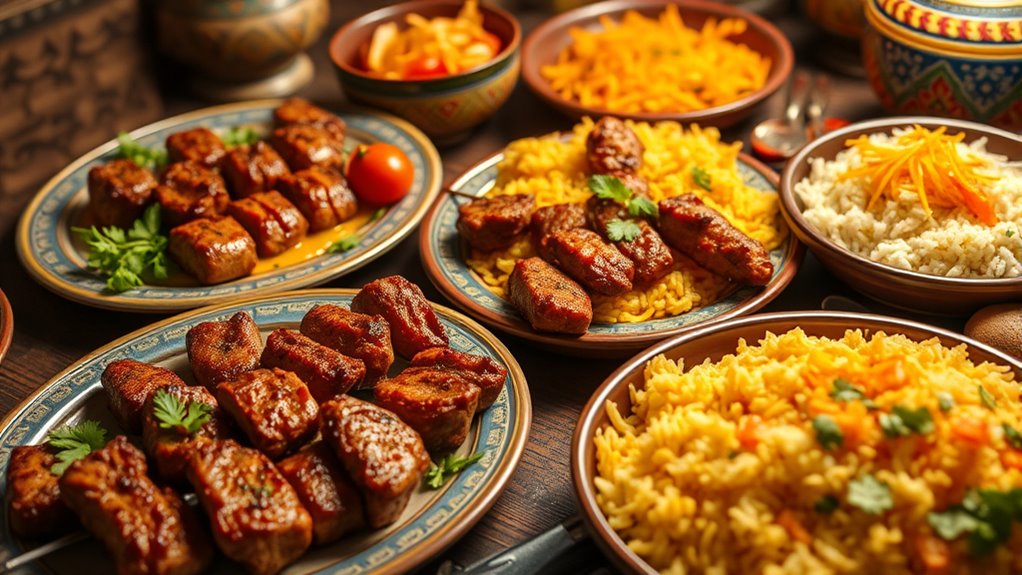
Have you ever wondered what makes a dish truly halal? The answer lies in understanding the principles behind halal cuisine, especially how meat is prepared and how it respects dietary restrictions. When it comes to meat preparation, halal practices follow strict guidelines to guarantee the meat is permissible for Muslims. This means the animal must be slaughtered by a Muslim who is mentally sound, and the process involves invoking Allah’s name at the moment of slaughter. The slaughter must be swift and humane, cutting the carotid artery, jugular vein, and windpipe in a single clean cut, allowing the blood to drain completely. This process is vital because, in Islamic law, consuming blood is forbidden, and proper slaughtering ensures the meat is clean and pure. Proper air fryer techniques can also help ensure that meats are cooked safely and thoroughly, maintaining their halal integrity. Understanding these practices is essential because they directly impact the quality and acceptability of the meat in halal dishes. It’s not just about what the animal is but also how it’s prepared. For many Muslims, the entire process is a form of worship, emphasizing compassion for animals and cleanliness. Additionally, the meat must come from animals that are lawful to eat—such as cows, sheep, goats, and chickens—and not from forbidden sources like pork or animals that have died from natural causes or were improperly slaughtered.
Dietary restrictions play a significant role in halal cuisine, shaping what ingredients can be used and how dishes are cooked. For example, avoiding pork and its by-products is mandatory, and this extends to avoiding cross-contamination with non-halal products. Many halal kitchens take extra precautions to prevent mixing utensils or cooking surfaces with non-halal foods. This attention to detail guarantees adherence to Islamic dietary laws and maintains the integrity of halal meals. This means that even sauces, broths, and marinades must be free of alcohol or non-halal ingredients.
In essence, halal cuisine isn’t just about the ingredients but also about respecting these dietary restrictions and guaranteeing every step of food preparation aligns with Islamic principles. Whether you’re preparing a simple chicken curry or a complex feast, understanding these core practices ensures that the meal is both lawful and respectful of religious beliefs. By paying attention to meat preparation and dietary restrictions, you’re not only following tradition but also honoring the values that make halal cuisine unique and meaningful.
As an affiliate, we earn on qualifying purchases.
Frequently Asked Questions
Are All Muslim Cultures Considered Halal?
Not all Muslim cultures are considered halal in every aspect, as cultural variations influence dietary restrictions. While the core principles of halal focus on permissible foods, practices differ across regions. You should recognize that some communities may have unique interpretations or additional restrictions, so it’s essential to comprehend local customs. Always verify specific guidelines, especially when it involves prepared foods or local traditions, to ensure they align with halal standards.
Can Non-Halal Ingredients Be Used in Halal Cooking?
Yes, non-halal ingredients can be used in halal cooking if you guarantee proper ingredient substitution and maintain flavor compatibility. You should carefully replace non-halal items with halal alternatives, like plant-based or certified halal products, to keep the dish compliant. Always check ingredient labels and consider how substitutions impact taste, so the dish remains delicious while adhering to halal principles.
How Is Halal Meat Certified and Verified?
Think of Halal certification as a trustworthy passport for meat, granting it entry into the halal culinary world. You verify this by checking for official Halal certification symbols from reputable authorities, ensuring meat has undergone proper Halal slaughter practices. Meat verification involves inspecting labels and certificates, confirming the meat’s origin aligns with Halal standards. This process guarantees your food’s purity, much like a seal of authenticity that keeps your culinary journey genuine.
Are There Regional Differences in Halal Cuisine?
Yes, there are regional differences in halal cuisine that reflect local flavors and culinary traditions. You’ll notice diverse spices, cooking techniques, and ingredients across regions, showcasing culinary diversity. For example, Middle Eastern halal dishes often feature rich spices and oils, while Southeast Asian versions incorporate coconut and fresh herbs. These regional flavors add unique character to halal food, making it a vibrant, global culinary experience.
What Are Common Misconceptions About Halal Food?
You might think halal food is just about meat, but it’s more than that. Myth busting reveals that halal isn’t about specific ingredients but about ingredient purity and preparation methods. Some believe it’s only for Muslims, but many people enjoy halal dishes for their ethical and quality standards. Remember, halal focuses on cleanliness, ethical slaughter, and avoiding forbidden ingredients, so it’s about more than just religious rules.
Conclusion
Now that you understand the principles and popular dishes of halal cuisine, you’re ready to explore a world bursting with flavor and tradition. Embrace these culinary delights, knowing they’re crafted with care and respect for faith. Think of halal food as a treasure chest, overflowing with vibrant spices and rich aromas that can transform any meal into a celebration. Plunge in with confidence and let your taste buds set out on an unforgettable journey!
NFL season / tailgating Picks
team gear
As an affiliate, we earn on qualifying purchases.