
Greek cuisine features vibrant, flavorful dishes like meze and moussaka, crafted with a rich tradition of using high-quality olive oil and fresh seasonal ingredients. You’ll find that slow-cooked techniques, gentle sautéing, and marinating highlight the natural flavors of vegetables, meats, and legumes. This approach emphasizes simplicity and craftsmanship, connecting you to Greece’s cultural roots. If you explore further, you’ll discover how these ingredients and methods create authentic, unforgettable Mediterranean flavors.
Key Takeaways
- Greek cuisine features diverse meze dishes, emphasizing fresh ingredients and traditional techniques like slow cooking and olive oil use.
- Moussaka showcases layered flavors, with high-quality olive oil and seasonal produce enhancing its rich, authentic taste.
- Mediterranean staples such as olives, feta, and fresh vegetables highlight Greece’s emphasis on land and tradition.
- Olive oil is central to Greek cooking, used to deepen flavors in sauces, marinades, and cooking methods like roasting and braising.
- Emphasis on seasonal ingredients and simple preparations reflects Greece’s cultural respect for land and centuries-old culinary heritage.
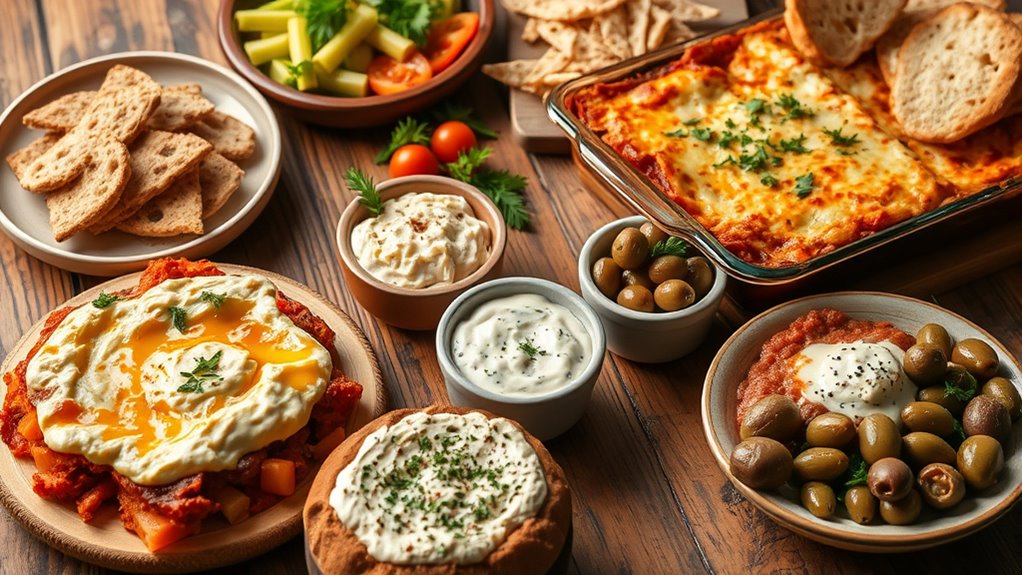
Have you ever wondered what makes Greek cuisine so vibrant and flavorful? It all begins with the foundation of many dishes: olive oil. Greece’s rich history of olive oil production plays a vital role in shaping its culinary identity. The country’s climate and centuries-old traditions allow for the cultivation of high-quality olives, which are carefully pressed to produce that golden elixir. This olive oil isn’t just a cooking ingredient; it’s a symbol of Greek culture. When you cook with it, you’re engaging in a tradition that dates back thousands of years. Its robust flavor enhances everything from salads to stews, giving each dish a distinctive Mediterranean touch. The use of olive oil in Greek cooking is deeply rooted in traditional techniques. These methods have been passed down through generations, emphasizing simplicity and respect for ingredients. For example, many recipes involve gently sautéing vegetables or marinating meats in olive oil and herbs, allowing the flavors to meld without overpowering the natural taste. This approach highlights the importance of patience and craftsmanship in Greek culinary arts. Additionally, high-quality olive oil is essential for achieving authentic flavors and health benefits in Greek dishes. In Greek cuisine, traditional cooking techniques are often slow and deliberate, ensuring that each ingredient reaches its full potential. Roasting vegetables, braising meats, and preparing sauces are done with care, often over open flames or in clay pots to preserve authentic flavors. These methods not only maintain the integrity of the ingredients but also reflect a deep connection to the land and history. When preparing classic dishes like moussaka or souvlaki, you’ll notice how these techniques bring out layers of flavor and texture that are simply unmatched. The emphasis on fresh, seasonal ingredients further enhances the dishes, making each meal a celebration of local produce and tradition.
Top picks for "greek cuisine meze"
As an affiliate, we earn on qualifying purchases.
Frequently Asked Questions
What Are the Regional Variations of Greek Meze?
You’ll notice regional variations of Greek meze showcase different flavors and ingredient variations. In the islands, expect fresh seafood and lemon-based dishes, while in mainland Greece, you’ll find heartier options with lamb and eggplant. In Crete, herbs like oregano and thyme shine, whereas northern regions incorporate more dairy and wild greens. These regional flavors create unique meze experiences, reflecting local ingredients and culinary traditions, giving each area its distinct taste.
How Is Authentic Moussaka Traditionally Prepared?
Like a story unfolding in layers, authentic moussaka features a layered eggplant base, seasoned with herbs and sometimes ground meat. You start by frying or baking thin slices of eggplant, then layer them with a rich, spiced meat sauce. The crown jewel is a creamy bechamel sauce poured on top, baked until golden. This dish embodies tradition, patience, and harmony—each layer revealing a deeper flavor.
What Are Common Mediterranean Staples Beyond Greece?
You’ll find common Mediterranean staples beyond Greece like hummus, falafel, and tabbouleh in the Levant, along with olive oil and fresh herbs that add flavor and richness. In Spain, you enjoy tapas and cured meats, while Italy offers pasta and olive oil-based sauces. These staples emphasize fresh ingredients and bold flavors, making Mediterranean cuisine vibrant and diverse, perfect for sharing and exploring different regional tastes.
How Do Greek Ingredients Differ From Other Mediterranean Cuisines?
Did you know Greece consumes about 20% of the world’s olive oil? Greek ingredients differ from other Mediterranean cuisines mainly in their olive oil quality and herb usage. Greek olive oil tends to be more robust and grassy, enhancing dishes like salads and grilled meats. They also favor herbs like oregano and thyme in unique combinations, setting their flavors apart from, say, Italian or Middle Eastern cuisines, which use different herbs and oils.
What Are the Health Benefits of Traditional Greek Dishes?
You benefit from the health benefits of traditional Greek dishes because Greek dietary patterns emphasize Mediterranean superfoods like olive oil, fresh vegetables, and fish. These ingredients boost heart health, reduce inflammation, and support weight management. By eating a diet rich in these wholesome foods, you can improve your overall well-being, strengthen your immune system, and enjoy delicious, nutrient-packed meals that promote long-term health.
Conclusion
Don’t let unfamiliar ingredients or traditional methods scare you away from exploring Greek cuisine. Embrace the rich flavors of meze, moussaka, and other Mediterranean staples—each bite offers more than just taste; it’s a journey into a vibrant culture. By trying these dishes, you’ll discover that authentic Greek food isn’t intimidating but inviting. So, step outside your comfort zone and savor the experience—your palate will thank you for it.