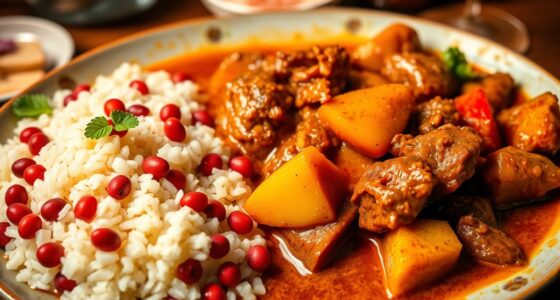
Mexican enchiladas and mole feature rich, flavorful sauces that define their national character. Depending on the region, you’ll encounter tangy tomato-based sauces in the north or spicy chiles and herbs in the south. Moles, like Oaxaca’s chocolaty black varieties or Puebla’s complex poblano, showcase diverse ingredients and traditions. These sauces aren’t just toppings; they’re the heart of each dish, telling stories of local ingredients and history. If you keep exploring, you’ll uncover even more flavors and secrets behind these culinary treasures.
Key Takeaways
- Mexican enchiladas are defined by their flavorful, complex sauces that serve as the dish’s core, not just toppings.
- Regional variations include red, green, and black sauces, each reflecting local ingredients and culinary traditions.
- Mole sauces, like Oaxaca’s dark chocolate-infused or Puebla’s savory-sweet versions, showcase diverse ingredients and rich history.
- Sauces enhance authenticity, regional identity, and overall flavor harmony in Mexican dinner dishes.
- Embracing sauce diversity adds depth and cultural richness to enchiladas and mole-based meals.
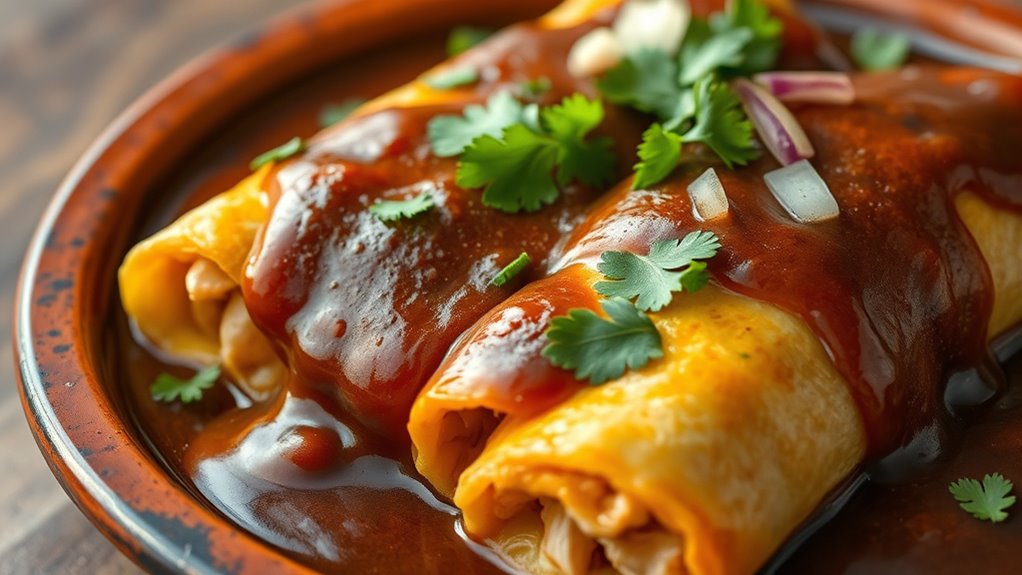
Mexican enchiladas and mole are iconic dishes that showcase the rich flavors and vibrant traditions of Mexican cuisine. When you think about these dishes, you’re immediately drawn to the complex sauces that define their character. Sauce variations play a *vital* role in shaping each dish, offering a wide range of flavors, textures, and aromas. Whether you’re indulging in a simple red sauce or a rich, complex mole, the sauce is the heart of the dish. These variations aren’t just random; they reflect regional differences across Mexico, each adding its unique touch to the classic recipes. For example, in the north, you might find enchiladas topped with a tangy tomato-based sauce, while in the south, the sauces tend to be spiced with local chiles and herbs. Mole sauces, in particular, demonstrate an incredible diversity, from the dark, chocolate-infused moles of Oaxaca to the brighter, fruitier versions found in Puebla. These regional differences influence the ingredients used, the preparation techniques, and the overall flavor profiles, making every bite a new experience.
As you explore these dishes, you’ll notice how sauce variations contribute to their authenticity and regional identity. Enchiladas are often smothered in a sauce that’s either red, green, or black, depending on the ingredients and regional preferences. You might prefer a smoky chipotle sauce from the north or a fresh tomatillo-based green sauce from central Mexico. These sauces aren’t just toppings—they’re *integral* to the dish’s flavor harmony. When it comes to mole, the differences are even more profound. Oaxaca’s black mole, rich with chocolate, chiles, nuts, and spices, is a labor of love, often simmered for hours. By contrast, Puebla’s mole poblano features a complex blend of ingredients that include chocolate, dried fruits, and multiple chiles, creating a savory-sweet balance. These regional variations and sauce differences aren’t just about ingredients; they reflect centuries of culinary history and cultural influences, making each version unique.
Understanding these regional and sauce differences allows you to appreciate the deep-rooted traditions behind Mexican enchiladas and mole. Each variation tells a story, from local ingredients to historical trade routes, shaping the flavors you enjoy on your plate. Whether you’re making a simple enchilada or a layered mole, embracing these differences enhances your experience and respect for Mexican culinary heritage. So, next time you prepare or order these dishes, pay close attention to the sauces—because they’re what truly make Mexican enchiladas and mole stand out as rich, flavorful, and deeply regional favorites.
As an affiliate, we earn on qualifying purchases.
Frequently Asked Questions
What Are the Origins of Traditional Mexican Enchiladas and Mole?
You should know that traditional Mexican enchiladas and mole have deep cultural influences, blending indigenous ingredients with Spanish culinary evolution. Enchiladas originated from pre-Hispanic times, evolving over centuries with regional variations, while mole reflects a rich history of combining chili peppers, spices, and chocolate, influenced by both native cultures and Spanish colonization. This fusion creates iconic dishes that showcase Mexico’s vibrant culinary heritage.
How Do Regional Variations Influence Enchilada and Mole Recipes?
Regional variations profoundly influence your enchilada and mole recipes through local ingredients and cooking techniques. You might use different chiles, spices, or proteins depending on the region’s available ingredients. Your cooking methods, like roasting or grinding, also vary, giving each dish unique flavors and textures. By embracing these regional elements, you create authentic dishes that reflect local culinary traditions and enrich your dining experience.
Can Vegan or Gluten-Free Versions Be Made?
You can definitely make vegan substitutions and gluten-free options for enchiladas and mole. Think beyond traditional ingredients—use plant-based cheeses, tofu, or jackfruit as filling options, and swap corn or rice tortillas for gluten-free versions. By experimenting with these alternatives, you’ll find that vegan and gluten-free dishes can be just as flavorful and satisfying, proving that rich sauces and authentic taste aren’t limited by dietary restrictions.
What Are the Best Wine Pairings With Enchiladas and Mole?
For a perfect wine pairing, opt for a medium-bodied red like Pinot Noir or a slightly sweet Riesling. These choices enhance the complex flavors of enchiladas and mole without overpowering them. The wine’s acidity and subtle sweetness add flavor enhancement, balancing the richness of the sauces. You’ll find that these wines complement the smoky, spicy notes, making your dinner more enjoyable and memorable.
How Long Can Leftover Sauces Be Stored Safely?
Leftover sauces can be stored safely for three to four days when you follow proper food storage and food safety guidelines. Keep them in airtight containers, refrigerate promptly, and reheat thoroughly before serving. Avoid leaving sauces at room temperature for extended periods to prevent bacterial growth. If you want to preserve them longer, consider freezing for up to three months, ensuring they stay fresh and safe to enjoy later.
Conclusion
Don’t let the thought of making these rich sauces intimidate you. With a few simple ingredients and some patience, you’ll craft authentic Mexican enchiladas and mole right in your kitchen. The vibrant flavors and comforting heat are totally worth the effort, and your family will love the delicious results. So go ahead, give it a try—you might just discover a new favorite dinner that brings everyone together around the table.