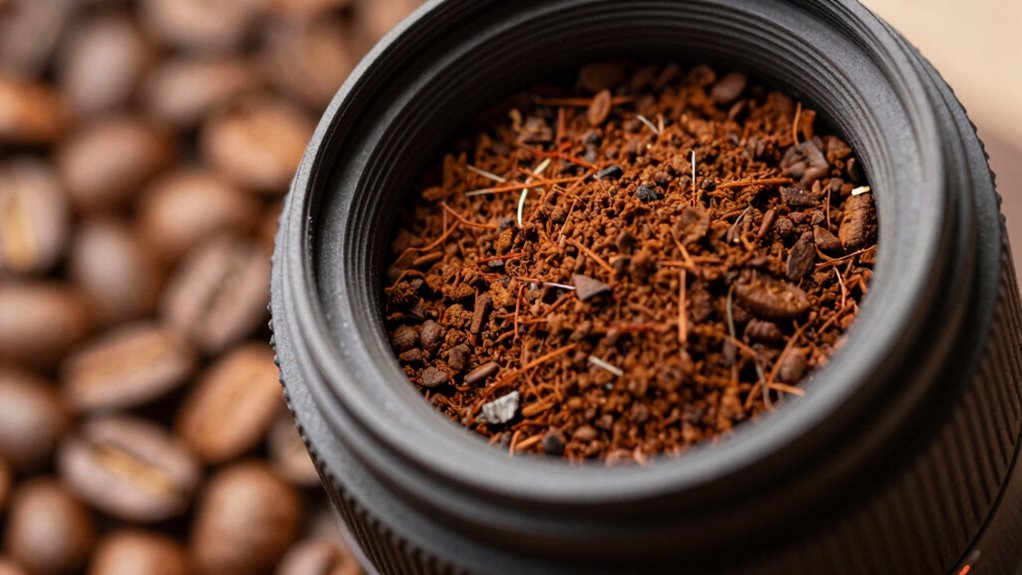
If your grinder is causing clumps, it’s often due to oil buildup or moisture in your beans, which leads to uneven grounds and poor shot quality. To fix this, regularly clean your grinder with a brush, use cleaning products or rice to remove residues, and store beans properly in a cool, dry place. Adjusting your grind to a coarser setting can also help prevent clumping. Keep these tips in mind, and you’ll find simple ways to improve your espresso every time.
Key Takeaways
- Regularly clean burrs and chamber to remove oil residues causing clumping.
- Use cleaning products or rice to thoroughly clear built-up oils and debris.
- Store beans properly in a cool, dry place to prevent moisture-related clumping.
- Adjust grind settings to a coarser level and grind at a steady pace for smoother flow.
- Maintain your grinder routinely to ensure consistent, high-quality espresso shots.
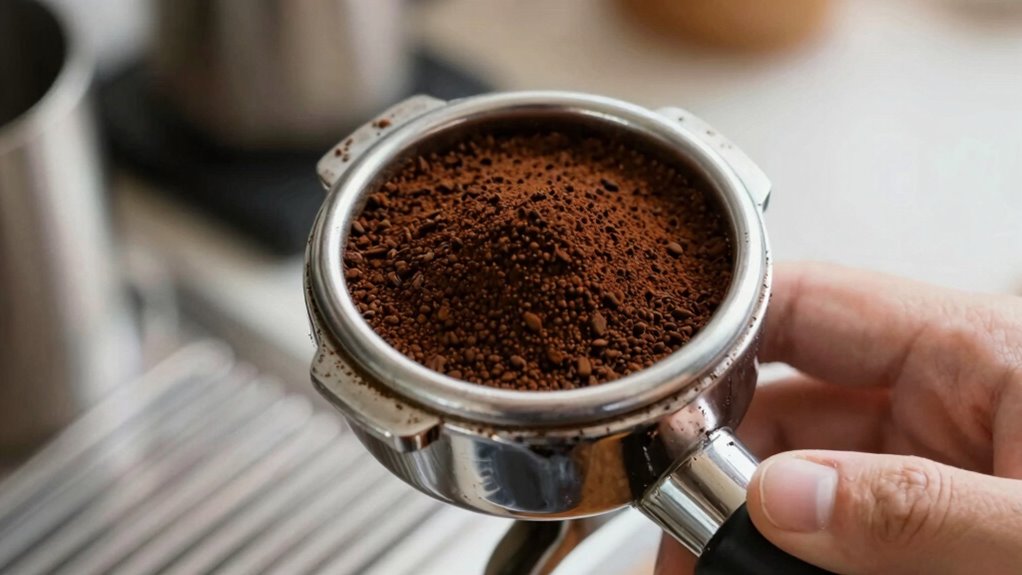
If you’ve noticed inconsistent espresso shots or uneven extraction, grinder clumps might be to blame. Clumps form when coffee grounds stick together, creating uneven particle sizes that disrupt the espresso-making process. This issue is often overlooked because many think their grinder is functioning fine or assume the problem lies elsewhere. However, addressing grinder clumps through proper grinder maintenance can markedly improve your coffee’s quality. When your grinder is clean and well-maintained, it guarantees that the coffee grounds stay evenly distributed, which is vital for extracting the full flavor and aroma from your beans.
One of the main causes of clumping is the build-up of coffee oils and residues that accumulate over time. These residues can cause grounds to stick together, especially if you’re using oily or dark roasts. Regular grinder maintenance, including thorough cleaning, prevents this build-up and keeps your grinder operating smoothly. You don’t need fancy tools—simply brushing out the burrs or blade chamber after each use and occasionally running a grinder cleaning product or rice can remove stubborn residues. When your grinder is clean, you’re also helping to preserve coffee freshness because old oils and residues can impart off-flavors to fresh beans. This means your coffee maintains its intended flavor profile and overall quality, making every shot taste better.
Regular cleaning prevents oil build-up, ensuring smooth grinding and better-tasting, fresher coffee.
Another common mistake is grinding beans too fine or too quickly, which can cause grounds to become compacted and form clumps. Adjusting your grind setting to a slightly coarser level can sometimes eliminate the formation of clumps. Additionally, ensuring your grinder operates at a steady, moderate speed rather than rushing the process helps produce more consistent grounds. It’s also worth noting that storing beans properly—away from moisture and air—helps maintain their freshness, preventing oils from becoming sticky or rancid, which can contribute to clumping. When beans are fresh, they grind more evenly, reducing the chances of uneven extraction caused by inconsistent particle sizes. Proper grinder maintenance routines are essential for preventing clumps and ensuring optimal performance.
Ultimately, don’t underestimate the power of simple, regular grinder maintenance. It’s a small effort that leads to big improvements in your espresso quality. By keeping your grinder clean, adjusting your grind settings as needed, and storing beans properly, you guarantee that your grounds stay free-flowing and consistent. This not only improves shot consistency but also preserves coffee freshness, making each cup more enjoyable. Remember, a well-maintained grinder isn’t just about convenience; it’s a key step in revealing the full potential of your coffee beans and achieving that perfect shot every time.
Frequently Asked Questions
Can Grinder Clumps Affect Espresso Extraction Time?
Yes, grinder clumps can affect espresso extraction time. When your grinder isn’t maintained properly, uneven grind consistency occurs, leading to clumps that block the water flow during brewing. This slows down extraction or causes uneven shots. To prevent this, regularly clean your grinder and check for clumps. Ensuring consistent grind size helps maintain ideal extraction times, giving you better-tasting espresso with every shot.
What’s the Best Way to Prevent Clumping During Grinding?
To prevent clumping during grinding, start with proper grinder maintenance by regularly cleaning your burrs and chute to avoid residue buildup. Store your beans in an airtight container in a cool, dry place to reduce moisture that causes clumps. Before grinding, give the beans a quick shake or stir. These simple steps keep your grinder running smoothly, ensuring consistent grounds and better espresso shots.
Do Different Grind Sizes Influence Clumping Severity?
Yes, different grind sizes influence clumping severity. A finer grind increases the chance of clumps due to reduced grind consistency, making it harder to flow evenly. Conversely, a coarser grind usually results in fewer clumps. To minimize this, guarantee your bean freshness stays high, as stale beans tend to clump more, and maintain consistent grind size. Properly ground beans and fresh beans work together to prevent clumping and ensure better shots.
How Often Should I Clean My Grinder to Reduce Clumps?
You should clean your grinder at least once a month to prevent clumps and maintain ideal performance. Regular maintenance tips include brushing out residual grounds and using proper storage solutions to keep beans fresh and dry. Keep your grinder in a cool, dry place, and consider using airtight containers for beans. Consistent cleaning helps reduce clumping, ensuring your coffee grounds stay consistent and your shots taste great every time.
Are Certain Beans More Prone to Causing Clumping?
Certain beans are more prone to causing clumping, especially if they’re oily or stored poorly. When you keep your beans in airtight containers away from light and moisture, it helps reduce oil buildup that leads to clumping. Also, your grinder’s material matters; burr grinders with ceramic or stainless steel blades tend to handle oily beans better than blade grinders. Proper bean storage and choosing the right grinder can keep clumps at bay.
Conclusion
So, next time your shot looks more like a muddy puddle than a barista’s masterpiece, remember—it’s probably those pesky clumps. Don’t blame your skills; blame the grinder’s sneaky habit of playing hide-and-seek with your grounds. Skip the easy fix, and you’ll keep wasting time and coffee. Or, you could just embrace the chaos and call it “art.” Either way, happy brewing, and may your shots be ever smooth—clump-free, of course.