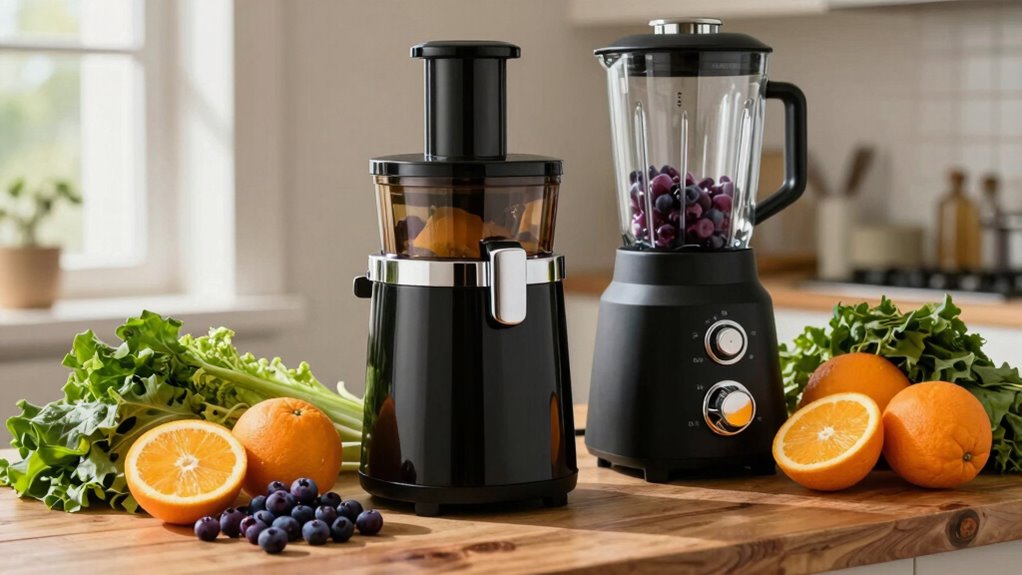

When choosing between a juicer and a blender, you should know that juicers extract clear juice by removing most pulp, which strips away fiber and offers concentrated vitamins and minerals but less satiety and slower digestion. Blenders, on the other hand, retain all produce, keeping fiber intact for better digestion, blood sugar control, and fullness. Understanding how each affects nutrition can help you meet your health goals—there’s more to discover if you keep exploring.
Key Takeaways
- Juicers produce smooth juice with minimal fiber, offering quick nutrient absorption but less dietary fiber.
- Blenders retain all fiber, providing a more balanced nutritional profile and promoting better digestion and satiety.
- Fiber in blended drinks slows sugar absorption, stabilizes blood sugar, and enhances fullness compared to juiced beverages.
- Choosing between a juicer and blender depends on whether you prioritize rapid vitamin intake or comprehensive nutrition with fiber.
- Pulp texture from blending varies, influencing drink satisfaction and how filling the beverage feels.
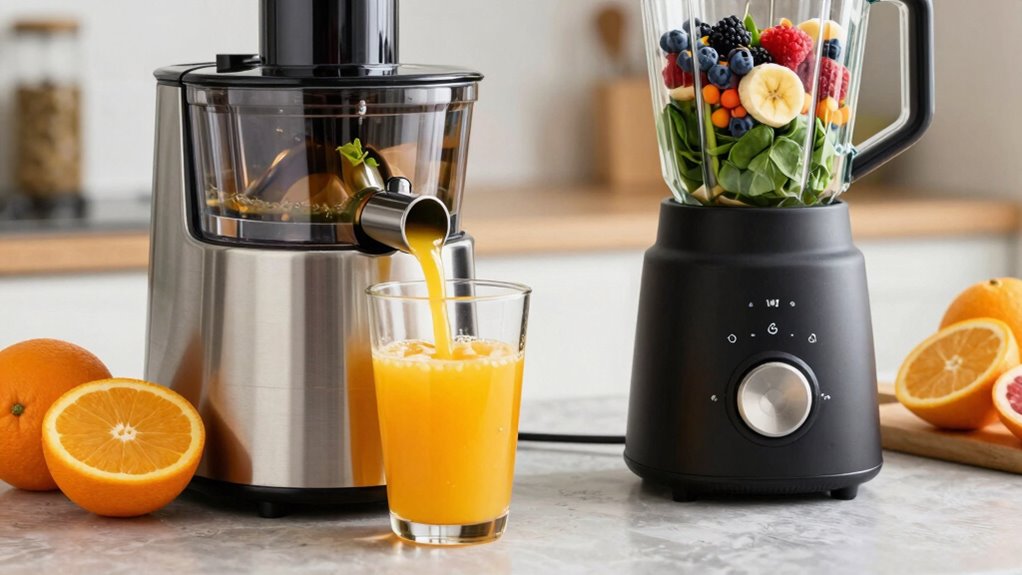
When deciding between a juicer and a blender, understanding their core differences can help you choose the right appliance for your needs. One of the most significant distinctions lies in how each handles produce and what you get in the final drink. Juicers extract juice by separating it from the pulp, resulting in a smooth, thin liquid that’s easy to drink quickly. This process typically reduces fiber retention because most of the pulp is discarded. As a result, juice from a juicer provides a quick hit of vitamins and minerals but lacks the dietary fiber that aids digestion and promotes fullness.
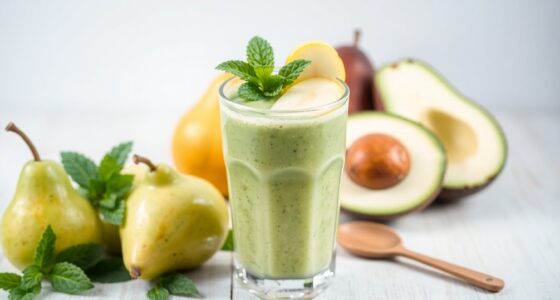
On the other hand, blenders keep everything intact, blending fruit, vegetables, and sometimes liquids into a thicker, more textured drink. This means you retain the pulp texture, which can vary from slightly gritty to smooth depending on the blending time and settings. Because the entire fruit or vegetable is pulverized, you preserve all the fiber content. This fiber is essential for maintaining healthy digestion, controlling blood sugar levels, and keeping you feeling full longer. When you opt for a smoothie or blended drink, you get more detailed nutrition, including the benefits of fiber, which can slow sugar absorption and stabilize energy levels.
From a nutritional perspective, this trade-off is significant. Juicers give you concentrated nutrients in a liquid form, but they strip away fiber, which is vital for healthy digestion and satiety. If you’re looking to maximize vitamin and mineral intake without concern for fiber, a juicer might be your choice. However, if you prioritize a more balanced nutritional profile and want to benefit from fiber’s health perks, blending is the better option. Keep in mind, the pulp texture you get from a blender can also influence how satisfying your drink feels; chunkier textures can make your drink more filling, while a smoother blend offers a more uniform consistency.
Additionally, considering fiber retention when choosing between these appliances can help tailor your intake to your dietary needs. Ultimately, your decision depends on your health goals and preferences. If you’re after quick nutrient absorption and don’t mind missing out on fiber, a juicer works well. But if you want a more wholesome, fiber-rich option that keeps the pulp texture in your drink, a blender offers more detailed nutrition. Understanding how each appliance handles fiber retention and pulp texture will help you pick the right tool for your lifestyle and dietary needs.

Elite Gourmet EJX600 Mini Compact Small Space-Saving Masticating Slow Juicer Cold Press Juice Extractor, Nutrient and Vitamin Dense, BPA-Free Tritan, Easy to Clean, 16 oz Juice Cup, Charcoal Grey
✅ MINI COMPACT JUICER (Single-Serve Size): This is a mini / compact juicer – smaller than standard countertop…
As an affiliate, we earn on qualifying purchases.
As an affiliate, we earn on qualifying purchases.
Frequently Asked Questions
Which Appliance Retains More Fiber in the Final Drink?
A blender retains more fiber in your final drink because it keeps the pulp content intact, blending everything together. Juicers, on the other hand, remove most of the pulp, which results in less fiber retention. If you’re aiming for higher fiber intake, using a blender is your best bet. It allows you to enjoy the full fiber benefits, supporting digestion and keeping you fuller longer.
Are There Significant Taste Differences Between Juice and Smoothie?
You’ll notice that juice offers a brighter, more concentrated flavor profile, often highlighting the natural sweetness of fruits. Smoothies, on the other hand, deliver a richer, creamier texture that can mask some flavors but enhances overall mouthfeel. Your taste preference depends on whether you favor a light, invigorating drink or a hearty, velvety one. Texture preferences play a big role in deciding which beverage suits your palate best.
How Do Cleaning Requirements Compare Between Juicers and Blenders?
Cleaning your juicer is like tending a delicate garden—requires frequent attention, especially after each use, making maintenance a bit more involved. You’ll find it needs more detailed cleaning due to its many parts, whereas a blender’s fewer components make cleanup quicker and easier. With regular cleaning frequency, you’ll keep both appliances in top shape, but a blender generally offers simpler maintenance, saving you time and effort in your busy routine.
Which Appliance Is Better for Making Baby Food?
You should choose a blender for making baby food because it preserves fiber and keeps flavor profiles intact. Blenders blend ingredients into smooth, pureed textures, making it easier for your little one to swallow and digest. Unlike juicers, they retain more nutrients and fiber, which are essential for healthy growth. Plus, cleaning is straightforward, so you can prepare baby food quickly and make certain it’s hygienic for your baby.
Do Juicers or Blenders Produce More Nutrient Loss Over Time?
Ironically, your blender wins the race when it comes to nutrient preservation, thanks to its gentle blending process. Juicers, with their high oxidation rates, actually lose more nutrients over time because they expose juice to air. So, if you’re after maximum nutrient retention, go for the blender. It’s like saving your nutrients in a vault, while juicers leave them vulnerable to rapid oxidation.
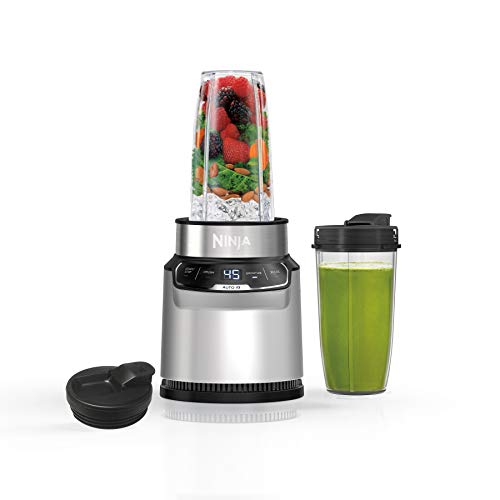
Ninja | Blender | Nutri Pro | Single Serve | For Smoothies, Salsa, Shakes and Frozen Drinks | Includes 2 Smoothie Cups & Lids | Crushes Ice, Fruit & Veggies |Silver | BN401
ULTIMATE POWER: 1000-peak-watt motor powers through the toughest ingredients and pulverizes ice to snow in seconds for creamy…
As an affiliate, we earn on qualifying purchases.
As an affiliate, we earn on qualifying purchases.
Conclusion
Ultimately, choosing between a juicer and a blender is like picking between two different journeys—each offers its own flavor and benefits. A juicer strips away the fiber, leaving you with pure, concentrated nutrients, while a blender keeps the whole fruit, providing a comforting, hearty blend. Think of it as the difference between a sharp, focused arrow and a warm, embracing hug. Trust your gut, and let your health goals steer your choice—your body will thank you.
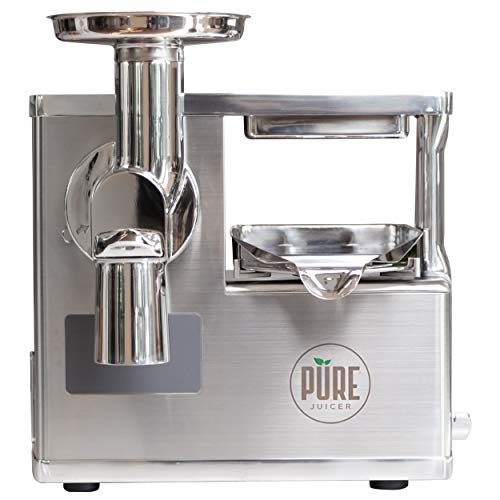
PURE Juicer Two-Stage Juicer – Premium Cold Press Juicing Machine – Solid Stainless Grinder and Hydraulic Press For Fruits, Vegetables, Nuts
PURE JUICER – Our stainless steel juicer uses a unique two-stage cold press process. It quickly grinds the…
As an affiliate, we earn on qualifying purchases.
As an affiliate, we earn on qualifying purchases.
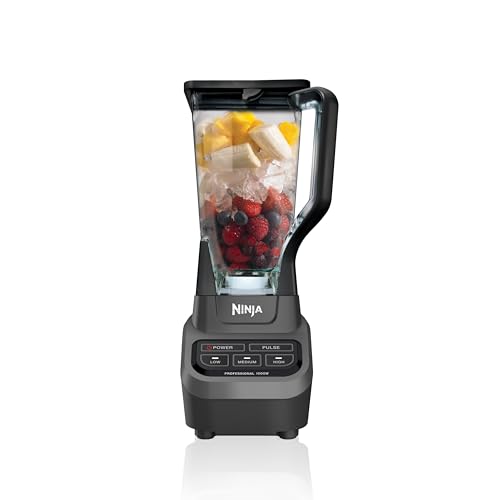
Ninja Professional Blender, Smoothie Blender, Drink Mixer, Grinder, Ice Crusher, Frozen Fruit Blending | Professional 1000 W Power, Total Crushing ™ Technology, XL 72-oz. Pitcher Black, Grey, BL610
PROFESSIONAL POWER: 1000 watts of professional power can crush ice and breakdown any tough ingredient.Power source : Corded…
As an affiliate, we earn on qualifying purchases.
As an affiliate, we earn on qualifying purchases.