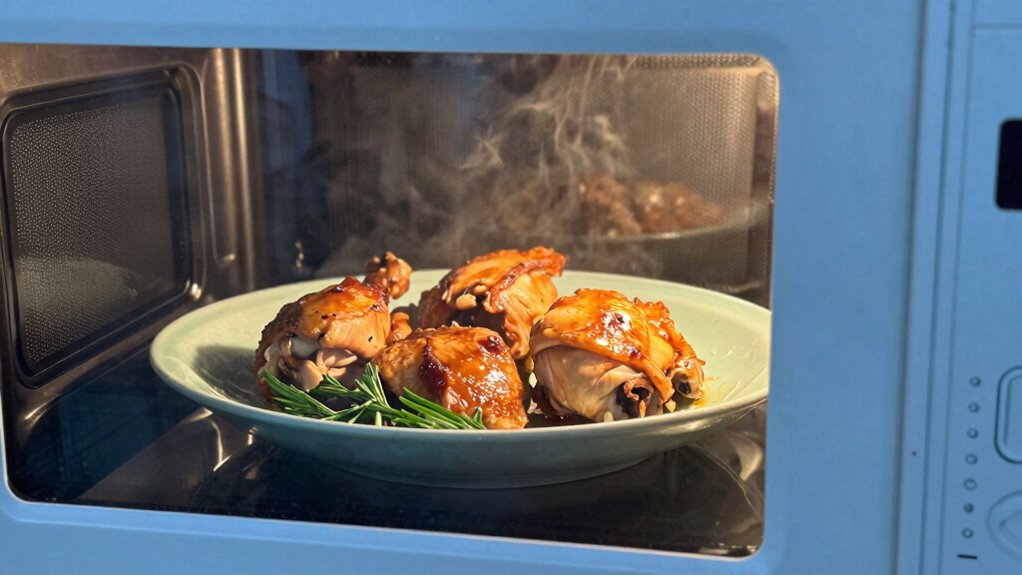

To keep your chicken juicy when reheating in the microwave, use a microwave-safe dish and cover it to trap moisture while leaving a vent for steam. Reheat in short intervals, stirring or rearranging the chicken halfway to promote even heating. Make sure the internal temperature reaches 165°F, and rest the chicken for a minute before serving. Following these tips helps prevent dryness and rubberiness—stick around to learn more essential reheating techniques.

Get kitchen staples and gadgets delivered free with Prime
- Fast, free delivery on millions of items
- Prime Video, Amazon Music and more included
- Member-only deals all year
Key Takeaways
- Cover chicken with a microwave-safe lid or plastic wrap to trap moisture and prevent drying out.
- Reheat in short intervals (30-60 seconds), stirring or rearranging for even heating.
- Slice large pieces into smaller portions to promote uniform warmth and retain juiciness.
- Ensure chicken reaches an internal temperature of 165°F (74°C) to prevent dryness and ensure safety.
- Rest the chicken for 1-2 minutes after reheating to allow residual heat to distribute evenly.

Reheating food in the microwave might seem straightforward, but following some simple rules guarantees your meals stay safe and tasty. When it comes to reheating chicken, these microwave reheating rules and food safety tips are especially important to guarantee your dish remains juicy and flavorful instead of rubbery or dry. First, always make sure the chicken is heated evenly. Use a microwave-safe dish and consider covering it with a microwave-safe lid or microwave-safe plastic wrap, leaving a small vent for steam to escape. This helps trap moisture, preventing the chicken from drying out. Stir or rearrange the chicken halfway through reheating if possible, so heat distributes evenly across all portions. Uneven heating can leave cold spots where bacteria might survive, so ensure the chicken reaches an internal temperature of 165°F (74°C). Use a food thermometer to verify this—it’s the best way to guarantee safety and quality. Proper reheating techniques can make a significant difference in maintaining the texture and flavor of your leftovers.
Following proper microwave reheating rules also means paying attention to the duration. Reheat in short intervals, typically 30 to 60 seconds, and check the temperature regularly. Overheating can make chicken rubbery, so it’s crucial to stop once it hits the safe temperature. Rest the chicken for a minute or two after reheating; this allows residual heat to finish the job and helps maintain moisture. If you’re reheating a large portion, consider slicing it into smaller pieces before microwaving. Smaller pieces heat more evenly and reduce the risk of cold spots. Keep in mind that leftovers should be stored properly in airtight containers and refrigerated within two hours of cooking, as per food safety guidelines, to prevent bacterial growth. Proper storage and handling are essential to prevent foodborne illnesses and ensure the best quality of your leftovers.
Another useful tip is to avoid overcrowding the microwave. Spread the chicken out on the plate or dish to ensure even heat distribution. If you’re reheating multiple items, do so separately or arrange them to avoid stacking, which can hinder proper reheating. Remember, microwave reheating rules aren’t just about convenience—they’re about keeping your food safe to eat. Always discard leftovers that have been left out too long or show signs of spoilage, like a sour smell or slimy texture. By following these food safety tips and microwave reheating rules, you’ll preserve the juiciness of your chicken and avoid the common pitfalls that lead to tough, rubbery leftovers. Proper reheating ensures your meal remains delicious and safe with every bite.
As an affiliate, we earn on qualifying purchases.
Frequently Asked Questions
Can I Reheat Chicken Multiple Times Safely?
Yes, you can reheat chicken multiple times safely if you follow food safety and reheating guidelines. Each time you reheat, verify the chicken reaches an internal temperature of 165°F to kill bacteria. Store leftovers properly in airtight containers and reheat only what you plan to eat. Avoid reheating multiple times to prevent potential foodborne illnesses and maintain the chicken’s quality and juiciness.
What Is the Best Container for Reheating Chicken?
You should use microwave-safe containers, like glass or BPA-free plastic, for reheating chicken. These containers guarantee microwave safety and help maintain food quality. Avoid metal or non-microwave-safe plastics, which can cause hazards. Proper food storage techniques, like airtight containers, prevent contamination and keep your chicken fresh. Using the right container helps reheat evenly, preserves juiciness, and keeps your food safe to eat.
How Do I Prevent Chicken From Drying Out?
Did you know covering your chicken with a damp paper towel can actually boost moisture retention? To prevent it from drying out, use gentle reheating techniques like low power settings and short intervals. Adding a splash of broth or water helps keep the meat moist, while stirring or flipping halfway distributes heat evenly. These simple steps make certain your reheated chicken stays juicy and delicious every time.
Is It Safe to Reheat Chicken in the Microwave Overnight?
It’s not safe to reheat chicken in the microwave overnight, as bacteria can grow and cause foodborne illnesses. For better food safety and texture preservation, always refrigerate leftovers within two hours and reheat only the portion you plan to eat. When reheating, do so evenly and thoroughly to ensure safety, and avoid leaving chicken out too long to keep it juicy and prevent rubbery texture.
Can I Reheat Chicken From Frozen Directly?
Yes, you can reheat frozen chicken directly, but reheating safety is essential. Make certain to thaw it safely in the refrigerator or use the defrost setting on your microwave before reheating thoroughly. This ensures even heating and prevents bacteria growth. If you reheat frozen chicken straight from the freezer, expect longer cooking times and check that the internal temperature reaches 165°F to keep it safe and juicy.
Conclusion
So, now you know the secret to reheating chicken without turning it into rubber. Just follow these simple rules, and you’ll keep your leftovers juicy and delicious. Remember, patience is a virtue—don’t rush the process, or you might end up with a dried-out mess. With a little care, reheating becomes a breeze, and you’ll always enjoy your chicken as if it just came off the grill. It’s worth the effort to keep things tasty!
Halloween Picks
halloween
As an affiliate, we earn on qualifying purchases.