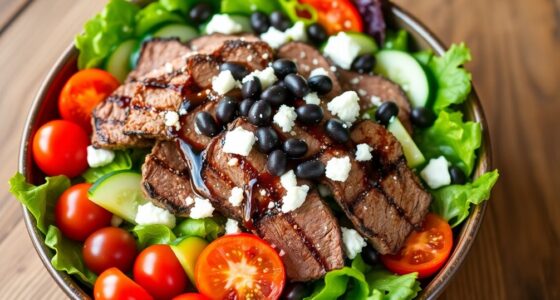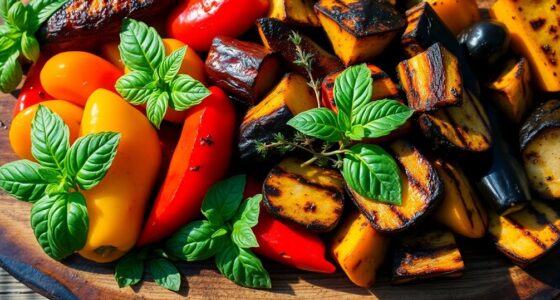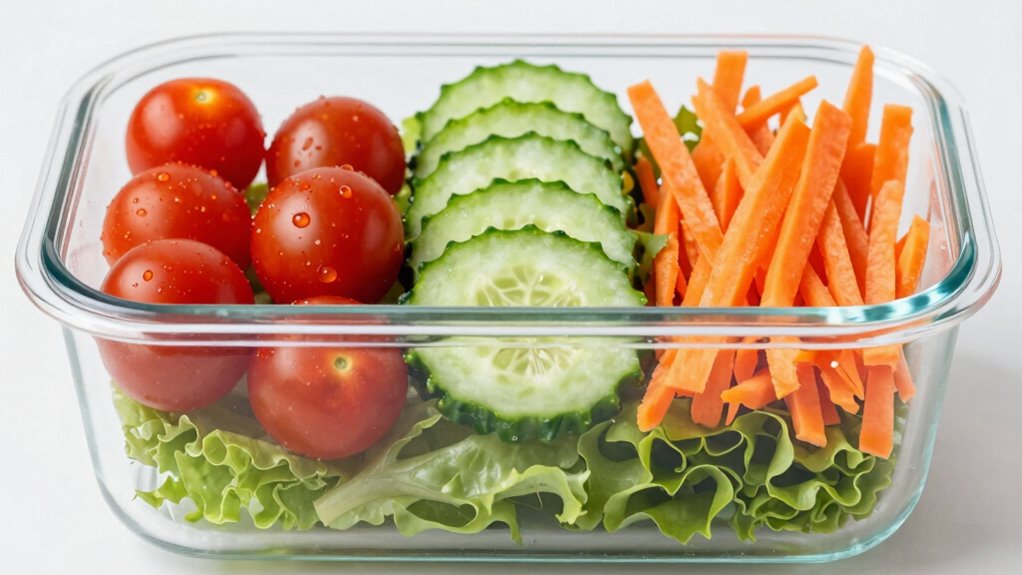

To keep your meal-prep salads fresh and crisp, always layer ingredients strategically. Start with sturdy items like chopped vegetables and cooked proteins at the bottom, then add lighter, moisture-sensitive greens and delicate toppings on top. Keep dressing separate until just before eating, and store everything in airtight containers. Proper layering prevents sogginess and extends shelf life. If you want tips on perfecting this process, continue exploring the ingredient order secret for long-lasting salads.
Listen free for 30 days with Audible
Thousands of audiobooks and originals — cancel anytime.
As an affiliate, we earn on qualifying purchases.
Key Takeaways
- Layer sturdy vegetables and proteins at the bottom to create a solid base that prevents moisture transfer.
- Keep dressing separate until just before eating to avoid greens wilting.
- Place dry ingredients like nuts or cheese on top of wetter layers for added crunch and flavor.
- Use airtight, stackable containers to maintain freshness and prevent sogginess.
- Assemble salads with hearty ingredients first, then add delicate greens on top for longevity.
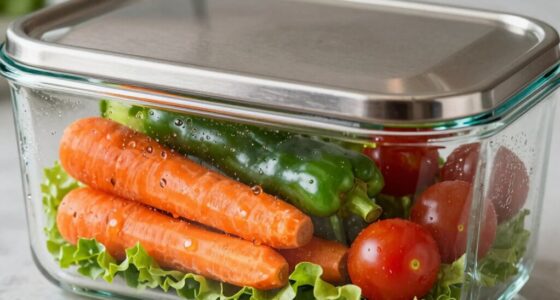
Meal-prep salads are a convenient way to enjoy fresh, healthy meals throughout the week without daily effort. The key to making them last without wilting lies in understanding the proper ingredient order and how to use storage containers effectively. When assembling your salads, start with the sturdier ingredients at the bottom of your storage containers. Think of items like hearty vegetables—carrots, cucumbers, bell peppers—and proteins such as cooked chicken, chickpeas, or boiled eggs. Placing these first creates a stable base that shields more delicate ingredients from moisture and crushing during storage and transport.
Start with sturdy ingredients like vegetables and proteins at the bottom to keep salads fresh and intact.
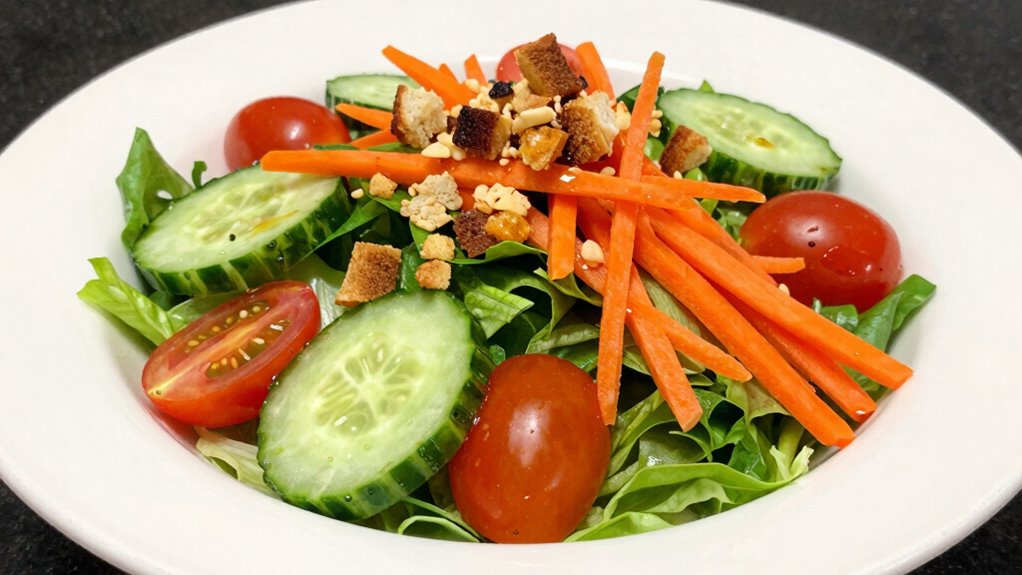
Next, layer your flavor combinations carefully. Use a variety of textures and tastes to keep each salad interesting. For example, add crunchy nuts or seeds, tangy cheeses, or fresh herbs on top of the sturdier layers. This approach not only enhances flavor but also prevents ingredients like greens or tomatoes from becoming soggy. When you’re ready to eat, you can simply shake or toss the contents to distribute the flavors evenly, avoiding the sogginess that often comes from pre-mixed salads.
Another essential tip involves the placement of dressing and moist ingredients. To prevent wilting, keep dressing separate until you’re ready to eat. Many storage containers come with compartments or small jars that fit inside or alongside the main compartment. Alternatively, you can store dressing in a small, leak-proof container and add it just before serving. This keeps the greens crisp and vibrant. When layering, place dry ingredients above the dressing compartment, so the dressing doesn’t seep into the greens prematurely. Understanding ingredient layering is crucial for maintaining freshness and texture.
Choosing the right storage containers is vital. Opt for airtight, BPA-free containers that seal tightly, preserving freshness and preventing leaks. Clear containers also help you quickly identify what’s inside, saving time during busy mornings. If you’re packing multiple salads for the week, consider stacking containers to save space and keep ingredients separate until you’re ready to eat. This way, each component stays fresh, and you avoid the sogginess caused by moisture transfer.
airtight salad storage containers
As an affiliate, we earn on qualifying purchases.
As an affiliate, we earn on qualifying purchases.
Frequently Asked Questions
Can I Customize the Ingredient Order for Different Salad Types?
Yes, you can customize the ingredient order for different salad types. Focus on ingredient layering to guarantee freshness and prevent wilting, placing hearty items like grains or beans at the bottom and delicate greens on top. Salad customization allows you to adapt the order based on your ingredients, keeping everything crisp and delicious. Experiment with different arrangements to find what works best for each salad, making your meal prep more flexible and enjoyable.
How Long Can Prepped Salads Stay Fresh Without Wilting?
You can keep prepped salads fresh for up to 3-4 days if you focus on proper ingredient layering and salad dressing placement. Store the dressing separately to prevent wilting, and layer sturdy ingredients at the bottom with delicate ones on top. Keep everything in an airtight container in the fridge, and you’ll enjoy crisp salads without wilting, as long as you follow these simple tips.
Are There Specific Storage Containers Recommended for These Salads?
Think like a pioneer with your storage—opt for airtight containers or glass storage options. These containers lock in freshness, preventing air from spoiling your salad. Glass storage is especially great because it doesn’t stain or retain odors, keeping your salads tasting fresh longer. Always choose containers that fit your salad size without overcrowding, and make sure they seal tightly to keep ingredients crisp and vibrant for days.
Does the Ingredient Order Affect Nutritional Value?
Yes, ingredient layering affects nutrient preservation. By placing denser, nutrient-rich ingredients at the bottom and lighter ones on top, you help prevent nutrient loss and wilting. This method guarantees the salad stays fresh and retains its nutritional value longer. Proper ingredient layering minimizes exposure to air and moisture, which can degrade vitamins. So, pay attention to your order to maximize both freshness and nutrition in your meal-prep salads.
Can This Method Be Used for Warm or Cooked Salads?
Ever wonder if this method works for warm or cooked salads? Absolutely, but you need to think about temperature considerations carefully. You should add warm ingredients last to prevent wilting and preserve flavor. Use separate containers for hot items and let them cool slightly before combining. This way, you keep your salad fresh and flavorful without sacrificing texture or nutritional value. Just remember, gentle layering is key to a perfect warm or cooked salad.
Conclusion
Now that you know the ingredient order secret, your salads will stay fresh and crisp all week. Just layer wisely, keep the dressing separate until mealtime, and enjoy vibrant, wilt-free meals whenever you want. Isn’t it satisfying to master a simple trick that saves time and keeps your salads perfect? Give it a try, and you’ll wonder how you ever made salads any other way. Fresh, flavorful, and fuss-free—what’s not to love?
NFL season / tailgating Picks
team gear
As an affiliate, we earn on qualifying purchases.