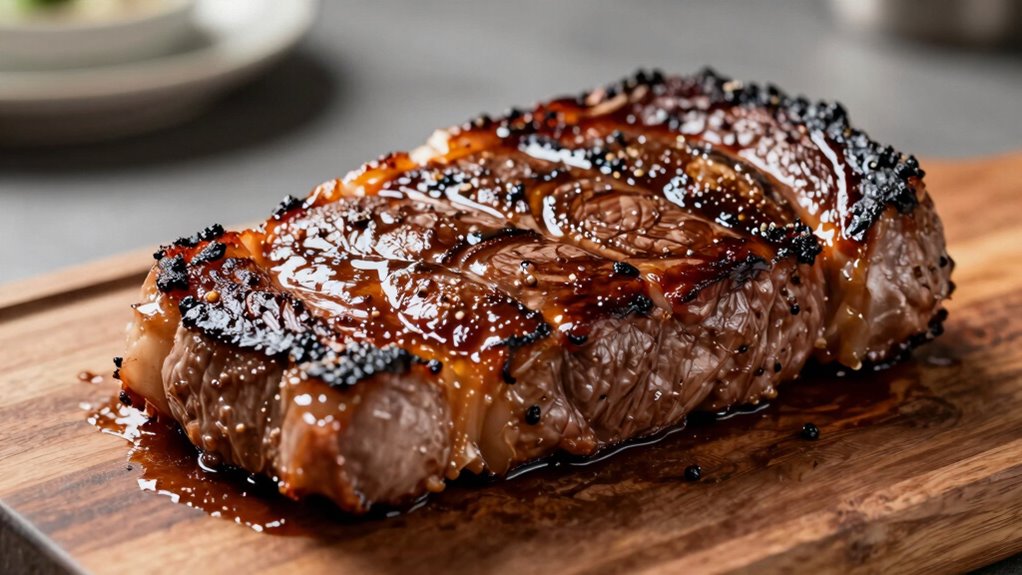

To finish sous vide steak, the best sear methods combine high heat and quick action. A hot cast iron skillet or a blowtorch gives you control and a perfect crust without overcooking the interior. Searing each side for 1–2 minutes until golden-brown is ideal. Avoid overcrowding the pan to maintain temperature. If you want to master precise techniques and tips for ideal results, continue exploring how to perfect your sear process.

Get kitchen staples and gadgets delivered free with Prime
- Fast, free delivery on millions of items
- Prime Video, Amazon Music and more included
- Member-only deals all year
Key Takeaways
- Use a cast iron skillet heated between 400–450°F for optimal Maillard reaction during searing.
- Pat the sous vide cooked steak dry to ensure proper browning and crust development.
- Sear each side for 1–2 minutes, flipping frequently for an even, flavorful crust.
- Incorporate butter, garlic, or herbs during searing to enhance flavor and richness.
- For precise control, finish with a culinary torch or sear in a hot skillet before serving.
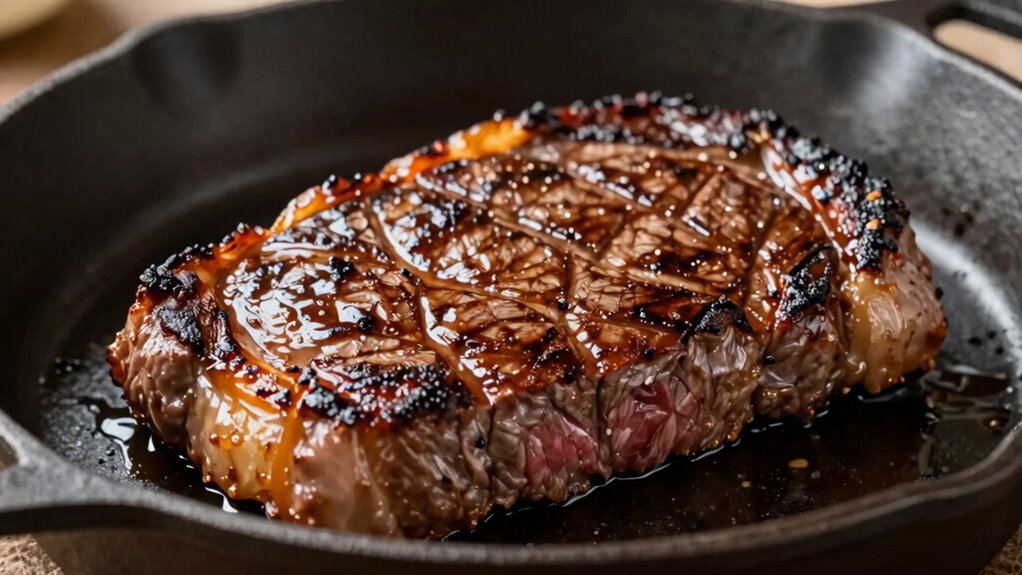
Finishing a steak with the sous vide technique guarantees perfect doneness and tenderness every time. But the final touch—searing—really brings everything together, giving your steak that irresistible crust and flavor. When it comes to searing, your success hinges on precise temperature regulation and choosing the right searing techniques. You want to avoid overcooking the exterior while preserving the perfect interior doneness you achieved during the sous vide bath. To do this, you need to manage your heat carefully and employ effective searing methods.
Temperature control is key. You should aim for a high, consistent heat to quickly develop a crust without lingering too long on the surface. Using a cast iron skillet is popular because it retains heat well and offers even searing. Before searing, make sure your pan is hot—around 400 to 450°F (204 to 232°C)—so you get a rapid Maillard reaction, creating that caramelized, flavorful crust. If your pan isn’t hot enough, you’ll end up with a pale, underdeveloped crust; if it’s too hot, you risk burning the surface before the interior reaches the desired char. Keep the steak dry and season it well beforehand, as moisture can hinder browning. Proper temperature regulation during searing is essential for achieving the ideal crust without overcooking.
When it comes to searing techniques, a quick, focused approach works best. Sear each side for 1-2 minutes, flipping frequently to ensure an even crust. Using tongs helps you handle the steak without piercing the meat, which could let juices escape. For added flavor, some chefs like to add butter, garlic, or herbs during the searing process, basting the steak for extra richness. Another effective method is a torch sear—using a culinary torch can produce an intense, localized sear in a matter of seconds, allowing you to control the exact spot you want to caramelize without risking overcooking the interior.
You also have the option of finishing your steak in an oven after initial searing if you prefer a gentler, more controlled heat. This can help develop a crust evenly across the surface. However, for the classic, quick sear, maintaining a hot skillet and using proper searing techniques ensures you get that perfect balance of crust and tenderness. Remember, the goal is to create a beautiful, flavorful exterior in a short amount of time while keeping the interior exactly as you like it—thanks to careful temperature regulation and skilled searing methods.
cast iron skillet for searing steak
As an affiliate, we earn on qualifying purchases.
As an affiliate, we earn on qualifying purchases.
Frequently Asked Questions
Can I Sous Vide Multiple Steaks at Once?
Yes, you can sous vide multiple steaks at once, but you need to guarantee they fit comfortably in your water bath without overcrowding. This allows even cooking and consistent results. Keep in mind the cooking times may vary slightly depending on thickness. After cooking, store the steaks properly with storage tips in mind, and always sear them just before serving for the best flavor and texture.
How Do I Prevent Over-Searing After Sous Vide?
Prevent over-searing by practicing precise searing temperature control and avoiding over searing techniques. Keep your pan hot but not too hot, and sear for just a brief, beautiful burst of heat—about 1 to 2 minutes per side. Watch your steak carefully, flipping when a crust forms. This way, you’ll prevent over-searing, preserve tenderness, and achieve that perfect, flavorful finish without burning or drying out your steak.
What’s the Ideal Searing Temperature for Different Steak Cuts?
You should aim for a searing temperature around 300-400°F (150-200°C) for most steak cuts. Thinner cuts like filet mignon need lower heat to prevent overcooking, while thicker cuts like ribeye can handle higher temps for better flavor development. Precise temperature control guarantees you get a perfect sear without burning the surface. Keep a close eye on the heat, and use a thin layer of oil to enhance flavor and achieve that ideal crust.
How Long Should I Rest Steak After Searing?
You should rest your steak for about 5 to 10 minutes after searing. This resting time allows the juices to redistribute, ensuring a juicy steak, and minimizes the impact of carryover cooking. During this period, the internal temperature may rise slightly, so keep that in mind. Cover it loosely with foil if you’d like, but avoid wrapping tightly, which can cause excess moisture.
Can I Reuse the Searing Oil or Pan?
You can reuse searing oil if it’s still clean and hasn’t smoked excessively. Keep an eye on the oil’s color and smell—if it’s dark or burnt, it’s best to discard it. When reusing, reheat the oil gently to avoid smoking, and always do a quick pan cleanup afterward to remove any food residue. This guarantees your next sear stays flavorful and your pan stays in good shape.
Conclusion
Ultimately, mastering the perfect sear elevates your steak from good to unforgettable. By gently coaxing flavors and textures into harmony, you invite a symphony of sensations with each bite. Remember, the true art lies in the subtle dance between heat and patience, where even the most modest technique can reveal extraordinary results. Embrace the journey, and your craft will quietly whisper tales of culinary finesse, leaving everyone enchanted by your refined touch.
Columbus Day / Indigenous Peoples' Day Picks
long weekend sales
As an affiliate, we earn on qualifying purchases.