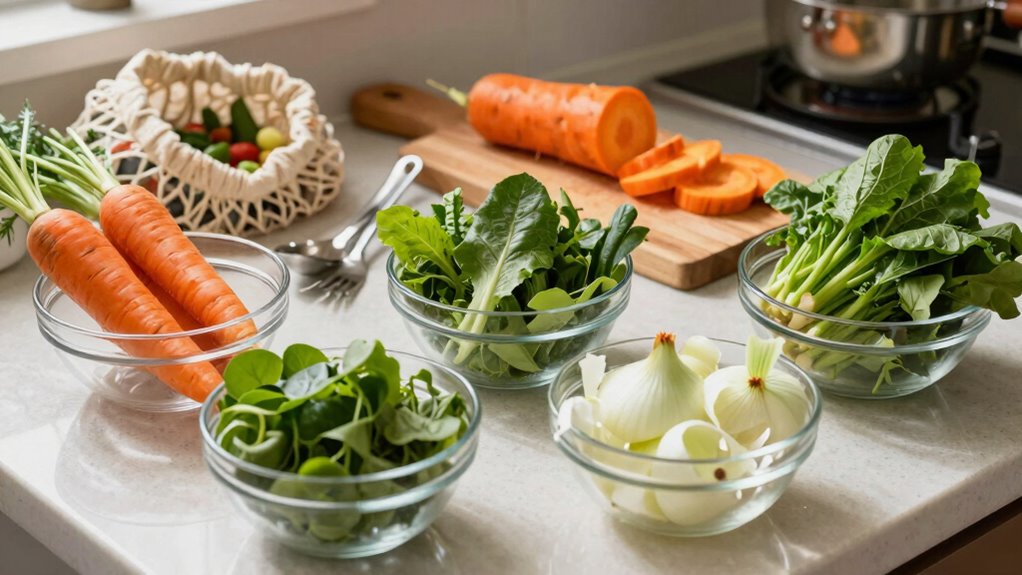

To master zero-waste dinner prep, focus on root-to-stem cooking by using vegetable tops, peels, and stems in your meals—think making pesto from carrot greens or sautéing beet greens. Wrap bread in cloth and store herbs in water to keep them fresh longer. Freeze leftovers and creatively reuse food scraps in stocks or compost. These simple steps reduce waste, save money, and boost sustainability. Keep exploring to discover more practical tips that will transform your dinner plans.
Key Takeaways
- Use vegetable peels, stems, and tops in stocks, pestos, or sautés to maximize ingredient utilization.
- Incorporate edible plant parts like beet greens or carrot tops into salads and side dishes.
- Preserve herbs and greens by storing in water or freezing to extend their usage.
- Compost kitchen scraps responsibly to close the food cycle and enrich garden soil.
- Plan meals around root-to-stem cooking to reduce waste and create creative, sustainable dishes.
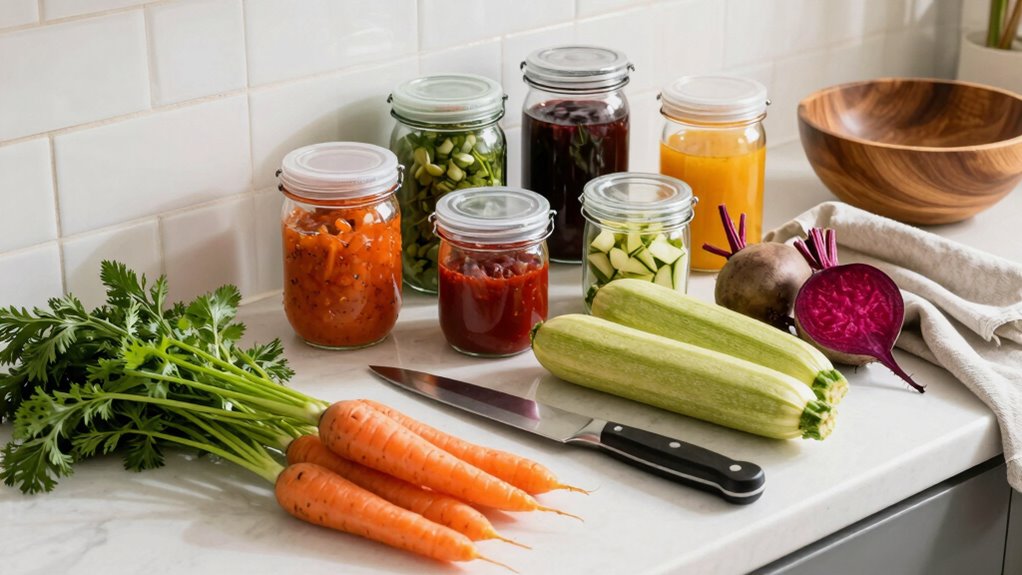
Preparing dinner with a zero-waste mindset is a simple yet impactful way to reduce your environmental footprint. When you focus on minimizing waste, you’re not just cutting down on packaging—you’re also making smarter choices about how you handle your food. One key aspect is food preservation. Instead of tossing leftovers or letting produce spoil, find ways to extend their life. For example, store herbs in water like flowers, wrap bread in a cloth, or freeze excess portions for later. Preserving food not only prevents waste but also guarantees you always have ingredients ready for future meals, saving you trips to the store and reducing packaging waste.
Another vital element is composting techniques. Composting allows you to turn your kitchen scraps—like vegetable peels, coffee grounds, and eggshells—into nutrient-rich soil for your garden. This reduces the amount of waste that would otherwise end up in landfills, where it contributes to methane emissions. To make composting easy, set up a designated bin in your kitchen, lined with newspaper or compostable bags. Regularly transfer the scraps to an outdoor compost pile or bin. If space is limited, consider worm composting (vermicomposting), which is compact and odor-free, making it perfect for apartment dwellers. Using composting techniques effectively closes the loop in your food cycle, giving scraps a second life and reducing the need for synthetic fertilizers when you garden.
In addition to food preservation and composting, you can also incorporate root-to-stem ideas into your dinner prep. Instead of discarding vegetable tops, peels, or stems, find ways to include them in your meals. For example, use carrot tops to make pesto or stock, and sauté beet greens as a side dish. This approach minimizes waste and maximizes the nutritional value of your ingredients. It also encourages creativity in the kitchen, helping you discover new flavors and techniques. Incorporating edible plant parts into your cooking not only reduces waste but also introduces you to a variety of flavors and nutritional benefits.

Stainless Steel Storage Skin Peeler with Peel Collector, Easy Peeling, Lightweight and Portable, Green
- Built-in Peel Collector: Keeps countertops clean and mess-free
- Sharp Stainless Steel Blade: Effortless, clean peeling of fruits and vegetables
- Easy Split Design: Quick disposal of peels with separate handle and container
As an affiliate, we earn on qualifying purchases.
As an affiliate, we earn on qualifying purchases.
Frequently Asked Questions
How Can I Start Reducing Food Waste in My Daily Cooking?
Start reducing food waste by practicing smart meal planning; only buy what you need and use leftovers creatively. Incorporate composting tips to dispose of vegetable scraps properly, turning waste into nutrient-rich soil. Be mindful of expiration dates and store produce correctly to extend freshness. Use root-to-stem cooking techniques, like making broth from vegetable trimmings or pickling peelings, to minimize waste and make the most of every ingredient.
What Are Some Common Root-To-Stem Recipes for Beginners?
You can start with simple root-to-stem recipes like making vegetable stems into stir-fries, turning fruit peelings into flavored water, and using carrot tops for pesto. These ideas reduce waste and boost flavor, making cooking more sustainable. By embracing vegetable stems and fruit peelings, you’ll easily incorporate zero-waste habits into your daily routine. These beginner-friendly recipes help you save money, minimize waste, and enjoy delicious, creative meals every day.
How Do I Store Leftovers to Minimize Waste?
You should store leftovers in airtight containers to keep food fresh longer and reduce waste. Label them with dates so you use the oldest first, helping minimize spoilage. Keep your fridge at the right temperature and organize food for easy access, which encourages waste reduction. Wrap leftovers properly if refrigerating or freezing, and plan meals around what you have to prevent unnecessary disposal. This approach guarantees minimal waste and maximizes food use.
Are There Specific Tools That Help With Zero-Waste Dinner Prep?
Yes, eco-friendly kitchen tools and composting accessories are essential for zero-waste dinner prep. You can use bamboo utensils, reusable silicone bags, and beeswax wraps to reduce waste. Composting accessories like compost bins or worm farms help you repurpose vegetable scraps and food waste responsibly. These tools make your process easier, more sustainable, and guarantee you’re actively minimizing waste while preparing delicious, root-to-stem meals.
How Can I Involve My Family in Sustainable Cooking Habits?
Getting your family involved is like planting a garden—you nurture growth through shared effort. To encourage sustainable habits, invite them to plan meals, shop with reusable bags, and cook together using root-to-stem ideas. Make it fun by setting challenges or sharing the environmental benefits. When everyone participates, sustainable cooking becomes a family adventure, fostering teamwork and a deeper appreciation for reducing waste together.
Conclusion
By embracing root-to-stem cooking, you can reduce food waste by up to 50%, making a real difference for the planet. Not only will you save money and enjoy creative meals, but you’ll also contribute to a more sustainable future. So next time you prep dinner, remember that every peel and stem has potential—turning scraps into delicious, waste-free dishes is easier than you think. Start small, stay consistent, and watch your impact grow.