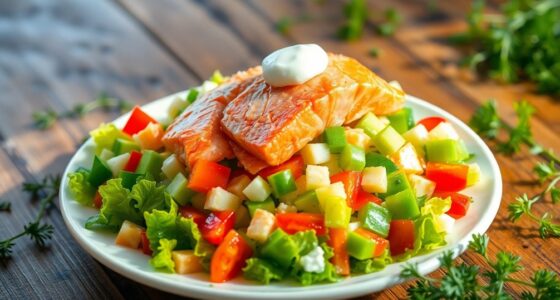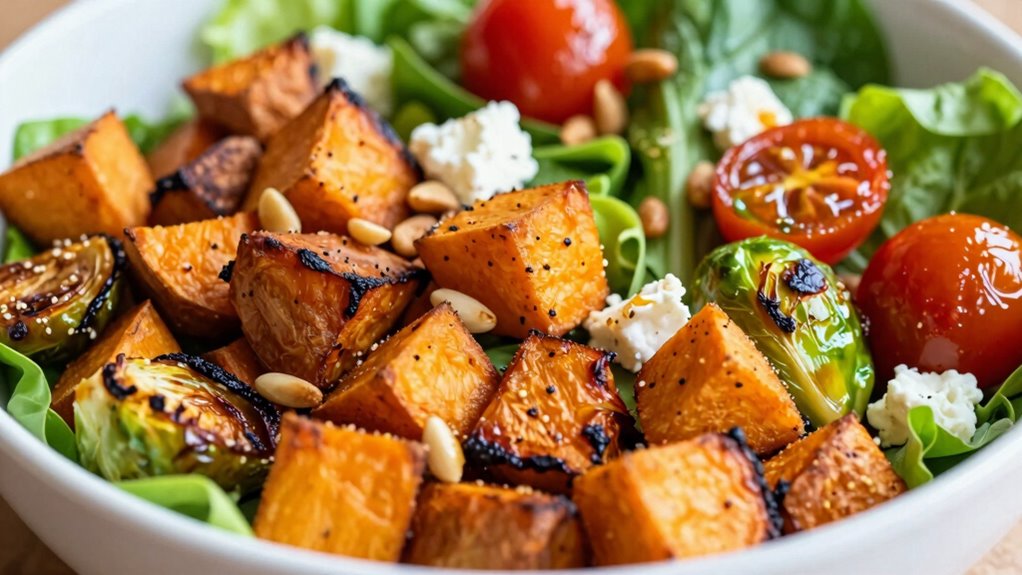

Adding roasted components to your salads boosts flavor, texture, and seasonal appeal. Roasting brings out rich, complex flavors and natural sweetness, transforming simple ingredients into standout elements. It also creates appealing contrasts—crunchy nuts, tender vegetables—that keep each bite interesting. Plus, it’s easy to do with minimal effort. By incorporating more roasted ingredients, you’ll elevate your salads to new heights. Stay curious—there’s more to discover about making salads even more delicious.

Get kitchen staples and gadgets delivered free with Prime
- Fast, free delivery on millions of items
- Prime Video, Amazon Music and more included
- Member-only deals all year
Key Takeaways
- Roasted ingredients add depth, richness, and complex flavors, elevating the overall salad experience.
- They provide appealing textural contrasts, making salads more engaging and satisfying.
- Incorporating seasonal, roasted produce enhances freshness and supports sustainable eating.
- Roasting is simple, amplifying salad appeal without requiring advanced techniques.
- Including roasted components introduces variety, sophistication, and seasonal relevance to salads.
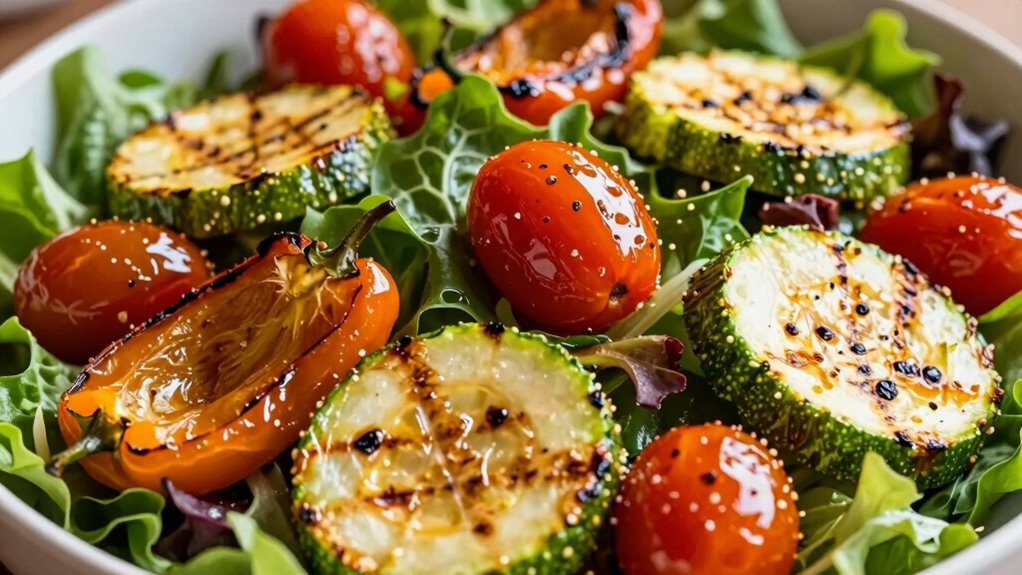
Roasted components are often overlooked in salads, but they deserve a prominent place because they add depth, richness, and complex flavors that raw ingredients can’t match. When you incorporate roasted vegetables, nuts, or fruits, you bring a new dimension to your salad that elevates it beyond simple freshness. The warmth and caramelization from roasting unlock seasonal flavors, intensifying their natural sweetness or earthiness, making each bite more memorable. For example, roasted butternut squash brings out its inherent sweetness, perfectly complementing bitter greens or tangy dressings. This seasonal flavor shift adds a layer of sophistication and relevance to your dish, aligning with the time of year and available ingredients.
Beyond flavor, roasted components introduce a compelling textural contrast that keeps your palate engaged. The slight crunch of roasted nuts or seeds contrasts beautifully with tender greens, while roasted root vegetables offer a hearty, velvety softness that balances crisp vegetables or fresh herbs. This interplay of textures makes each forkful more interesting, preventing your salad from feeling monotonous or one-dimensional. You might find that the crispy edges of roasted Brussels sprouts add a satisfying bite, or that roasted beets provide a tender, juicy bite that contrasts well with the crispness of radishes. These textural elements don’t just add variety—they create a more satisfying eating experience overall. Incorporating seasonal produce into your roasting routine can also help you make the most of ingredients at their peak, reducing waste and supporting sustainable eating habits. Additionally, understanding flavor development through roasting can inspire creativity in your cooking and elevate everyday dishes.
Roasting is a simple process that amplifies the overall appeal of your salads without requiring complicated techniques. With just a bit of oil, salt, and your preferred seasonings, you unlock a world of flavor and texture that raw ingredients simply can’t deliver on their own. By integrating more roasted components into your salads, you’re not just adding variety—you’re elevating the entire experience. It’s a small change that makes a big difference, delivering seasonal flavor and textural contrast in every bite. Recognizing how culinary processes like roasting influence ingredient transformation can help you craft more flavorful and satisfying meals.
roasted vegetable salad toppings
As an affiliate, we earn on qualifying purchases.
As an affiliate, we earn on qualifying purchases.
Frequently Asked Questions
How Do Roasted Components Enhance Salad Flavors?
Roasted components enhance salad flavors by adding depth through rich, caramelized notes that complement fresh ingredients. They create intriguing flavor pairing opportunities, balancing acidity with sweetness or smokiness. Plus, their texture contrast—crisp on the outside and tender inside—makes each bite more exciting. By incorporating roasted elements, you elevate your salads, making them more satisfying and complex, encouraging you to explore new flavor combinations.
Are There Specific Vegetables Best Suited for Roasting in Salads?
You’ll find that vegetables like bell peppers, zucchini, cherry tomatoes, and carrots are perfect for roasting in salads. To make them shine, use seasoning tips like olive oil, garlic, and herbs, and master roasting techniques like high heat for caramelization. These vegetables develop rich flavors and textures that elevate your salad, making it more satisfying and flavorful. Don’t hesitate to experiment with different seasonings and roasting times for the best results.
How Can I Prevent Roasted Ingredients From Becoming Soggy in Salads?
To prevent roasted ingredients from becoming soggy in salads, let them cool completely before adding dressing, ensuring dressing compatibility with roasted flavors. Use storage techniques like keeping roasted components separate until serving, and store them in airtight containers. When ready to serve, toss the ingredients gently with dressing, avoiding excess moisture. This approach maintains crispness, enhances flavor, and keeps your salad fresh and appealing.
What Are Some Creative Roasted Components to Add Variety?
You should try roasted beetroot with goat cheese, or roasted sweet potatoes with sage for unique flavor pairings. Adding roasted chickpeas or walnuts introduces delightful textural contrasts, making your salad more interesting. Experimenting with roasted Brussels sprouts or cauliflower can also bring a smoky depth. These creative roasted components elevate your salads, offering unexpected flavors and satisfying textures that keep every bite exciting.
Do Roasted Ingredients Increase the Salad’s Nutritional Value?
Roasted ingredients can boost your salad’s nutritional benefits by increasing antioxidant levels, making it healthier overall. The roasting process enhances the bioavailability of certain nutrients, allowing your body to absorb more vitamins and minerals. Plus, roasted components add depth and flavor, encouraging you to eat more greens and vegetables. So, including roasted ingredients in your salads not only improves taste but also elevates their nutritional profile, supporting your health goals.
Conclusion
So next time you reach for salad ingredients, consider the warmth of roasted components—warmth that awakens flavors, richness that adds depth, and texture that invites curiosity. Embrace the contrast, the balance, the harmony they bring. Let roasted items become your salad’s heart, its anchor, its surprise. Because when you include more roasted components, you don’t just make salads—you create vibrant, layered experiences that delight with every bite.
Halloween Picks
halloween
As an affiliate, we earn on qualifying purchases.