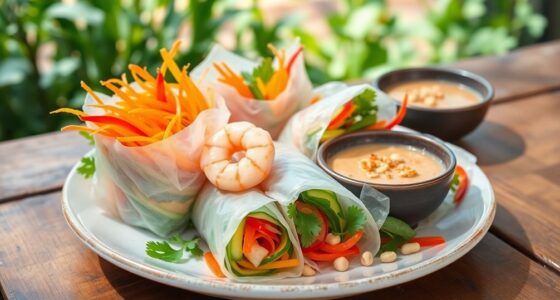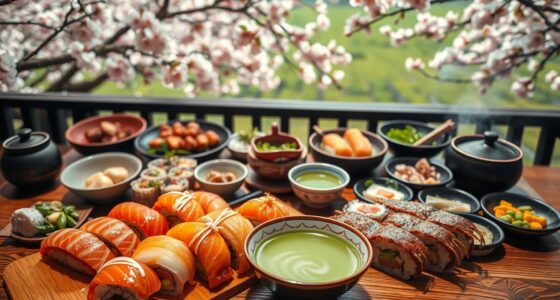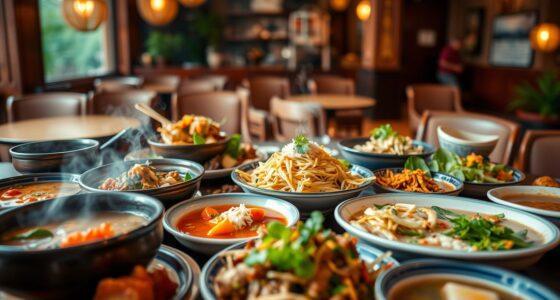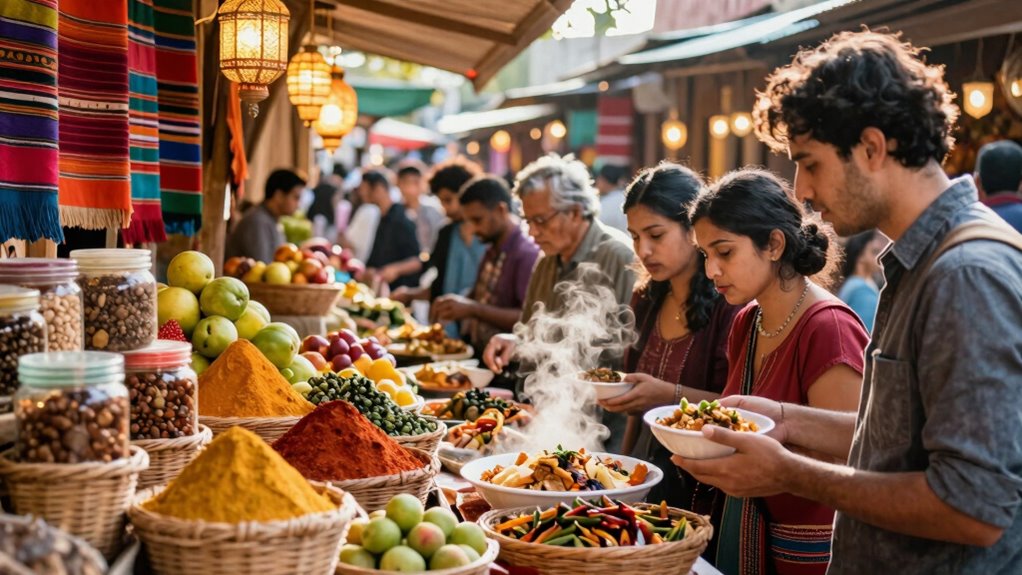
To start exploring world cuisines without feeling overwhelmed, keep an open mind and embrace curiosity about different cultures and flavors. Focus on mastering basic ingredients like soy sauce or lime, and start with simple recipes that highlight core techniques. Don’t be afraid to make substitutions and adapt dishes to your available ingredients. Gradually, you’ll become more confident in the kitchen while enriching your understanding of diverse culinary traditions. There’s plenty more to discover as you continue your journey.
Key Takeaways
- Begin with simple, authentic recipes to build confidence in each cuisine’s flavors and techniques.
- Focus on staple ingredients and basic flavor profiles to create a flexible foundation.
- Keep an open mind and embrace mistakes as part of the learning process.
- Explore cultural traditions and regional variations to deepen understanding and appreciation.
- Use cooking videos and authentic recipes as learning tools to guide your exploration.
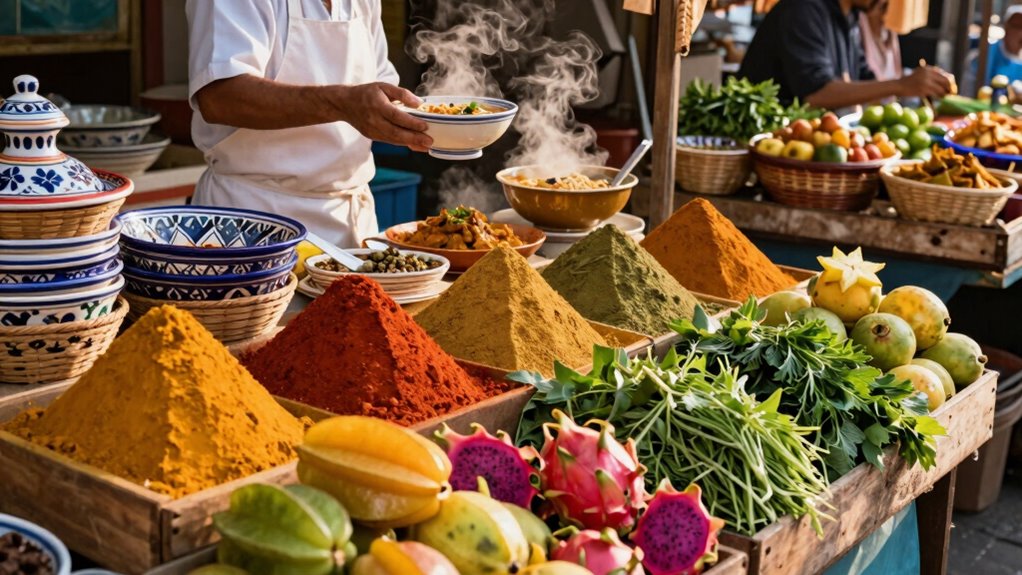
Starting on a journey to explore world cuisines can be exciting and rewarding, and the best place to start is by keeping an open mind and a curious palate. When you approach unfamiliar dishes, remember that many cuisines are deeply rooted in cultural traditions that influence ingredient choices and cooking methods. Understanding a bit about these traditions helps you appreciate the flavors and techniques behind each dish, making your exploration more meaningful. Don’t worry if you encounter ingredients you’re unfamiliar with or can’t find locally; ingredient substitutions are common and often necessary. For example, if a recipe calls for a specific herb or spice you don’t have, look for a similar flavor profile or a common substitute. This flexibility allows you to adapt recipes to what’s available, making cooking less intimidating and more accessible.
As you begin experimenting, focus on familiarizing yourself with staple ingredients from various cuisines. This helps you build confidence and creates a foundation to branch out. For instance, if you’re interested in Asian cuisine, stock up on soy sauce, sesame oil, and rice vinegar. For Mexican dishes, get accustomed to using lime, cilantro, and chili peppers. Once you grasp the basics, ingredient substitutions become easier, and you can tailor recipes to your taste or dietary needs. Don’t hesitate to swap ingredients—cooking is about creativity and adaptation, not rigidity. If you’re sensitive to spice, reduce the chili or use milder peppers; if you prefer a richer flavor, add a splash of coconut milk or cream.
Another helpful tip is to start with simple recipes that highlight the cuisine’s core flavors. This approach prevents overwhelm and allows you to focus on mastering key techniques and ingredients. As you gain confidence, you can gradually tackle more complex dishes. Watching cooking videos or reading authentic recipes can deepen your understanding, but always remember to adapt to what you have on hand. Over time, you’ll develop your own flavor combinations and ingredient substitutions that suit your preferences while respecting the cultural roots of each dish. Additionally, exploring cultural culinary traditions can enhance your appreciation and understanding of the dishes you prepare. Being aware of biodiversity and how it influences ingredient availability can also help you make more sustainable choices while experimenting. Recognizing regional variations can further diversify your culinary experience and help you discover unique interpretations of familiar dishes. Embracing a mindset that values cultural context can deepen your connection to the cuisine and add depth to your cooking journey.
Most importantly, embrace mistakes and view them as part of the learning process. Exploring world cuisines is about discovery, not perfection. Keep an open mind, enjoy the process, and let your curiosity guide you. With patience and a flexible approach, you’ll find that exploring global dishes becomes a rewarding adventure that broadens your culinary horizons and enriches your understanding of diverse cultures.
As an affiliate, we earn on qualifying purchases.
Frequently Asked Questions
How Can I Find Authentic International Restaurants Near Me?
To find authentic international restaurants nearby, start by checking local food festivals, which often feature genuine cuisine from around the world. You can also browse cultural food blogs for recommendations and hidden gems in your area. Engaging with community groups on social media can provide personal insights and reviews. These resources help you discover authentic spots without feeling overwhelmed, making your culinary exploration enjoyable and enriching.
What Kitchen Tools Are Essential for Cooking Global Dishes?
You’ll want a good chef’s knife, cutting boards, and a wok or large skillet for versatile cooking techniques. A mortar and pestle help with authentic flavoring, while a rice cooker simplifies grains. Keep basic spices and ingredient substitutions handy to adapt recipes from different cuisines. These tools enable you to explore global dishes confidently, adjusting flavors and techniques as you learn, making your culinary journey exciting and manageable.
How Do I Adjust Spice Levels for Different Cuisines?
Adjusting spice levels can feel like balancing an emotional tightrope, but it’s straightforward. Start small—add a pinch of spice, then taste and adjust gradually. For milder flavors, mix in dairy or sweetness to balance heat. For bold cuisines, increase spices slowly, tasting as you go. Remember, flavor balancing is key; it allows you to customize dishes to your comfort level, making every bite a delightful adventure rather than a fiery challenge.
Are There Online Resources for Learning Traditional Recipes?
Yes, plenty of online resources help you learn traditional recipes. Websites, cooking blogs, and video tutorials often include ingredient substitutions and detailed cooking techniques, making it easier to adapt recipes to your kitchen. Platforms like YouTube and specialized culinary sites provide step-by-step guides, so you can confidently try new cuisines. These resources help you understand authentic flavors while accommodating your ingredient availability and skill level.
How Can I Learn About Cultural Etiquette While Trying New Foods?
To learn about cultural customs and dining manners, you can start by researching online, reading travel guides, or watching videos about specific countries. When trying new foods, observe locals and follow their lead, like how they use utensils or share dishes. Respect cultural norms, such as greetings or table etiquette, and don’t be afraid to ask politely if you’re unsure. This shows your genuine interest and helps you adapt smoothly.
Conclusion
So, go ahead—dive into that international spice rack like a brave explorer armed with a fork. Don’t worry if your taste buds get a little confused or your kitchen looks like a flavor war zone. Remember, every dish is a passport stamp, and even failed attempts are just funny stories in your culinary adventure. Embrace the chaos, because in the world of cuisines, the only wrong move is not trying at all. Bon appétit, daredevil!