
TL;DR
Listen free for 30 days with Audible
Thousands of audiobooks and originals — cancel anytime.
Start your free trialAs an affiliate, we earn on qualifying purchases.
Recent culinary research confirms that tempering spices releases essential oils and enhances flavor. This technique is widely used in cooking to improve taste and aroma. The science behind it is now better understood, but some details remain under study.
Scientific research confirms that the technique of tempering spices—heating spices in oil or fat—>significantly enhances their flavor and aroma in cooking. This confirms a long-standing culinary practice used across many cuisines, making dishes more flavorful and aromatic.
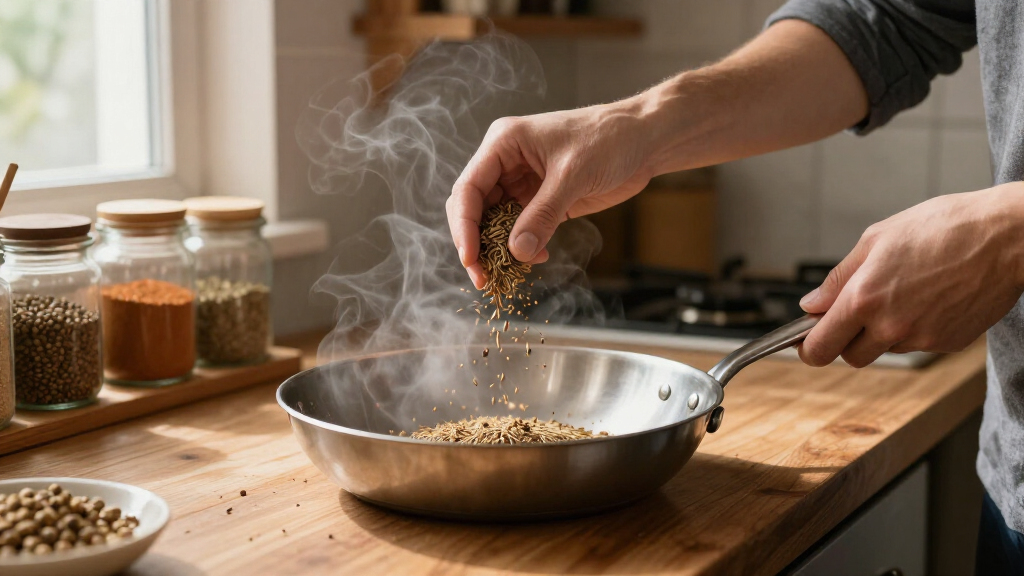
Recent studies in food science demonstrate that tempering spices causes the release of volatile oils and flavor compounds, which otherwise remain trapped within the spices. According to culinary experts, this process amplifies the spices’ aroma and taste, leading to more flavorful dishes. Traditionally, tempering involves heating spices such as cumin, mustard seeds, or cardamom in hot oil until they crackle or release their fragrance, a technique common in Indian, Middle Eastern, and Southeast Asian cuisines. Researchers note that the heat causes chemical transformations in the spices, intensifying their sensory qualities. While the practice has been long used, recent scientific experiments have quantified the flavor enhancement, providing a clearer understanding of why tempering works so well.Impact of Scientific Validation on Culinary Techniques
This confirmation of the scientific basis for tempering spices underscores its importance in professional and home cooking. It validates traditional culinary wisdom, encouraging cooks to adopt or refine this technique. Understanding the chemistry behind tempering can also inspire new flavor combinations and cooking methods, potentially improving food quality and consumer satisfaction. For food producers and chefs, this insight offers a basis for developing better seasoning practices and training programs. Ultimately, it elevates the appreciation of traditional cooking methods through scientific validation, bridging culinary arts and food science.As an affiliate, we earn on qualifying purchases.
Historical and Scientific Background of Tempering Spices
Tempering spices, also known as ‘tadka’ in Indian cuisine, has been used for centuries to enhance flavor. Historically, cooks relied on sensory cues like aroma and crackling sounds to determine when spices were ready. Recent scientific studies, however, have begun to analyze the chemical changes during tempering. These studies reveal that heating spices releases essential oils and volatile compounds that are responsible for aroma and taste. Prior to this research, the technique was considered more of an art than a science, but new findings have provided a scientific explanation for its effectiveness. The process involves heating spices in oil at specific temperatures, which causes chemical reactions such as the release of aromatic compounds and the breakdown of certain molecules, intensifying flavor.Remaining Questions About Optimal Tempering Practices
While scientific studies have confirmed the benefits of tempering, details such as optimal temperature ranges, timing, and specific spice combinations are still under investigation. It is not yet clear how variations in technique affect flavor outcomes across different cuisines or dishes. Further research is needed to establish standardized guidelines for best practices, especially for commercial food production and professional kitchens.Future Research and Culinary Applications of Tempering
Researchers plan to explore how different spices respond to various tempering conditions, aiming to develop precise guidelines for optimal flavor extraction. Culinary schools and food companies may incorporate these findings into training programs and product development. Additionally, chefs are expected to experiment with tempering techniques to create new flavor profiles, leveraging scientific insights to refine traditional recipes. Ongoing studies will also examine how tempering impacts nutritional qualities and shelf life of spices in prepared dishes.Key Questions
Why does heating spices improve their flavor?
Heating spices during tempering releases volatile oils and aromatic compounds, which enhance flavor and aroma. Scientific studies have confirmed that this process causes chemical changes that make spices taste and smell better.
Is tempering necessary for all spices?
Not all spices require tempering, but many, especially in Indian and Southeast Asian cuisines, benefit from it. It is particularly effective for spices with strong essential oils like cumin, mustard seeds, and cardamom.
What is the best temperature for tempering spices?
Research is ongoing, but generally, tempering occurs at medium-high heat until spices crackle or release aroma, typically between 120°C to 160°C (250°F to 320°F). Exact temperatures may vary depending on the spice and dish.
Can tempering be done with oils other than traditional cooking oils?
Yes, different oils can be used, but the choice affects flavor. Traditionally, oils like mustard oil, ghee, or vegetable oil are used, as they have high smoke points and complement the spices’ flavor release.
Does scientific understanding of tempering change how I cook at home?
Yes, knowing that tempering releases essential oils encourages cooks to pay attention to heat levels and timing, ensuring better flavor extraction and more aromatic dishes.
Source: rss
Fall Picks
fall essentials
As an affiliate, we earn on qualifying purchases.