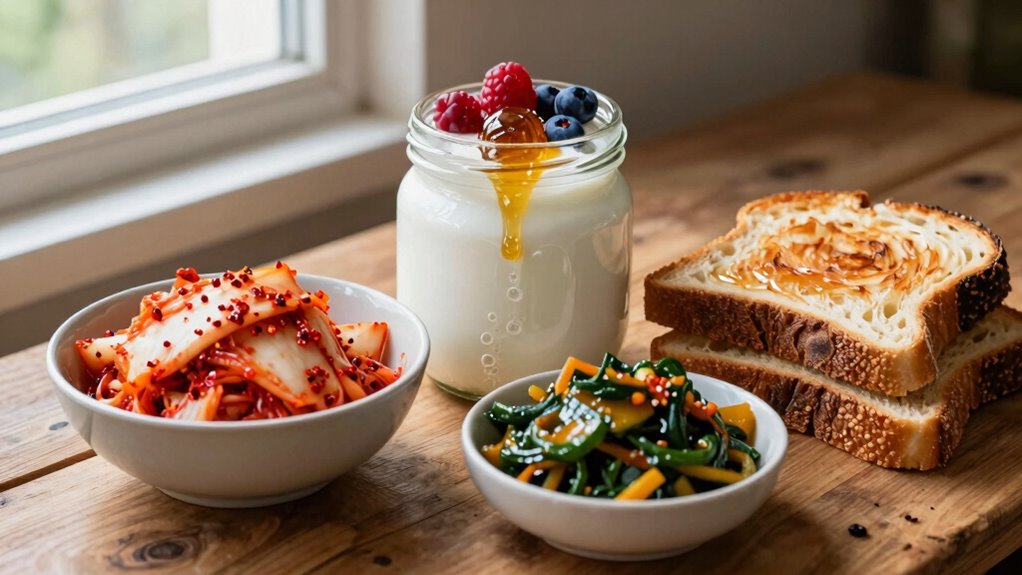

Fermented breakfast foods deserve a place at your table because they boost digestion, release dormant nutrients, and add incredible flavor to your morning routine. They carry rich cultural traditions, passed down for generations, offering both health benefits and culinary diversity. Modern techniques make preparing them easier and more accessible than ever. If you want to discover how these foods can transform your mornings, there’s plenty more to explore.

Get kitchen staples and gadgets delivered free with Prime
- Fast, free delivery on millions of items
- Prime Video, Amazon Music and more included
- Member-only deals all year
Key Takeaways
- Fermented breakfast foods enhance digestion and nutrient absorption, promoting overall health.
- They preserve cultural culinary heritage while offering unique, richer flavors.
- Modern methods make fermentation quick and accessible for busy lifestyles.
- Fermentation increases nutrient availability and reduces anti-nutrients in traditional recipes.
- Incorporating fermented foods supports gut health through probiotics and improves well-being.

Traditional recipes like kefir, fermented oats, or sourdough pancakes have been part of many cultures for centuries. These dishes carry a rich history, often passed down through generations, and offer tried-and-true methods for creating delicious, healthful meals. You can find countless recipes rooted in tradition, emphasizing simple ingredients and slow fermentation processes. These time-honored recipes not only enhance flavor but also reveal nutrients that are otherwise dormant. For example, sourdough bread’s fermentation process breaks down gluten and phytic acid, making it easier to digest and more nutritious. By embracing these traditional recipes, you honor culinary heritage while reaping the health benefits. Incorporating fermentation techniques into your breakfast routine can also help improve digestion and nutrient absorption, making your meals even more beneficial.
At the same time, modern adaptations of fermented breakfast foods make it easier to incorporate these healthful elements into busy lifestyles. You might blend kefir into smoothies, add fermented vegetables to egg dishes, or try quick-fermented fruit toppings. These adaptations often simplify the fermentation process or combine traditional techniques with new ingredients, allowing you to experiment without sacrificing flavor or health benefits. For instance, making your own yogurt or kimchi at home can be a straightforward project, and there are many recipes designed for quick fermentation. Using modern fermentation methods can significantly reduce preparation time and still deliver the same health benefits. These methods often leverage innovative fermentation techniques to streamline the process further. Exploring fermentation science can help you understand how to optimize these methods for better results. The key is to embrace fermentation as a versatile tool for creating breakfast options that are not only tasty but also packed with probiotics.
Incorporating fermented breakfast foods into your morning routine is a practical way to boost your health while enjoying diverse flavors. You don’t have to abandon your favorite recipes—just adapt them using traditional techniques or modern shortcuts. By doing so, you’ll introduce a new dimension of nutrition and flavor to your breakfast table, making each morning a nourishing start. Whether you stick with classic recipes or try contemporary innovations, fermented foods are a delicious way to support your well-being and elevate your breakfast game.
As an affiliate, we earn on qualifying purchases.
Frequently Asked Questions
Are Fermented Breakfast Foods Suitable for All Dietary Restrictions?
Yes, fermented breakfast foods can suit many dietary restrictions. Many options are gluten-free, making them safe for those with gluten sensitivities or celiac disease. Plus, you’ll find vegan-friendly choices like plant-based yogurt or kimchi, which don’t contain animal products. Just check labels or prepare at home to verify the fermented foods meet your specific needs. These foods can easily fit into a range of gluten-free or vegan diets.
How Long Do Fermented Breakfast Foods Stay Fresh?
Fermented breakfast foods typically stay fresh for about one to three weeks when stored properly. To maximize shelf life, keep them refrigerated in airtight containers. Follow storage tips like avoiding temperature fluctuations and using clean utensils to prevent contamination. Check for signs of spoilage, such as off smells or mold, before eating. Proper storage guarantees your fermented breakfast foods stay fresh, delicious, and safe to enjoy during their recommended shelf life.
Can Fermented Foods Replace Traditional Breakfast Options?
Yes, fermented foods can replace traditional breakfast options, offering both flavor versatility and cultural significance. Did you know they’re rich in probiotics that boost your gut health? By incorporating fermented foods like yogurt, kefir, or sauerkraut into your morning, you enjoy a nutritious start with unique flavors. They’re not just substitutes but also a way to embrace diverse culinary traditions, making your breakfast both healthy and culturally enriching.
Are There Any Risks Associated With Consuming Fermented Breakfast Foods?
Yes, there are risks when consuming fermented breakfast foods. You might face microbial risks if the fermentation isn’t done properly, leading to harmful bacteria growth. Also, ingredient sensitivities can cause reactions, especially if you’re sensitive to certain probiotics or additives. To enjoy these foods safely, make sure they’re prepared hygienically and check labels for ingredients that might trigger sensitivities. Moderation and proper storage are key to minimizing these risks.
How Do I Start Incorporating Fermented Foods Into My Morning Routine?
Think of adding fermented foods to your morning as tuning your flavor engine. Start simple—try yogurt or kefir in your breakfast, boosting flavor and gut health. Incorporate small portions gradually, and explore cultural dishes like miso soup or fermented oats. This approach enhances taste and connects you to global traditions, making your mornings more vibrant and meaningful. Over time, fermented foods will become a natural, delicious part of your routine.
Conclusion
Just like the ancient Greeks believed in nourishing both body and soul, incorporating fermented breakfast foods can invigorate your mornings and support your health. By embracing these probiotic-rich options, you’re joining a timeless tradition of mindful eating—think of it as your daily ode to the wisdom of our ancestors. So, why not start today? Your gut and your taste buds will thank you, and you’ll be living proof that good mornings begin with good microbes.
NFL season / tailgating Picks
team gear
As an affiliate, we earn on qualifying purchases.