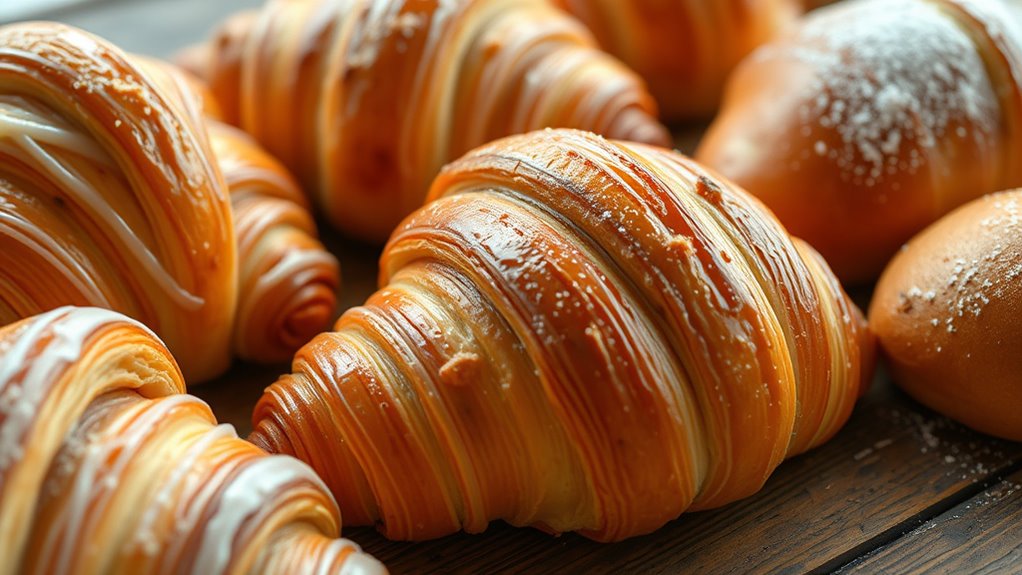

French pastries like croissants, pain au chocolat, and brioche make a luxurious breakfast. You’ll enjoy flaky, buttery layers in croissants, rich chocolate centers in pain au chocolat, and soft, sweet brioche with its tender crumb. Crafted with high-quality ingredients and artisanal techniques, these treats offer a perfect blend of flavor and texture. If you want to discover what makes them so special, keep exploring what sets authentic French pastries apart.
Key Takeaways
- Croissants, pain au chocolat, and brioche are classic French breakfast pastries known for their flaky, buttery, and sweet profiles.
- These pastries are crafted with high-quality ingredients like fresh butter, eggs, and fine flour, emphasizing artisanal techniques.
- Croissants feature layered, flaky dough; pain au chocolat includes rich chocolate centers; brioche offers a soft, enriched, bread-like texture.
- The meticulous baking process, including folding and fermentation, ensures optimal texture, flavor, and presentation.
- Enjoying these pastries provides a luxurious, authentic French breakfast experience rooted in traditional craftsmanship.
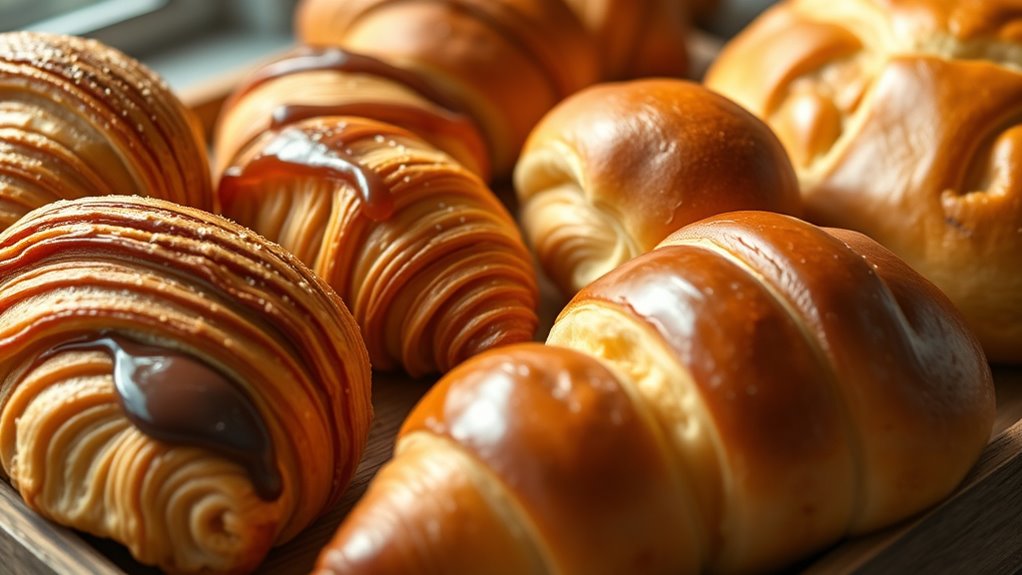
French pastries make a delightful start to any morning, offering a perfect blend of flaky, buttery layers and sweet flavors. When you indulge in classics like croissants, pain au chocolat, or brioche, you’re experiencing more than just a pastry—you’re savoring the artistry of artisanal baking. These treats are crafted with high-quality pastry ingredients that make all the difference, from the rich butter and fresh eggs to the finest flour. The magic begins with the careful selection of each ingredient, guaranteeing that every bite delivers the perfect texture and flavor.
As you bite into a croissant, you’re tasting the result of meticulous technique and quality ingredients. The dough is rolled and folded repeatedly, creating thin layers of butter and dough that puff up during baking, forming those signature flaky layers. This process, rooted in artisanal baking traditions, requires patience and skill. When the pastry hits your palate, you experience the melt-in-your-mouth tenderness combined with a satisfying crunch. The buttery aroma wafts through the air, promising an indulgence that’s both luxurious and comforting.
Pain au chocolat offers a similar experience but with a decadent twist. The flaky pastry encases a dark, glossy chocolate bar, creating a harmonious balance of rich, sweet flavors and crispy texture. The same high-quality pastry ingredients are essential here—good butter, precise folding, and proper fermentation ensure the pastry holds its shape while remaining tender. As you enjoy this pastry, you appreciate how each component complements the other, resulting in a flavor profile that’s both satisfying and addictive.
Brioche, on the other hand, presents a softer, bread-like alternative that’s equally delightful for breakfast. Its enriched dough, made with eggs, butter, and sometimes a splash of milk, produces a tender, slightly sweet bread. The artisanal process involves kneading and proofing the dough carefully to develop its airy structure. When baked, brioche has a beautifully golden crust and a moist, fluffy interior, perfect for spreading with butter or jam. Its subtle sweetness and buttery richness make it versatile, whether enjoyed plain or as a base for savory toppings.
In all these pastries, the essence of artisanal baking shines through in each layer, crumb, and flavor. It’s the thoughtful selection of pastry ingredients, combined with skilled craftsmanship, that elevates these breakfast treats beyond ordinary baked goods. When you choose authentic French pastries, you’re not just satisfying your hunger—you’re experiencing a craft perfected over generations, designed to delight with every bite.
Frequently Asked Questions
How Are Authentic French Pastries Traditionally Made?
Authentic French pastries are traditionally made by carefully performing dough lamination, where you fold butter into the dough multiple times to create flaky layers. You also allow proper pastry fermentation, letting the dough rest and develop flavor. This process guarantees a tender, airy texture. You should use quality ingredients and follow precise techniques, maintaining the right temperature and timing, to achieve those authentic, melt-in-your-mouth pastries loved worldwide.
What Are Common Variations of Croissants?
You’ll find common croissant variations with different fillings and toppings. Some include almond paste or ham and cheese for savory options, while others add chocolate or fruit preserves inside. To achieve flaky layers, you’ll use dough lamination, folding butter into the dough repeatedly. This technique creates the signature airy, crisp texture, and fillings can be added before rolling or shaping, giving you a delightful range of classic and inventive croissant styles.
How Should French Pastries Be Stored for Freshness?
Like a treasure waiting to be uncovered, your pastries deserve proper care. To keep them fresh, store your French pastries in an airtight container or wrap them tightly in plastic wrap. For ideal pastry preservation, avoid refrigeration as it can compromise texture. Instead, store at room temperature for up to two days, and reheat gently before serving. These storage tips ensure your pastries stay delicious, just as you enjoy them best.
Are There Gluten-Free Options for French Pastries?
Yes, you can find gluten-free options for French pastries. You should look for pastries made with gluten-free flours like almond, rice, or sorghum flour, which serve as tasty pastry substitutes. Many bakeries now offer gluten-free croissants and pain au chocolat, so you can enjoy these treats without gluten. Just make sure to verify ingredient labels or ask the baker to ensure they’re made with appropriate gluten-free pastry substitutes.
What Is the History Behind French Breakfast Pastries?
Imagine opening a window into history, where French breakfast pastries like croissants and pain au chocolat tell stories of French pastry artistry. You’ll find regional pastry influences shaping each delicate layer, from Austria’s croissants to France’s brioche. These pastries evolved from medieval monasteries and royal courts, blending tradition with innovation. Their history is a delicious tapestry reflecting France’s rich culture, craftsmanship, and love for baked goods that have delighted generations.
Conclusion
Now that you’ve explored these classic French pastries, you’re about to elevate your breakfast game to legendary status. Whether it’s a flaky croissant, a rich pain au chocolat, or a sweet, buttery brioche, each bite transports you straight to Paris’s charming cafés. Indulge in these delights daily, and you’ll discover that breakfast can be as extraordinary as a sunrise over the Eiffel Tower—an experience so delicious, it’ll make your mornings unforgettable.