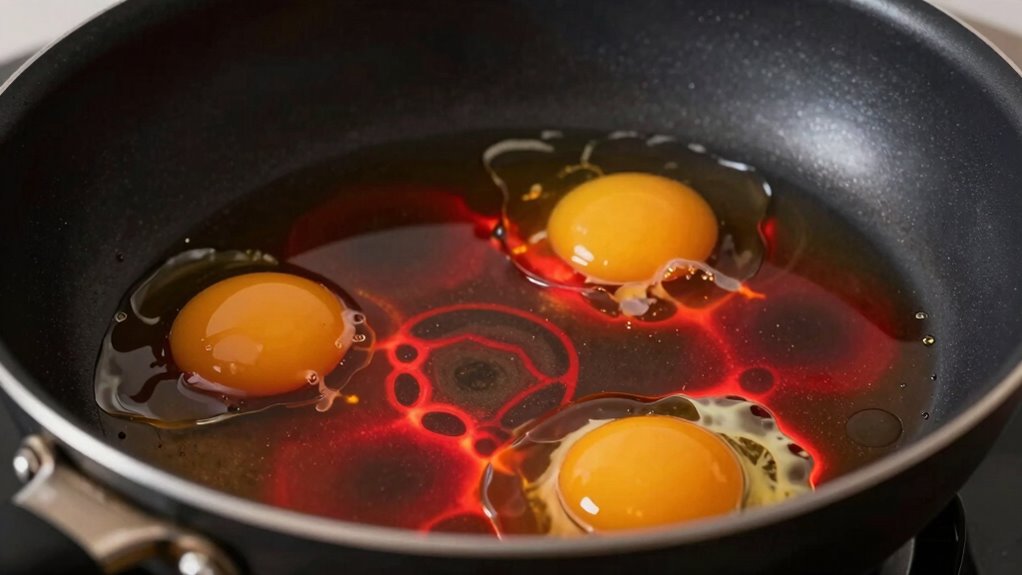

To prevent eggs from sticking on induction, start with a preheated, low-temperature pan. Use high-quality cookware suited for induction that distributes heat evenly. Set your burner to low or medium-low and gradually adjust as needed, avoiding high heat which can cause sticking. Maintain gentle, consistent heat and let the eggs sit briefly before stirring. Keeping your pan at the right temperature creates the perfect heat map for smooth, non-stick eggs—stick around to discover the detailed steps.
Key Takeaways
- Use a preheated, low-temperature pan to prevent eggs from sticking during induction cooking.
- Maintain consistent, gentle heat settings to ensure even cooking and minimize sticking risk.
- Select high-quality, induction-compatible non-stick or seasoned cookware for better heat distribution.
- Avoid stirring immediately; let eggs set briefly before gently moving them to reduce sticking.
- Adjust heat gradually if eggs start to stick, ensuring gentle temperature control with the induction’s quick response.
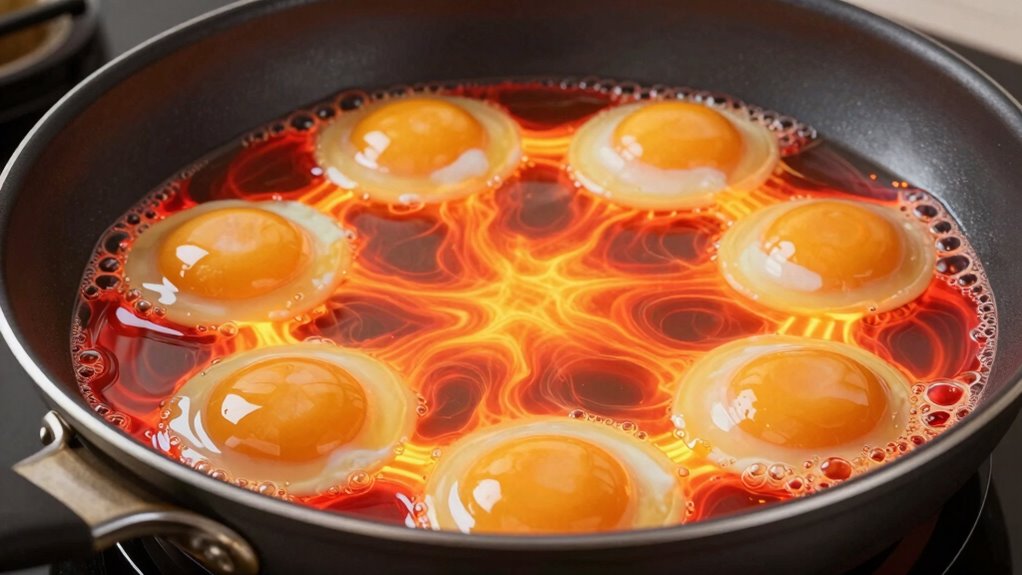
Cooking eggs on induction stoves can be tricky because they tend to stick if you don’t use the right techniques and cookware. Induction cooking heats cookware directly through magnetic fields, which means temperature control is vital to prevent sticking and ensure even cooking. To master this, you need to understand effective cooking techniques that work with induction’s fast heating and precise temperature adjustments. First, always start with high-quality non-stick or well-seasoned cookware designed for induction. Using the correct pan ensures better heat distribution and reduces the likelihood of eggs sticking, saving you frustration and cleanup time.
Use high-quality non-stick or seasoned cookware for better heat distribution and easier egg cooking on induction stoves.
When you cook eggs, it’s essential to pay attention to the heat level. Induction stoves respond quickly, so you should set the burner to low or medium-low. A common mistake is turning the heat too high, which causes eggs to stick and cook unevenly. Practice makes perfect: start with a preheated pan, but keep the temperature low enough that the eggs gently cook without sticking to the surface. This approach aligns with good cooking techniques and enhances kitchen safety by preventing hot oil or egg spatter, which can cause burns or slips.
Applying the right cooking techniques also involves timing and patience. Once you pour the eggs into the pan, avoid the temptation to stir immediately. Let them sit for a few seconds to start setting before gently pushing the eggs around with a spatula. This helps prevent sticking and creates a smoother texture. As the eggs cook, keep the heat consistent, and don’t rush to increase the temperature if you notice sticking. Instead, adjust the heat gradually. Remember, induction stoves heat quickly, so staying attentive is key to avoiding overcooking or sticking.
Another aspect of successful induction egg cooking is maintaining kitchen safety. Always use oven mitts or pot holders when handling hot pans, and ensure your cookware is stable on the induction cooktop. Keep the area clear of clutter to avoid accidents, especially when working with hot oil or liquids. Clean spills immediately to prevent residue buildup that could cause uneven heating or sticking in future uses. Properly managing your cooking environment minimizes hazards and keeps your kitchen safe. Additionally, understanding the importance of proper cookware selection can greatly reduce sticking issues and improve your cooking results.
Frequently Asked Questions
Can This Heat Map Be Used for All Types of Cookware?
Yes, this heat map can be used for most cookware types, but its accuracy depends on cookware compatibility and heat distribution. You’ll want to verify your pots and pans are compatible with induction cooktops for the best results. The heat map helps you identify hot spots and even heat distribution, so you can adjust your cooking technique accordingly. Keep in mind, some non-induction cookware may not work well with this heat map.
How Long Does It Take to See Results With the Heat Map?
You’ll see results with the heat map pretty quickly—usually within a few uses. Don’t expect instant perfection, though; it’s about timing expectations and watching for visual feedback. As you practice, you’ll get better at interpreting the heat zones. So, give it a few sessions, stay attentive, and you’ll start noticing how your cookware responds, making your cooking more precise and less sticky.
Is the Heat Map Safe to Use With Non-Stick Pans?
Yes, the heat map is safe to use with non-stick pans. It’s designed to monitor heat levels without causing damage, ensuring non-stick compatibility. You can confidently rely on it for precise heat safety, preventing overheating that could harm your pans or food. Just follow the recommended usage guidelines, and you’ll enjoy better cooking results while keeping your non-stick cookware in top condition.
Does Ambient Room Temperature Affect the Heat Map’s Accuracy?
Yes, ambient room temperature can influence the heat map’s accuracy. When the room is colder or warmer, it affects the pan’s initial temperature and how quickly it heats up, leading to potential inaccuracies. You should consider the ambient influence when using the heat map, especially if the room temperature fluctuates. To get the best results, try to maintain a consistent room temperature during cooking for more reliable readings.
Can the Heat Map Be Used for Other Cooking Techniques Besides Eggs?
Think of the heat map as your culinary Swiss Army knife. You can confidently use it for alternative uses and other cooking applications beyond eggs, like searing steaks or sautéing vegetables. It provides precise heat control, ensuring even cooking across various techniques. So, whether you’re frying, simmering, or grilling, this heat map helps you master different dishes, making your kitchen adventures more consistent and delicious.
Conclusion
Now that you know the perfect heat map for cooking eggs on induction, sticking becomes a thing of the past. Just remember to preheat your pan properly and use a touch of oil or butter. If you worry about mess, cleaning is quick and easy if you follow these tips. Don’t let sticking hold you back—enjoy delicious, perfectly cooked eggs anytime, stress-free! With this method, breakfast is smoother and more enjoyable every time.