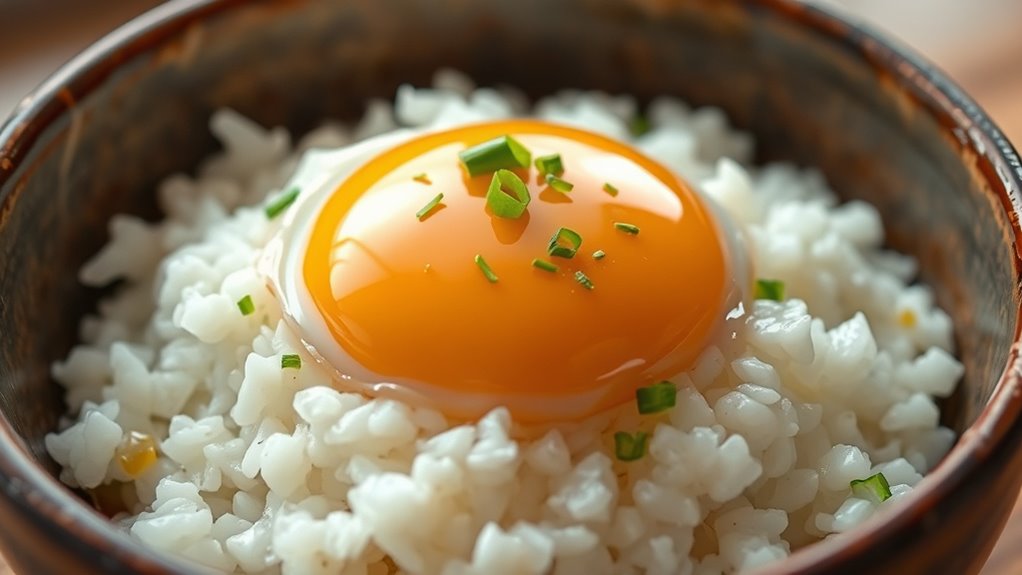

Tamago kake gohan is a popular Japanese breakfast where you mix a raw, high-quality egg into hot rice for a creamy, savory dish. To enjoy it safely, use pasteurized eggs and handle them carefully to avoid bacteria. Simply crack the egg over warm rice, stir well, and add flavorings like soy sauce or sesame oil if you like. If you want to explore more about this comforting dish, you’ll find interesting variations and tips ahead.
Key Takeaways
- Tamago Kake Gohan is a traditional Japanese breakfast combining hot rice with a raw egg for a creamy, savory flavor.
- Use high-quality, fresh, and preferably pasteurized eggs to ensure safety when eating raw.
- Crack the egg into a bowl, beat lightly, then pour over hot rice and mix thoroughly.
- Optional seasonings include soy sauce, sesame oil, or toppings like scallions and seaweed.
- Consume immediately while the rice and egg are warm to enjoy its best texture and flavor.
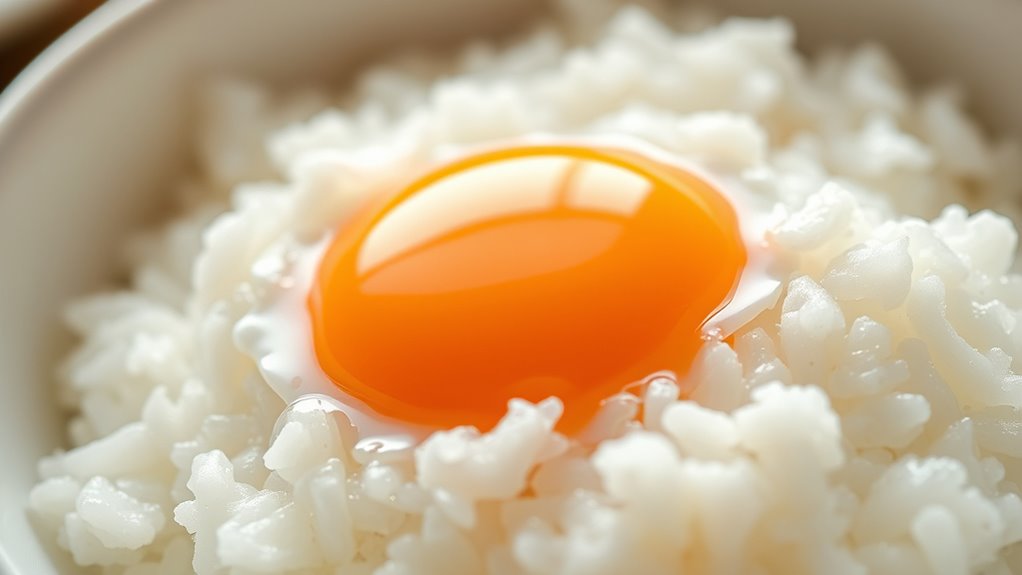
Ever wondered how a simple breakfast can be transformed into a comforting and flavorful dish? That’s exactly what Japanese Tamago Kake Gohan offers—a straightforward yet satisfying meal that combines plain rice with a raw egg, creating a creamy, savory experience. But before you plunge in, it’s essential to contemplate safety precautions. Raw eggs can carry Salmonella, so choosing high-quality, pasteurized eggs is wise. Always check that the eggs are fresh and stored properly. You might also want to wash the eggshells thoroughly before cracking them open. If you’re concerned about raw eggs, some people lightly cook the egg or use egg substitutes, but traditionally, Tamago Kake Gohan is enjoyed with raw yolk and white.
Enjoy Tamago Kake Gohan safely with fresh, high-quality, pasteurized eggs and proper handling.
This dish is deeply rooted in Japanese cuisine, but regional variations influence how it’s prepared and served. In some areas, people add a splash of soy sauce, sesame oil, or even a touch of dashi for extra umami. Others prefer mixing in chopped scallions or shredded seaweed to enhance the flavor and texture. In rural regions, you might find more rustic versions, using locally sourced eggs and rice, reflecting the local ingredients and taste preferences. City dwellers, on the other hand, often enjoy it with a more streamlined approach, emphasizing convenience without sacrificing flavor. Despite these regional differences, the core concept remains the same—combining hot rice with a raw egg to create a creamy, savory bite.
To prepare Tamago Kake Gohan properly, start with freshly cooked, hot rice—preferably just made or kept warm. Crack a high-quality, fresh egg into a bowl, and beat it lightly. Then, pour the egg over the rice and mix thoroughly until the mixture becomes smooth and creamy. Some people like to add a dash of soy sauce or a sprinkle of sesame seeds at this stage for added flavor. It’s best enjoyed immediately, while the rice is still warm, which helps the egg coat each grain and creates that signature silky texture. Recognizing the importance of safe handling practices when preparing raw eggs can help prevent foodborne illnesses and ensure a pleasant experience.
You might find it tempting to experiment with different toppings or seasonings, but always keep safety in mind. Using high-quality eggs and consuming the dish promptly reduces the risk of illness. Whether you prefer it simple or with regional twists, Tamago Kake Gohan offers a quick, nutritious, and delicious way to start your day. Its simplicity is part of its charm, turning everyday ingredients into a comforting breakfast that’s both satisfying and culturally rich.
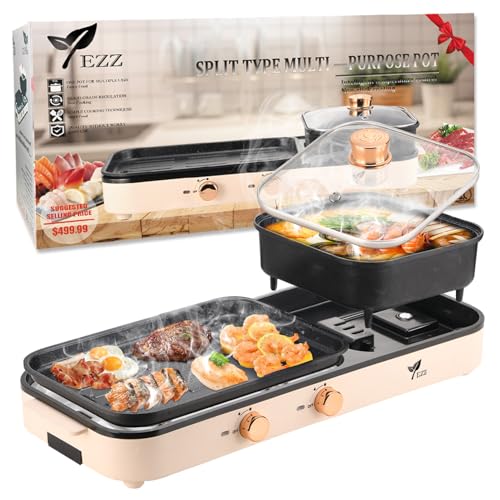
2026 Electric Hot Pot with Grill,2-10 People Indoor Hot Pot 2 in 1 Multi-function Smokeless Shabu-Shabu Hotpot Korean BBQ Grill for Simmer,Separate Dual Temperature Contral
Easy-Clean Dual Cooking System with 4L Pot & Grill : Enjoy the ultimate Shabu-Shabu and Korean BBQ experience...
As an affiliate, we earn on qualifying purchases.
Frequently Asked Questions
Is Tamago Kake Gohan Safe for Children?
Tamago kake gohan can be risky for children because of egg safety concerns, especially if the eggs aren’t pasteurized. Raw eggs may carry Salmonella, which can cause illness. For child nutrition, it’s better to use pasteurized eggs or cook the egg thoroughly. This guarantees your child gets the nutrients without the risk, making the meal safer and more suitable for their developing immune system.
Can Tamago Kake Gohan Be Made With Brown Rice?
Yes, you can make tamago kake gohan with brown rice. Keep in mind, brown rice has more nutritional differences than white rice, offering more fiber and nutrients. When preparing, cook the brown rice thoroughly to make certain a soft texture, making it easier to mix with the raw egg and soy sauce. This way, you enjoy a healthier version of tamago kake gohan without sacrificing flavor or texture.
How Long Can Tamago Kake Gohan Sit Out?
You shouldn’t leave tamago kake gohan out for more than two hours. Food safety and spoilage prevention are key, especially with raw eggs. After two hours, bacteria can grow rapidly, increasing the risk of foodborne illness. To keep it safe, refrigerate leftovers promptly or enjoy it immediately. Always prioritize freshness and proper storage to enjoy your breakfast safely and avoid any health risks.
Are There Any Variations With Added Toppings?
Yes, you can add additional toppings to tamago kake gohan to create flavor variations. Common options include chopped scallions, soy sauce, sesame seeds, or even a dash of chili oil for some heat. These toppings enhance the dish’s taste and texture, allowing you to customize it to your preferences. Feel free to experiment with different ingredients to discover new flavor combinations and make your breakfast more exciting.
Is Tamago Kake Gohan Popular Outside Japan?
You’re in for a surprise—tamago kake gohan is gaining international popularity. While it’s deeply rooted in Japanese culture, its simple, comforting nature appeals worldwide, leading to cultural adaptation with local toppings and flavors. As more people seek authentic yet easy-to-make breakfast options, this dish is catching on beyond Japan’s borders. So, don’t be shocked if you see it featured in trendy cafes or food blogs around the globe.

Topwit Hot Pot Electric with Grill, 2 in 1 Indoor Non-Stick Electric Pot and Griddle for Korean BBQ, Steaks, Shabu Shabu and Noodles, Independent Dual Temperature Control, Fast Heating, Green
【Indoor Hot Pot & BBQ Experience】Enjoy all the fun same as outdoor in your cozy house or dorm...
As an affiliate, we earn on qualifying purchases.
Conclusion
So there you have it—your daily adventure in breakfast bravery. Just crack that raw egg, pour it over your steaming rice, and pretend you’re a daring chef from Japan’s secret culinary society. Who needs fancy, cooked eggs when you can embrace the thrill of rawness? Remember, it’s all about the sweet rush of risking it all for that silky, salty goodness. Bon appétit—if you’re feeling brave enough, that is.

AORAN 2-in-1 Indoor Electric Grill & Hot Pot Combo, 1400W Dual-Zone Smokeless Cooker Cooker, Includes 4-Piece BBQ Accessories Set, Non-Stick & Easy Clean, Compact 21.8”x7”x10.6” for Home, Dorms
🔥 2-in-1 Sizzle & Simmer – Grill juicy steaks on one side and simmer aromatic broths on the...
As an affiliate, we earn on qualifying purchases.
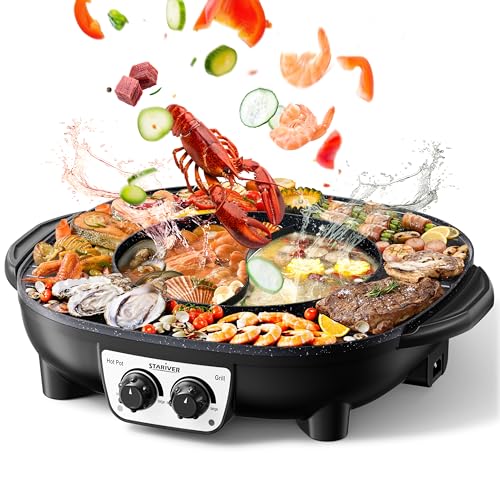
Stariver Hot Pot Electric with Grill 2 in 1, Indoor Korean BBQ & Shabu Shabu, Features Easy-clean Non-stick Coating, Dual Controls, 1800W Fast Heating, Perfect for Family Gatherings or Friends Parties
[Fun 2-in-1 Cooking] – Enjoy awesome meals with our Hot Pot with Grill combo! Simmer broth in the...
As an affiliate, we earn on qualifying purchases.