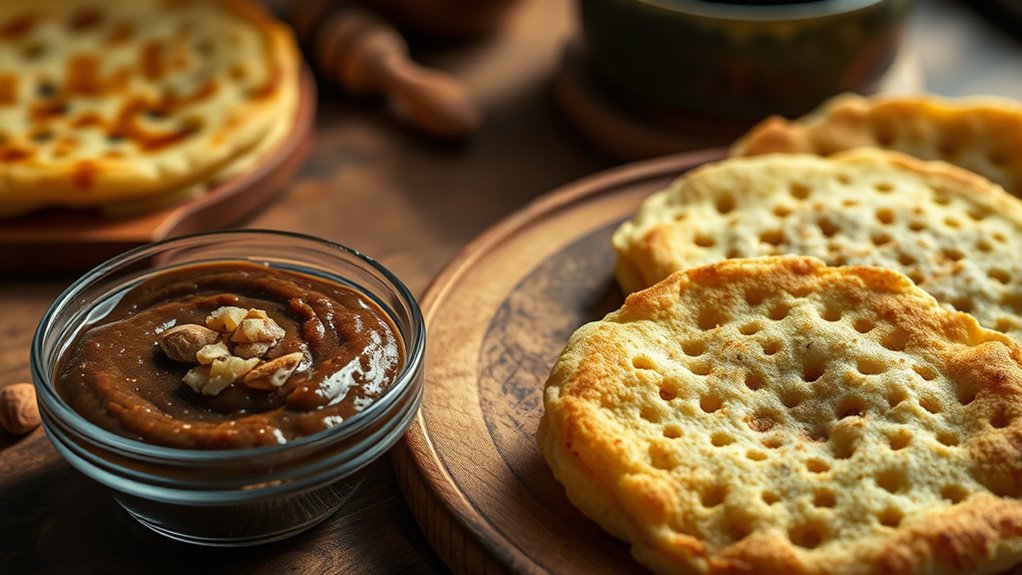

Moroccan Baghrir and Amlou are traditional breakfast favorites that highlight Morocco’s rich culinary culture. Baghrir, a spongy pancake made from semolina, yeast, and baking powder, is cooked until bubbly and often soaked in honey or butter. Amlou is a thick spread of roasted almonds, argan oil, and honey, served with warm bread or Baghrir. These iconic foods embody Moroccan hospitality and craftsmanship—keep exploring to discover more about their cultural significance.
Get ready for Prime Big Deal Days — try Prime free
Exclusive member deals on October 6–7, plus fast free delivery. Cancel anytime.
As an affiliate, we earn on qualifying purchases.
Key Takeaways
- Baghrir are Moroccan spongy pancakes made from semolina, traditionally cooked on a griddle until golden and bubbly.
- Amlou is a rich Moroccan nut spread made from roasted almonds, argan oil, and honey, often served with bread or Baghrir.
- Both foods symbolize Moroccan hospitality, cultural pride, and culinary heritage, reflecting Berber, Arab, and Mediterranean influences.
- The preparation of Baghrir emphasizes tradition, patience, and authenticity, connecting to Moroccan history and food preservation practices.
- Amlou highlights craftsmanship and community values, showcasing local ingredients and serving as a symbol of Moroccan generosity.

Moroccan Baghrir and Amlou are beloved traditional delicacies that showcase the rich flavors and culinary artistry of Morocco. When you think about Moroccan cuisine, these two dishes immediately come to mind as symbols of hospitality and cultural pride. Baghrir, often called “thousand-hole pancakes,” is a staple breakfast item, while Amlou is a treasured nut spread enjoyed with bread or pancakes. Both hold deep cultural significance, representing centuries-old culinary traditions passed down through generations. They embody Morocco’s vibrant history, blending Berber, Arab, and Mediterranean influences, making them more than just food—they’re a reflection of identity and community.
Moroccan Baghrir and Amlou symbolize cultural pride, tradition, and the vibrant history of Moroccan hospitality and community.
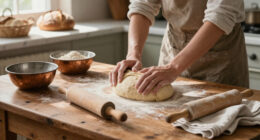
As you prepare Baghrir, you engage in a traditional process that emphasizes simplicity and authenticity. The batter is made from semolina, yeast, baking powder, and water, which you mix until smooth. The key to its characteristic texture lies in letting the batter ferment, allowing the natural yeast to create the signature holes as it cooks on a hot griddle. You cook it without flipping, patiently waiting for the surface to develop bubbles and the bottom to turn golden. This traditional preparation emphasizes patience and respect for culinary heritage, resulting in a light, spongy pancake that’s perfect for soaking up honey or butter. The process connects you to Moroccan customs, where each step is deliberate and rooted in history. Understanding the refrigeration cycle of food preservation can help maintain the freshness of ingredients used in traditional recipes.
Similarly, making Amlou involves a traditional preparation that highlights the importance of quality ingredients and craftsmanship. You grind roasted almonds, argan oil, and honey together until you achieve a smooth, thick spread. The use of argan oil, a Moroccan specialty, adds a rich, nutty flavor that’s unique to the region. This spread isn’t just a simple nut butter; it’s a symbol of Moroccan hospitality and generosity. You often serve Amlou with warm bread or alongside Baghrir, creating a harmonious breakfast experience. The ritual of preparing Amlou connects you to Morocco’s Berber roots, where each ingredient carries cultural significance and a story of local craftsmanship.
Both Baghrir and Amlou encapsulate Morocco’s culinary soul through their traditional preparation and cultural importance. Making them yourself allows you to experience a slice of Moroccan life, embracing centuries-old traditions. Whether enjoyed during a leisurely breakfast or shared with family and friends, these delicacies are more than just food—they’re a celebration of Moroccan history, community, and cultural pride. By understanding their significance and preparing them with care, you participate in a vibrant culinary heritage that continues to thrive today.
Top picks for "moroccan baghrir amlou"
As an affiliate, we earn on qualifying purchases.
Frequently Asked Questions
Can Baghrir Be Made Gluten-Free?
Yes, you can make Baghrir gluten-free by using gluten-free flour. Try almond flour, rice flour, or a blend of gluten-free oats and tapioca starch as alternative grain options. Mix these with your usual ingredients, then cook as usual. Just keep in mind that the texture may vary slightly, but with the right flour, you’ll still enjoy fluffy, delicious pancakes without gluten.
What Are the Health Benefits of Amlou?
Did you know that Amlou’s nutritional profile boosts your health with healthy fats and antioxidants? It offers remarkable antioxidant properties, helping fight free radicals and reduce inflammation. Rich in almonds, argan oil, and honey, Amlou supports heart health, improves skin, and boosts energy. Incorporating it into your diet can enhance overall well-being, making it a delicious, nutritious addition to your breakfast or snacks.
How Long Does Baghrir Stay Fresh?
You can keep baghrir fresh for about 1 to 2 days if stored properly. To maximize its shelf life, store the pancakes in an airtight container at room temperature, ideally in a cool, dry place. For longer freshness, you can refrigerate it for up to 3 days, but reheating might be necessary. Follow these storage tips to enjoy your baghrir at its best and prevent it from going stale.
Are There Vegetarian Alternatives to Traditional Amlou?
You might be surprised to find vegan amlou options that satisfy your craving. Instead of traditional Amlou, try nut butter swaps like almond, cashew, or sunflower seed butter, which are entirely vegetarian and vegan-friendly. These alternatives offer rich, nutty flavors and healthy fats, making them perfect for spreading on Baghrir or enjoying with honey. Experimenting with different nut butters keeps your breakfast exciting and cruelty-free.
What Are Some Common Variations of Baghrir Recipes?
You can try common variations of baghrir recipes by experimenting with gluten-free flours like buckwheat or millet, perfect if you’re avoiding wheat. For savory options, add herbs, spices, or cheese into the batter to create delicious, savory baghrir. These modifications give you versatile pancakes that suit different tastes and dietary needs, making your breakfast both exciting and adaptable to your preferences.
Conclusion
Now that you’ve discovered the warmth of Moroccan baghrir and the richness of amlou, you’re holding a treasure chest of flavors ready to brighten your mornings. These dishes are more than just breakfast—they’re a journey into Moroccan soul, like a gentle sunrise awakening your senses. So, next time you crave something special, let these pancakes and nut spreads be your passport to a flavorful adventure, turning every bite into a morning symphony.
NFL season / tailgating Picks
team gear
As an affiliate, we earn on qualifying purchases.