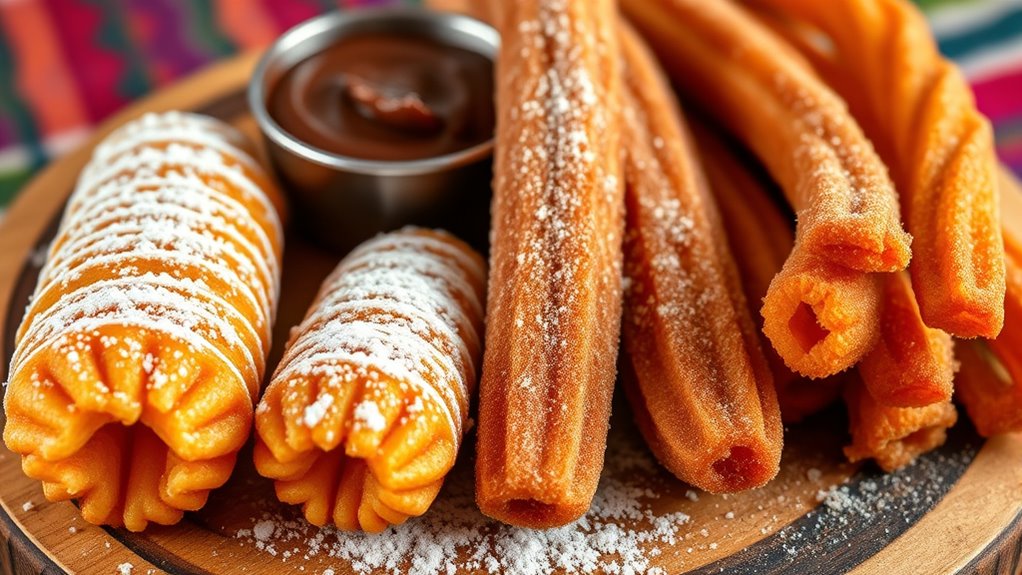

Churros around the world vary in flavor and style, but each version highlights regional tastes. In Spain, you’ll find thick, rich chocolate for dipping, while Mexican churros are coated in cinnamon sugar and often served with chocolate or caramel sauces. Filipino churros are typically sweetened with condensed milk or chocolate. Despite the differences, all share a crispy exterior and tender inside. Keep exploring to discover how these variations reflect local traditions and customs.
Key Takeaways
- Spanish churros are thick, often served with thick chocolate for dipping, emphasizing a crispy exterior and tender inside.
- Mexican churros are coated in cinnamon sugar and typically accompanied by chocolate or caramel sauces.
- Filipino churros are usually softer, enjoyed with sweetened condensed milk or chocolate sauces for dipping.
- All styles share a similar dough preparation process but vary in texture, flavor, and traditional dipping accompaniments.
- Dipping sauces and coatings reflect regional tastes, allowing for diverse customization across cultures.

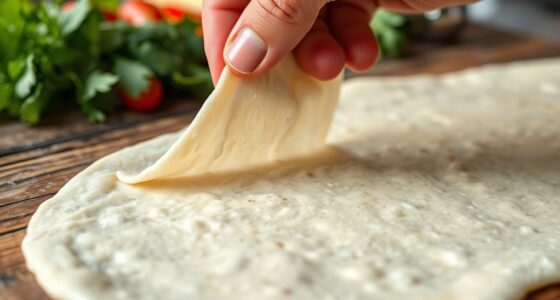
Churros have become a beloved treat enjoyed by people around the world, each culture adding its own unique twist. When it comes to making these delicious snacks, the process begins with dough preparation. You start by combining simple ingredients like flour, water, salt, and sometimes a touch of sugar. The key is to mix them thoroughly until you achieve a smooth, elastic dough that can be easily piped into hot oil. Once the dough is ready, you load it into a piping bag fitted with a star-shaped nozzle, which gives churros their characteristic ridges. As you squeeze the dough into the hot oil, it quickly puffs up and turns a beautiful golden brown, creating that crispy exterior everyone loves. The process of dough preparation is essential because it influences the texture and flavor of your churros, guaranteeing they’re perfectly crispy on the outside and tender inside.
No matter where you’re enjoying churros, dipping sauces are a vital part of the experience. In Spain, you might find churros served with thick, rich chocolate for dipping—an indulgent treat that complements the crunchy texture. Mexican churros, on the other hand, often come coated in cinnamon sugar right after frying, but they’re equally delicious with a side of chocolate or caramel sauce. Filipino-style churros tend to be slightly sweeter and are frequently enjoyed with a variety of dips, from sweetened condensed milk to chocolate sauces. The choice of dipping sauces enhances the flavor profile and allows you to customize each bite. You can experiment with different options, such as fruit preserves, honey, or even spicy chocolate for an extra kick. These sauces aren’t just accompaniments; they’re integral to the overall enjoyment, adding richness and depth to the crispy snack.
Across cultures, the preparation and pairing of churros with dipping sauces highlight the versatility of this treat. Whether you prefer the traditional Spanish style, the cinnamon-sugar-coated Mexican version, or the sweet, creamy Filipino twist, the core process remains similar. By paying attention to dough preparation, you guarantee your churros are crispy and flavorful, while choosing the right dipping sauce can elevate the experience to something truly memorable. The beauty of churros lies in how easily they adapt to different tastes and traditions, making them a universal favorite that’s simple to make yet endlessly customizable. So, next time you’re craving this warm, crunchy delight, remember that perfect dough preparation and the right dip can turn an ordinary snack into a delightful culinary adventure.
Frequently Asked Questions
What Are the Key Differences in Ingredients Among Styles?
You’ll notice key ingredient differences in churro styles through regional ingredient swaps and flavor variations. Spanish churros typically use simple flour and water, while Mexican versions add cinnamon for a warm, spicy flavor. Filipino churros often incorporate sugar or coconut milk for sweetness, giving them a distinct taste. These regional ingredient swaps create unique churro flavor variations, making each style deliciously different and reflective of local tastes.
How Do Preparation Techniques Vary Across Countries?
You’ll notice that preparation techniques for churros reflect their rich history and cultural influences. In Spain, they’re piped directly into hot oil, creating a crispy exterior. Mexican styles often involve frying thicker dough and rolling in cinnamon sugar, influenced by indigenous traditions. Filipino churros sometimes include sweet fillings or toppings, blending local flavors. These variations showcase how each country’s history shapes their unique approach to making churros.
What Are Traditional Sauces Served With Each Style?
You’ll find that traditional sauces really enhance each churro style. In Spain, you typically dip them in thick chocolate or caramel, creating rich flavor pairings. Mexican churros often come with a side of dulce de leche or chocolate for dipping, adding sweetness. Filipino styles are usually served with sweetened coconut or caramel sauces, complementing the crispy exterior. These dipping sauces elevate the flavor profiles and make each churro experience unique.
Are There Health-Conscious or Vegan Churro Options Available?
You might be surprised to learn that many places now offer vegan alternatives and health-conscious recipes for churros. You can find options made with plant-based ingredients, like almond or coconut milk, and baked instead of fried for a healthier twist. These options cater to your dietary needs without sacrificing the delicious taste, proving that enjoying churros can be both indulgent and aligned with your health or vegan lifestyle.
How Did Churros Become Popular in Different Regions?
You might find it fascinating that churros gained popularity through historical origins linked to Spanish explorers and traders. Their spread was influenced by cultural influences from different regions, adapting to local tastes and ingredients. As you explore various styles, you’ll see how traditional recipes merged with local customs, making churros a beloved treat worldwide. Their history and cultural exchanges explain why churros are enjoyed in so many diverse places today.
Conclusion
As you savor the crispy exterior and soft interior of churros, you realize how these sweet treats bridge worlds—Spanish elegance, Mexican vibrancy, and Filipino warmth. Each style offers a unique twist, yet all share that comforting crunch you crave. It’s fascinating how a simple dough can unite diverse cultures, turning a humble snack into a global delight. So next time you bite into a churro, remember you’re tasting a piece of international tradition, layered with history and flavor.