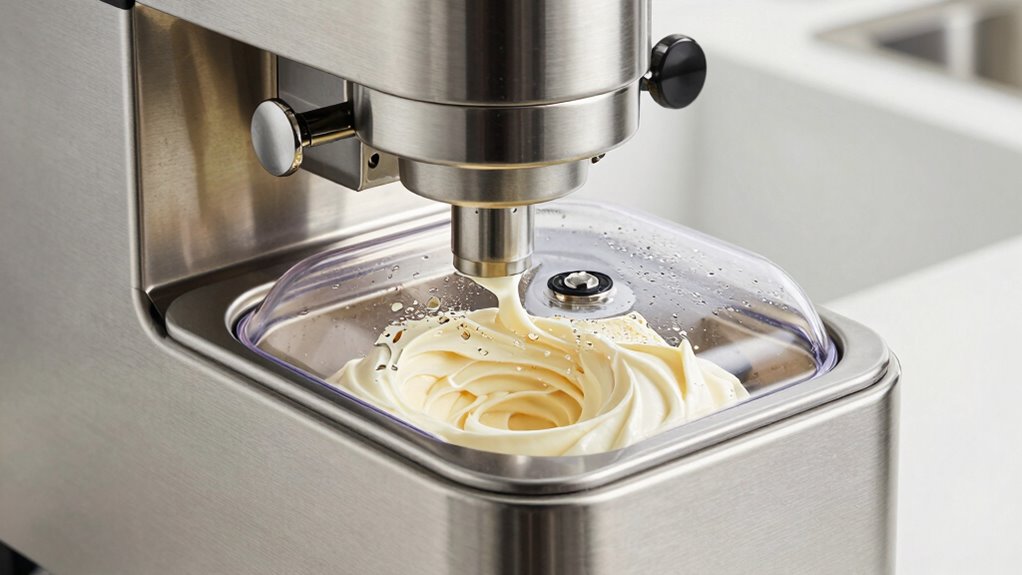

If your ice cream isn’t smooth, it’s often because traditional freezer bowl models don’t maintain a consistent cold temperature during churning, leading to icy or gritty textures. Compressor ice cream makers, however, have built-in cooling systems that keep the mixture at a steady, ideal temperature, preventing ice crystals from forming and producing a consistently creamy result. To understand how these systems work and why they improve your ice cream, keep exploring the details below.
Key Takeaways
- Compressor ice cream makers maintain a constant, low temperature during churning, preventing ice crystal formation and ensuring a smooth texture.
- They use a built-in cooling system that continuously cools the mixture, unlike traditional models that rely on pre-frozen bowls.
- Inconsistent freezing or fluctuations in temperature can cause icy or gritty ice cream, which compressor models help avoid.
- Proper operation and avoiding overfilling the drum can improve the effectiveness of the compressor’s cooling process.
- Regular maintenance and ensuring the compressor’s cooling system is functioning properly are essential for consistently smooth ice cream.

If you want to make delicious ice cream at home without waiting for it to freeze, compressor ice cream makers are the ideal solution. These machines eliminate the need for pre-freezing bowls or waiting hours for your mixture to solidify. Instead, they feature a built-in compressor that continuously cools the mixture as it churns, allowing you to enjoy fresh, smooth ice cream in a fraction of the time. When choosing a compressor ice cream maker, you’ll notice that many models boast a sleek industrial design. This isn’t just about aesthetics; a well-thought-out industrial design ensures the machine is sturdy, easy to handle, and efficient in operation. It often incorporates user-friendly controls, durable materials, and a compact footprint that fits comfortably in your kitchen. The design also considers noise levels and vibration, making your ice cream-making experience more pleasant. Additionally, the cooling system in compressor models is typically more reliable and consistent than traditional methods, providing superior results. Energy efficiency is another vital factor to contemplate. Unlike older or basic models that may consume a lot of power, modern compressor ice cream makers are engineered to use energy wisely. They often have insulated components and efficient compressors that minimize electricity use while maintaining ideal cooling performance. This not only saves you money on your energy bills but also reduces your carbon footprint. Many models come with programmable timers or automatic shut-off features, further enhancing their energy efficiency by preventing unnecessary power consumption once the ice cream reaches the desired consistency.
One common issue with non-compressor machines is inconsistent freezing, which results in icy, gritty textures rather than smooth, creamy ice cream. With a compressor model, continuous cooling ensures the mixture stays at a consistent temperature during churning, leading to a uniformly smooth texture. The built-in compressor maintains a constant cold temperature, unlike manual or freezer bowl models that rely on pre-frozen bowls and can fluctuate in temperature, causing ice crystals to form. This constant cooling process helps you avoid the frustration of icy, uneven ice cream and guarantees a superior taste and texture every time.
Frequently Asked Questions
How Long Does It Take to Make Ice Cream With a Compressor Machine?
It typically takes about 20 to 40 minutes to make ice cream with a compressor machine, depending on your batch size and the desired consistency. Larger batches may need more freezing time, while smaller ones freeze faster. Keep in mind that initial freezing can take longer, but once the compressor runs, it churns and freezes your mixture quickly. Check the texture; it’s ready when smooth and firm.
Can Compressor Ice Cream Makers Make Dairy-Free Options?
Yes, you can make dairy-free options with a compressor ice cream maker. Imagine creating delicious ice cream using plant-based ingredients and dairy alternatives like coconut milk, almond milk, or cashew cream. Your machine’s powerful compressor easily handles these substitutes, offering smooth, creamy textures. So, don’t limit yourself—experiment with different dairy-free recipes and enjoy a variety of indulgent, homemade ice creams that satisfy every craving.
What Maintenance Is Required for Compressor Ice Cream Makers?
You need to perform regular cleaning routines on your compressor ice cream maker to prevent buildup and guarantee quality. Make sure to clean the parts that contact the ice cream after each use. Additionally, check the refrigerant levels periodically to keep the compressor running efficiently. Proper maintenance like cleaning and refrigerant checks helps extend your machine’s lifespan and keeps your ice cream smooth and delicious every time.
Are Compressor Ice Cream Makers Suitable for Commercial Use?
Sure, compressor ice cream makers are perfect for your dream of a small business or a busy café, thanks to their commercial scalability and rugged equipment durability. They handle high-volume production without breaking a sweat, making them a reliable choice. So, if you’re serious about serving smooth, creamy ice cream consistently, these machines are built for the challenge—no need to worry about them melting under pressure!
How Loud Are Compressor Ice Cream Makers During Operation?
Compressor ice cream makers typically produce moderate noise levels during operation, which can be noticeable but usually not disruptive. The noise depends on the model and its sound insulation features; models with better insulation tend to be quieter. If noise is a concern, look for machines with soundproofing or placed away from quiet spaces. You can also use sound barriers to minimize sound transmission, making your experience more comfortable.
Conclusion
So, while compressor ice cream makers promise smooth, creamy treats with their built-in refrigeration, remember that perfection isn’t guaranteed. The same technology that offers convenience can also introduce variability—causing your ice cream to turn out less than ideal. It’s a reminder that even the most advanced machines can’t replace the art of patience and technique. In the end, achieving that perfect scoop is a balance between innovation and understanding your equipment’s limits.