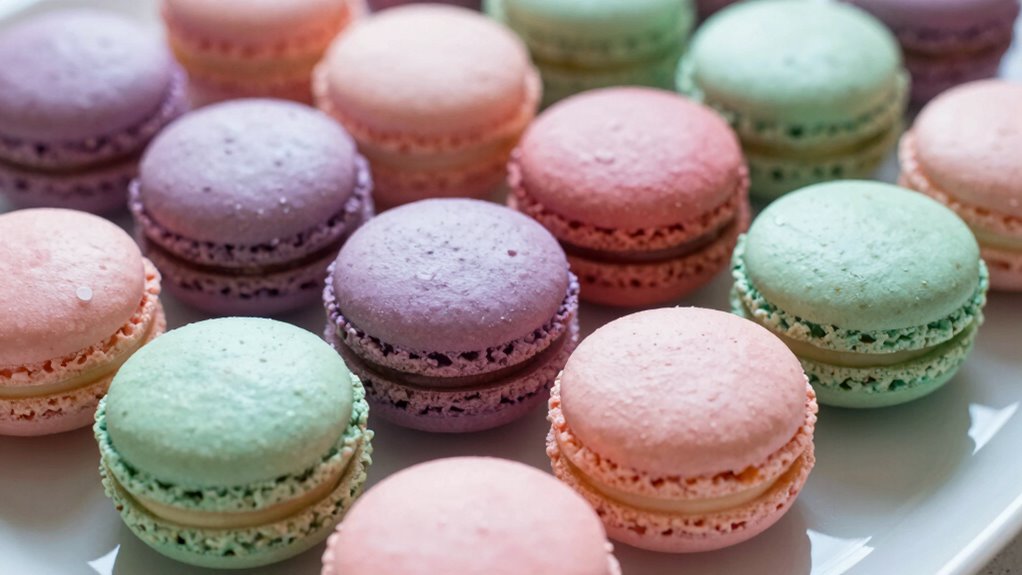

To fix hollow shells and cracked tops, focus on proper mixing, ensuring the batter isn’t overmixed or undermixed. Make sure your oven is properly preheated and maintains a consistent temperature, avoiding sudden temperature changes. Tap the baking sheet firmly to release trapped air bubbles before baking, and don’t open the oven door prematurely. Rest your filled macarons for 24 hours to meld shells and fillings, resulting in flawless texture and appearance. Keep exploring to uncover more tips for perfect macarons.
Key Takeaways
- Ensure proper mixing to avoid overmixing batter, which can cause cracks and hollow shells.
- Maintain a consistent oven temperature and avoid rapid temperature changes during baking.
- Tap the baking sheet to release trapped air bubbles before baking to prevent cracks.
- Rest filled macarons in the fridge for 24 hours to meld shells and filling, reducing hollowness and cracks.
- Use an oven thermometer and avoid opening the oven prematurely to ensure even baking and prevent defects.
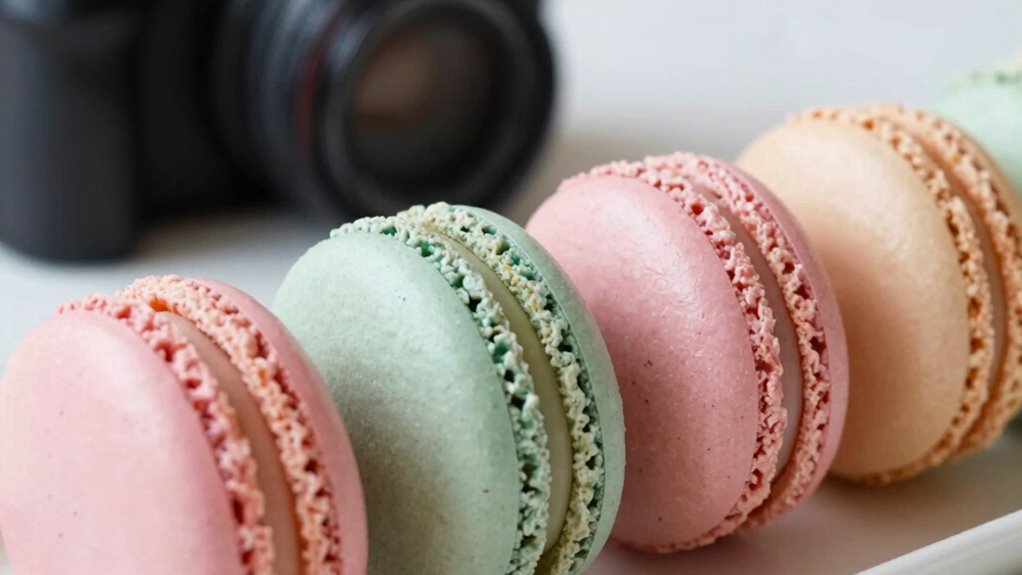
Have you ever wondered if everything you’ve heard about macarons is true? Many myths surround these delicate treats, especially when it comes to fixing common issues like hollow shells and cracked tops. One of the key factors in achieving perfect macarons is understanding proper filling techniques. When you fill your macarons, avoid squeezing too much filling into the shells. Overstuffing can cause the shells to crack or become misshapen as the filling pushes outward. Instead, use a piping bag to apply a small, even amount of filling onto the flat side of one shell, then gently press another shell on top. This method ensures the filling stays neatly inside and helps maintain the smooth, shiny surface you’re aiming for. Proper filling techniques also involve letting the filled macarons rest in the fridge for at least 24 hours. This resting period allows the shells and filling to meld, resulting in a better texture and flavor, while also reducing the risk of cracking when you bite into them. Additionally, understanding the importance of proper resting and aging can significantly improve your macaron’s texture and appearance, making the process more predictable and successful.
Storage tips are equally crucial in maintaining your macarons’ integrity. Keep your macarons in an airtight container, ideally layered with parchment paper to prevent sticking or breaking. Store them in the refrigerator if you plan to consume them within a few days, as the cool temperature helps preserve their structure and flavor. When you’re ready to serve, bring the macarons to room temperature before indulging—they taste best when not too cold, and this also helps avoid condensation which can make the shells soggy. If you need to keep macarons longer, freezing is an option. Wrap them tightly in plastic wrap and place inside a sealed container. When you thaw them, do so gradually in the fridge before bringing them to room temperature. Many people believe that cracked tops are solely caused by overmixing the batter, but that’s only part of the story. Cracks often result from rapid temperature changes or uneven baking. To prevent this, make sure your oven is fully preheated and maintain a consistent temperature throughout baking. Using an oven thermometer can help you monitor this. Also, tap the baking sheet firmly on the counter before baking to release any trapped air bubbles that could cause cracks. Remember, patience is key—don’t open the oven door prematurely, as sudden drafts can cause the shells to crack or puff unevenly. When you combine proper filling techniques with good storage habits, you set yourself up for success in making perfectly smooth, crack-free macarons. The myths about these treats can be dispelled with a little knowledge and attention to detail, turning your baking into a true art form.
Frequently Asked Questions
Can Macaron Shells Be Frozen Without Losing Quality?
Yes, you can freeze macaron shells without losing quality if you use proper freezing methods. Wrap the shells tightly in plastic wrap or place them in an airtight container to prevent moisture damage. For ideal quality preservation, freeze them quickly and store for no more than a month. When ready to use, defrost at room temperature while still wrapped to maintain their texture and flavor.
Does the Color of Food Dye Affect Macaron Texture?
Don’t judge a book by its cover—your macaron’s color doesn’t impact its texture directly. Food coloring stability varies, but most gel dyes won’t affect the shell’s structure or taste. However, some liquid dyes might introduce moisture, influencing texture or flavor influence. Bright, vibrant colors won’t change the recipe’s outcome, so choose your dyes wisely to keep your macarons perfect inside and out.
Are Organic Ingredients Better for Achieving Perfect Macarons?
Choosing organic ingredients can benefit your macarons by providing higher ingredient quality and fewer additives, which may enhance flavor and texture. Organic benefits include cleaner, more natural flavors that let the true taste shine through. While organic ingredients aren’t a guarantee for perfect macarons, using high-quality, fresh components can improve your chances of achieving that smooth, glossy shell and tender interior you desire.
How Long Do Macarons Stay Fresh at Room Temperature?
Under the soft glow of your kitchen lights, your macarons stay fresh for about 2 to 3 days at room temperature. Keep them in an airtight container in ideal conditions—cool, dry, and away from direct sunlight. Imagine that delicate crunch giving way to a chewy center, a moment that lasts just a little longer when stored properly. Beyond that, their freshness fades, so savor them quickly before they lose their magic.
Can I Replace Almond Flour With Other Nut Flours?
Yes, you can replace almond flour with other nut flours for your macarons. Nut flour substitution works well, but keep in mind that almond alternatives like hazelnut or cashew flour may alter the flavor and texture. You might need to adjust the amount slightly and be mindful of the moisture content. Experimenting helps, but almond flour remains the most traditional and reliable choice for consistent macaron results.
Conclusion
Now that you know the truths behind macaron myths, you’re ready to banish bothersome hollow shells and cracked tops. With mindful mixing, meticulous measuring, and patience in the process, you’ll create perfect, pretty pastries that impress and inspire. Approach your baking with confidence, and watch your macarons masterfully morph into magnificent, mouthwatering marvels. Remember, practice perfects, so keep experimenting and elevating your skills—soon, you’ll be savoring sensational, smooth-shelled sweets with a sweet smile.