
To master French macarons, focus on perfecting your technique by carefully managing your oven temperature, about 300°F, to prevent cracks and hollow centers. Experiment with flavor innovations like lavender honey or passion fruit ganache to elevate your creations and complement the almond shells. Pay attention to shell characteristics—smooth, shiny, and slightly risen—and adjust baking time as needed. Continue exploring advanced tips to create beautifully flavored, textured macarons with flawless shells.
Key Takeaways
- Master proper macaron shell baking temperatures and techniques to achieve smooth, shiny, and well-risen shells.
- Experiment with innovative flavor combinations like lavender honey and passion fruit ganache to enhance fillings.
- Adjust oven temperature and monitor heat to prevent cracks and hollow centers during baking.
- Pair fillings such as tangy lemon curd or caramel with sea salt to create balanced, sophisticated flavor profiles.
- Consider how filling textures complement shell characteristics for a refined and harmonious macaron experience.

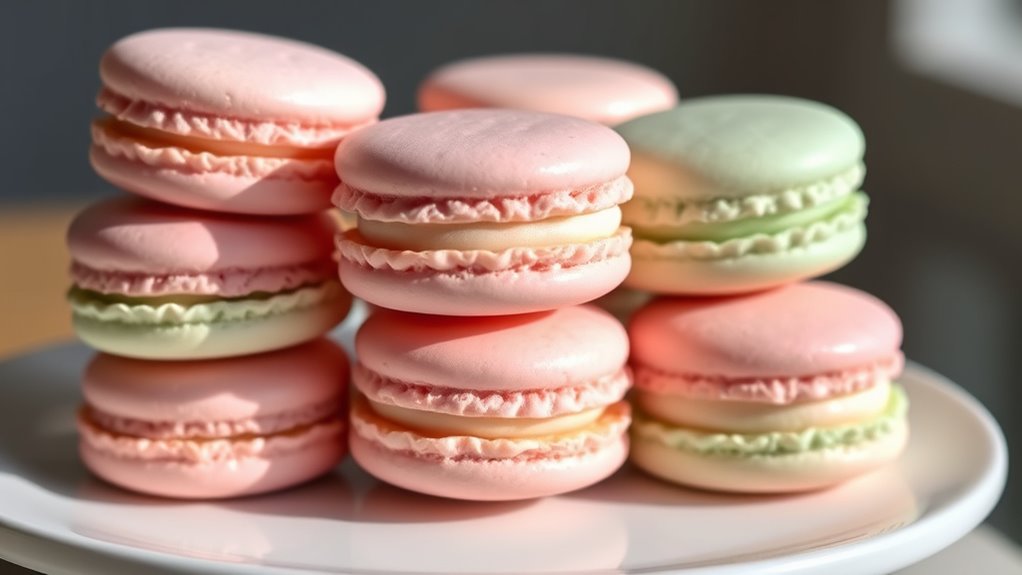
Have you ever wondered what makes French macarons so irresistibly delightful? It all comes down to the perfect balance of technique and creativity. One of the most exciting aspects of crafting macarons is experimenting with filling flavor combinations. From classic vanilla and chocolate to more adventurous options like lavender honey or passion fruit ganache, your fillings are where you can really let your personality shine. When choosing flavors, think about how they’ll complement the delicate almond shell. Pairing a tangy lemon curd with a bright raspberry filling or a rich caramel with sea salt can elevate your macarons to new heights. But flavor alone isn’t enough—you need to pay close attention to your baking process, especially baking temperature adjustments, to get that signature smooth, glossy shell. The right temperature ensures your macarons develop that delicate foot and avoid cracks or hollow centers. If your oven runs hot, you might need to lower the temperature slightly or adjust the baking time. Conversely, if you notice your shells aren’t setting properly, a gentle increase in temperature can help. It’s essential to monitor your oven’s heat because even slight variations can impact the final texture and appearance. Using an oven thermometer can help you maintain consistent conditions, especially when experimenting with new flavors or techniques. When baking, aim for a temperature around 300°F (150°C), but remember, your oven’s quirks might require tweaks. With each batch, note the adjustments you make, so you can refine your process over time. Proper baking temperature adjustments also influence how your shells develop their characteristic crisp exterior and chewy interior, which is key to a great macaron. Once baked, the shells should have a smooth, shiny surface and a slight rise at the edges—signs that your temperature was just right. When it’s time to fill them, consider how each flavor will interact with the shell’s texture and sweetness. Light, fruity fillings work beautifully with a gentle, slightly sweetened shell, while richer, ganache-like fillings might require a sturdier base to prevent sogginess. Overall, mastering filling flavor combinations and baking temperature adjustments is essential to elevating your macarons from simple treats to sophisticated confections. It’s a delicate dance of science and art, but with patience and practice, you’ll create macarons that not only look stunning but taste unforgettable. Incorporating proper technique and consistent practice can significantly improve your results over time. The joy lies in experimenting, learning from each batch, and discovering your signature flavor profile.
Frequently Asked Questions
What Are the Best Storage Methods for Macarons?
To keep your macarons fresh, store them in airtight storage containers and use proper macaron packaging to prevent moisture absorption. Place the container in the refrigerator if you plan to keep them for more than a day, and let them come to room temperature before serving. This method maintains their delicate texture and flavor, ensuring your macarons stay delicious and visually appealing for several days.
How Can I Prevent Macarons From Cracking During Baking?
To prevent your macarons from cracking during baking, make sure your oven temperature is accurate and consistent, ideally around 300°F (149°C). Also, check your batter consistency; it should be smooth and flow slowly off the spatula without being runny. Let the batter rest before baking to form a skin, which helps prevent cracks. Monitoring these aspects closely gives you a better chance at perfectly smooth, crack-free macarons.
What Are Some Unique Flavor Pairing Ideas for Macarons?
You can explore innovative flavor pairings by combining unexpected ingredients like lavender and honey, or match seasonal fruits such as raspberry with basil. Think about blending sweet and savory elements, like goat cheese with fig jam, for a unique twist. Use seasonal ingredients like pumpkin or cranberry in your fillings to keep things fresh. Experimenting with these seasonal ingredient combinations will make your macarons stand out with delightful, memorable flavors.
How Long Do Homemade Macarons Stay Fresh?
Like a delicate flower, your homemade macarons need tender care to stay fresh. Typically, their shelf life is about 2 to 3 days if kept at room temperature, but for best storage, place them in an airtight container and refrigerate. They can last up to a week in the fridge. To preserve their crispness and flavor, avoid exposure to moisture and serve at room temperature before indulging.
Are There Gluten-Free Options for Macarons?
Yes, you can make gluten-free macarons using gluten-free ingredients and alternative flours like almond or coconut flour. These flours provide the necessary structure and flavor, making the macarons suitable for gluten-sensitive or celiac individuals. Just keep in mind that gluten-free flours may require slight adjustments in recipes and technique. With the right ingredients and careful baking, you can enjoy delicious gluten-free macarons that match traditional ones.
Conclusion
Now that you’ve uncovered the secrets behind French macarons, you’re ready to turn your kitchen into a sweet symphony. With each delicate bite, you’ll craft tiny edible masterpieces that dance on your palate like a well-choreographed ballet. Embrace your newfound techniques and flavor adventures, and watch your macarons become the star of every gathering. Remember, every perfect shell is a small victory—your journey into macaron mastery is just beginning, so let your creativity soar.