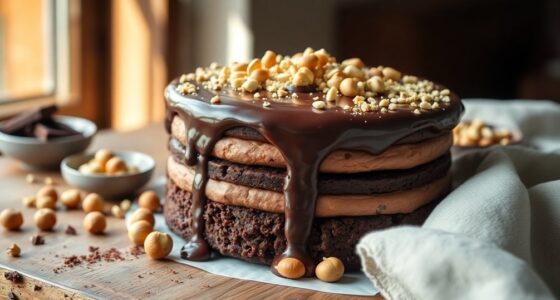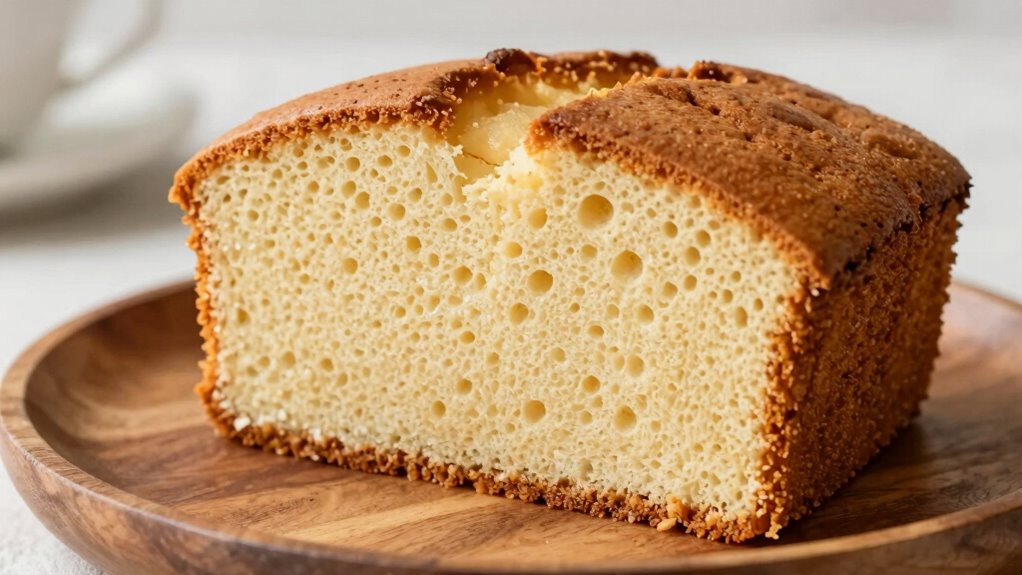

To avoid grit and crumble in your gluten-free cake, use the right flour blend, like rice, tapioca, and potato starch, to mimic gluten’s structure. Add moisture-rich ingredients such as yogurt or applesauce, and consider brushing with simple syrup after baking. Be careful not to overbake and cool the cake properly to lock in moisture. Master these tips, and you’ll transform your gluten-free cakes into moist, tender treats. Keep going to discover more expert tricks.
Key Takeaways
- Use well-balanced gluten-free flour blends with rice, tapioca, and potato starch to mimic gluten’s structure.
- Incorporate moisture-retaining ingredients like yogurt, applesauce, or oils to prevent dryness and crumbling.
- Avoid overmixing the batter to maintain a delicate crumb and prevent a gritty texture.
- Bake at the correct temperature for the appropriate time, and perform the toothpick test to avoid overbaking.
- Finish with simple syrup or creamy frosting to add moisture and improve overall cake tenderness.
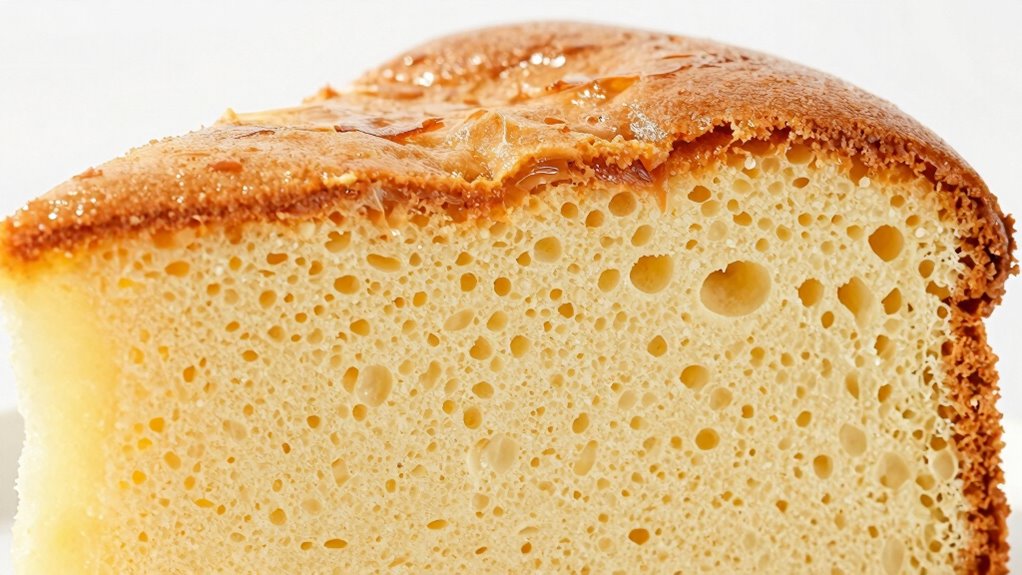
Have you ever wondered why gluten-free cakes often have a different texture than traditional ones? The main reason is that gluten provides elasticity and structure, giving baked goods their familiar chewiness and stability. Without gluten, the texture can become crumbly, dry, or gritty. To combat this, many bakers rely on specially formulated gluten free flour blends. These blends combine different flours like rice, tapioca, potato starch, and sometimes xanthan gum or guar gum. The goal is to mimic the properties of wheat flour, providing better structure and a more cohesive crumb. Choosing the right blend is essential because not all gluten-free flours behave the same way. Some absorb more moisture, while others can make baked goods dense or dry. When selecting a gluten free flour blend, look for one designed specifically for cakes to guarantee it offers the right balance of ingredients to support a tender, moist crumb.
Moisture retention is another key factor in achieving a desirable cake texture. Gluten-free cakes tend to dry out faster because they lack the gluten network that traps moisture in traditional baking. To improve moisture retention, you can add ingredients like applesauce, yogurt, or buttermilk, which help keep the batter moist and contribute to a soft texture. Additionally, using oils or fats instead of butter can help lock in moisture, making each slice tender and rich. Properly measuring liquids and not overmixing the batter also plays a significant role. Overmixing can incorporate too much air or break down the delicate structure, leading to a crumbly or dense cake. When baking, avoid opening the oven too early, as sudden temperature changes can cause the cake to collapse or become dry.
Another tip is to bake your cake at the right temperature and for the correct amount of time. Overbaking is a common culprit behind dry, gritty textures. Keep an eye on your cake and perform a toothpick test near the end of the baking time. If it comes out moist but not wet, your cake is ready. Once baked, letting the cake cool properly on a wire rack allows steam to escape gradually, preventing the bottom from becoming soggy or the top from cracking. If you want to enhance moisture further, consider brushing the finished cake with a simple syrup or icing it with a creamy frosting. These finishing touches can mask minor dryness and add flavor, making your gluten-free cake feel moist and satisfying.
Frequently Asked Questions
Can Gluten-Free Cakes Be as Moist as Regular Cakes?
Yes, gluten-free cakes can be as moist as regular cakes. To achieve this, focus on moisture retention by using ingredients like applesauce or yogurt, which add natural moisture. Incorporate texture enhancement techniques such as adding eggs or xanthan gum to improve structure. Be sure not to overbake, as this can dry out your cake. With these tips, your gluten-free cake will stay tender and delicious every time.
What Are the Best Substitutes for Traditional Flour in Gluten-Free Baking?
You can replace traditional flour with grain alternatives like almond, coconut, or rice flour to achieve the right texture. To improve binding and prevent crumbliness, add natural binding agents such as xanthan gum or guar gum. These help hold the ingredients together and give your cake a moist, tender crumb. Experiment with different combinations to find what works best for your recipe, ensuring a delicious, gluten-free treat.
How Do I Prevent My Gluten-Free Cake From Drying Out?
To prevent your gluten-free cake from drying out, focus on moisture retention and proper baking techniques. Keep an eye on baking time and temperature, as overbaking can dry your cake. Incorporate ingredients like applesauce or yogurt to boost moisture. Additionally, cover the cake with a towel while cooling or store it in an airtight container to lock in freshness and maintain a tender, moist texture.
Are There Specific Ingredients That Improve Gluten-Free Cake Structure?
To improve your gluten-free cake structure, use gluten free binders like xanthan gum or guar gum, which help hold everything together. Incorporate alternative flours such as almond, rice, or tapioca flour to add moisture and stability. These ingredients work together to prevent grit and crumble, giving your cake a better texture. Be sure to measure accurately and blend well for the best results.
How Long Should Gluten-Free Cakes Be Baked for Optimal Texture?
You should bake your gluten-free cake for about 25-30 minutes at 350°F (175°C). Keep an eye on the baking time to prevent overbaking, which can cause crumbliness. Use a toothpick to check doneness; it should come out clean. Adjust the oven temperature slightly if needed, as oven variability can affect baking time. Proper timing guarantees a moist, well-structured cake with the right texture.
Conclusion
To achieve the perfect gluten-free cake, remember that avoiding grit and crumble isn’t just about ingredient swaps—it’s about understanding how gluten substitutes interact. Some believe that adding xanthan gum creates a more cohesive texture, but recent studies suggest it might sometimes make cakes denser. Experiment with natural binders like chia or flaxseed for better results. Ultimately, patience and a bit of trial and error help you discover what works best for your unique recipe and palate.