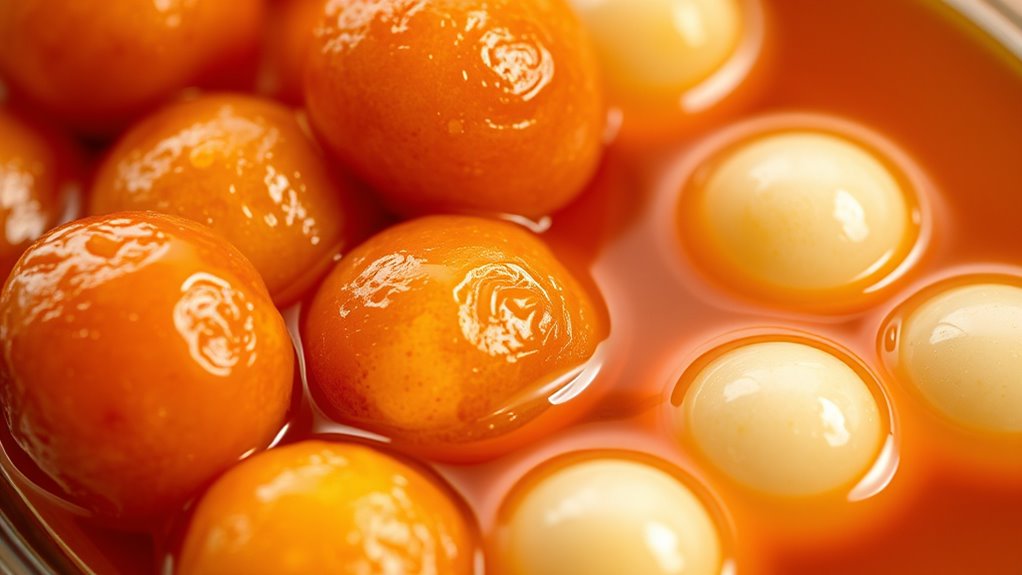

Indian gulab jamun and rasgulla are beloved milk-based sweets renowned for their creamy textures and regional flavors. Gulab jamun involves frying dough balls and soaking them in fragrant sugar syrup, while rasgulla features spongy paneer balls cooked in thickened syrup, often flavored with rosewater or saffron. Variations in ingredients and techniques reflect regional tastes across India. To discover how these traditions come together in each treat, keep exploring the unique preparation methods.
Key Takeaways
- Gulab jamun and rasgulla are traditional Indian milk-based sweets with rich textures and regional flavor variations.
- Gulab jamun involves frying dough balls and soaking them in flavored sugar syrup, often with cardamom or rosewater.
- Rasgulla features spongy paneer balls cooked in thick, sweetened syrup, with regional differences in flavoring and presentation.
- Regional influences affect syrup ingredients, such as saffron in Odisha or lemon juice in Gujarat, impacting taste and appearance.
- Mastering syrup preparation and soaking techniques is essential to authentic, flavorful Indian milk-based sweets.
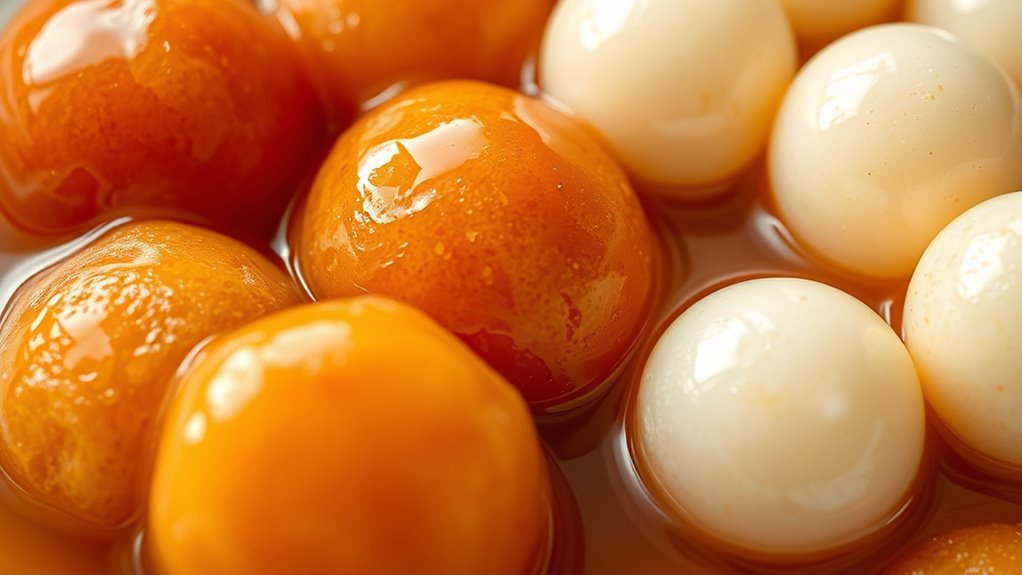
Milk-based sweets have long captivated dessert lovers around the world with their rich, creamy textures and delicate flavors. Among the most beloved are Indian gulab jamun and rasgulla, each offering unique tastes and textures rooted in centuries of culinary tradition. When making gulab jamun, you’ll find that mastering sugar syrup techniques is vital. You need to prepare a fragrant syrup, typically flavored with cardamom, rosewater, or saffron, and guarantee it’s warm when you add the fried dough balls. The key is to soak the balls until they become soft, absorbing the syrup and developing their characteristic juiciness. You’ll notice that regional variations influence how the syrup is prepared and flavored. For example, in North India, you might add a hint of rosewater, while in Gujarat, a dash of lemon juice or saffron is common to prevent crystallization and enhance flavor. These small differences give each version its unique identity.
Moving on to rasgulla, its soft, spongy texture is achieved by cooking chenna (fresh paneer) balls in a slightly thickened sugar syrup. Here, the sugar syrup technique involves boiling water with sugar until it reaches a perfect consistency—thick enough to coat the rasgullas but not so dense that it hampers their ability to absorb sweetness. As with gulab jamun, regional variations come into play; in Bengal, rasgullas are often slightly larger and served chilled, soaking up subtle flavors of rose or cardamom. In Odisha, they may be infused with saffron, giving a different aromatic profile. The regional influences extend even further, affecting the size, sweetness level, and flavorings used in the syrup. Additionally, the regional variations also influence the ingredients used in the preparation, such as the type of milk or flavoring agents.
Both sweets rely heavily on a delicate balance of temperature and timing during cooking and soaking. The sugar syrup acts as both the cooking medium for rasgulla and the soaking bath for gulab jamun, making it the backbone of their texture and flavor. As you prepare these sweets, you’ll find that adjusting the sugar syrup’s consistency and flavoring is indispensable for achieving authentic results. Regional variations aren’t just about tradition—they influence how the sweets are experienced, offering a delightful spectrum of flavors and textures. Whether you prefer the spongy rasgulla or the melt-in-your-mouth gulab jamun, understanding these techniques and regional nuances helps you craft desserts that celebrate India’s rich culinary heritage.

Gits Instant Gulab Jamun Dessert Mix, 200g – India
Gits Instant Gulab Jamun Dessert Mix, 200g – India
As an affiliate, we earn on qualifying purchases.
As an affiliate, we earn on qualifying purchases.
Frequently Asked Questions
What Are the Traditional Origins of Gulab Jamun and Rasgulla?
You might find it fascinating that Gulab Jamun and Rasgulla have ancient origins rooted in Indian history. These sweets hold deep cultural significance, symbolizing hospitality and celebration. Gulab Jamun likely originated from Persia and was adapted over centuries in India, while Rasgulla has origins linked to Bengal. Their rich history reflects the culinary evolution and cultural importance of milk-based desserts in Indian tradition.
How Do Regional Variations Affect Their Recipes?
Your taste buds might feel like they’ve traveled the world! Regional variations greatly influence their recipes, as local ingredients and culinary influences shape their flavors and textures. For example, in some areas, you’ll find Rasgulla made with different types of milk or flavored with regional spices, while Gulab Jamun recipes adapt to local sweeteners and cooking techniques. These regional touches make each version unique and reflect local culinary traditions.
Are There Vegan or Dairy-Free Versions Available?
Yes, you can find vegan alternatives and dairy-free recipes for Gulab Jamun and Rasgulla. Many cooks use plant-based milk options like almond, soy, or coconut milk to create dairy-free versions. You might also find recipes that replace traditional ingredients with vegan substitutes like coconut oil or aquafaba. These adaptations guarantee you can enjoy these sweet treats without dairy, catering to your dietary preferences while maintaining authentic flavors.
What Is the Ideal Way to Store These Sweets?
Did you know proper storage extends shelf life by up to a week? To keep your sweets fresh, store them in airtight storage containers. Keep Gulab Jamun and Rasgulla refrigerated, ideally at 4°C (39°F), and avoid exposure to air and sunlight. This prevents spoilage and preserves their texture and flavor. Always consume within a week for the best taste and safety.
How Do These Sweets Compare Nutritionally to Other Desserts?
You’ll find that Gulab Jamun and Rasgulla are higher in calorie content and sugar levels compared to many other desserts. While they’re delicious, they often contain more added sugars and fats, making them richer treats. If you’re watching your calorie intake, you might want to enjoy these sweets in moderation, as their sweetness and calorie density can quickly add up compared to lighter desserts like fruit or yogurt-based options.
rasgulla making kit
As an affiliate, we earn on qualifying purchases.
As an affiliate, we earn on qualifying purchases.
Conclusion
So, next time you indulge in gulab jamun or rasgulla, remember you’re tasting more than just sweets—you’re experiencing a burst of centuries-old tradition in every bite. These milk-based delicacies aren’t just desserts; they’re a symphony of flavors that can make your taste buds dance like they’ve never danced before. Immerse yourself, savor each moment, and let these treats remind you that sweetness truly knows no bounds—it’s a journey you won’t forget.

PANEER DODI PHOOL Naturals, Withania Coagulans – Pure Indian Rennet – 100 gram
Bring home the age-old wisdom of Ayurveda with Paneer Phool Naturals—your natural companion for holistic health and wellness.
As an affiliate, we earn on qualifying purchases.
As an affiliate, we earn on qualifying purchases.

Digital Candy Thermometer with Pot Clip, 10" Long Stainless Steel Probe, Instant Read Kitchen Thermometer for Cooking, Baking, and Candy Making
Pot Clip Design for Safer Operation: This candy thermometer digital with clip can be fixed to the pot…
As an affiliate, we earn on qualifying purchases.
As an affiliate, we earn on qualifying purchases.