
TL;DR

Get kitchen staples and gadgets delivered free with Prime
- Fast, free delivery on millions of items
- Prime Video, Amazon Music and more included
- Member-only deals all year
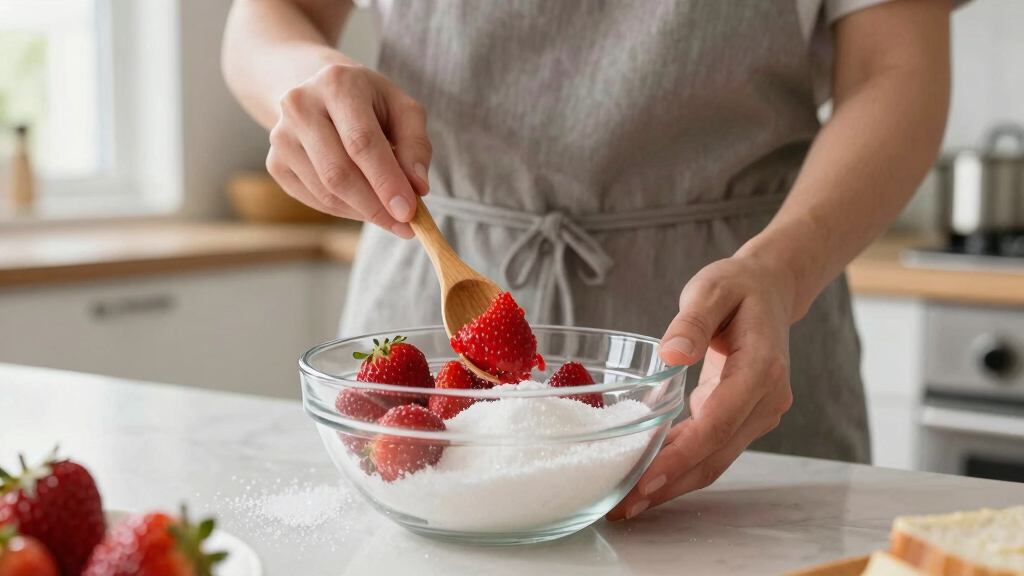
Macerating strawberries with sugar is a straightforward process that enhances their sweetness and softens the fruit without heat. This technique is popular for elevating desserts and can be done in as little as 30 minutes. The method involves mixing strawberries with sugar and letting them sit to release their juices.
Strawberries can be easily enhanced through a simple process called maceration, which involves soaking the berries in sugar to release their juices and soften their texture. This technique requires no heat and takes just a short amount of time, making it accessible for home cooks aiming to elevate their desserts.
According to Bon Appétit, maceration involves mixing fresh strawberries with sugar and refrigerating them for at least 30 minutes. During this time, the sugar draws moisture from the berries, creating a glossy syrup and softening the fruit. The process can be extended to several hours or overnight for a more jam-like consistency. The method works well with various fruits, including blackberries, raspberries, peaches, and cherries, with slight adjustments in timing based on fruit delicacy.
To enhance flavor, additional ingredients such as citrus zest, juice, vanilla or almond extracts, and spices can be added. Frozen strawberries can also be macerated, though they tend to release more liquid due to cell wall breakdown during freezing. The resulting mixture is versatile, suitable for toppings, sauces, or smoothies, and can be stored in the refrigerator for up to three days or frozen for later use.
Why It Matters
This technique matters because it offers a quick, easy way to improve the flavor and texture of strawberries, making them more appealing for desserts and breakfast dishes. It is especially relevant during peak strawberry season when fresh berries are abundant and at their best. The ability to macerate other fruits expands culinary options, providing home cooks with versatile ingredients for a variety of recipes.
As an affiliate, we earn on qualifying purchases.
Background
Maceration is a traditional method used to soften and flavor fruits by soaking them in sugar or other liquids. Recent guidance from Bon Appétit emphasizes its simplicity and effectiveness, highlighting how it can transform fresh berries into a more indulgent, juicy component for desserts like shortcakes, pavlova, and ice cream toppings. The technique has gained popularity as a no-heat method suitable for quick preparation, especially during summer months when berries are in season.
“Maceration is a process in which produce, usually fruit, sits in a flavorful substance such as sugar, vinegar, or juice, which tenderizes the ingredient and intensifies its natural flavor.”
— an anonymous researcher from Bon Appétit
“Depending on how long they sit, the strawberries can remain slightly firm or become soft and jammy.”
— Bon Appétit
What Remains Unclear
It is not yet clear how different types of sugar or additional flavorings might affect the final texture or flavor beyond general recommendations. Specific timing may vary depending on fruit ripeness and size, and personal preferences for firmness or softness.
What’s Next
Next steps include experimenting with flavor additions like citrus zest or spices, and testing storage options for macerated strawberries. Further guidance may emerge on optimal timing for different fruits and desired textures, as well as how to incorporate macerated berries into various recipes.
Key Questions
How long should I macerate strawberries for best results?
For lightly softened berries with some syrup, 30 minutes is sufficient. For juicier, more concentrated flavor, 1–2 hours is recommended. For a very soft, jam-like consistency, overnight is ideal.
Can I use frozen strawberries for maceration?
Yes. Frozen strawberries can be macerated by thawing them in the refrigerator with sugar. They tend to release more liquid and become softer, making them suitable for toppings or smoothies.
What other fruits can be macerated?
Blackberries, raspberries, peaches, plums, cherries, and melons all respond well to maceration, with timing adjustments based on fruit delicacy and skin thickness.
Source: Bon Appétit
Halloween Picks
halloween
As an affiliate, we earn on qualifying purchases.