Japanese dorayaki and taiyaki are beloved street treats that highlight the country’s rich culinary tradition. Dorayaki features fluffy pancake-like layers filled with sweet red bean paste, while taiyaki is a fish-shaped pastry filled with similar sweets or custard. Both use traditional techniques like precise cooking on griddles or in molds to achieve perfect textures. Their craftsmanship reflects Japan’s dedication to artistry and simplicity. If you keep exploring, you’ll discover how these treats embody centuries of culinary heritage.
Key Takeaways
- Dorayaki and Taiyaki are traditional Japanese sweets featuring pancake-like batter with sweet fillings.
- Dorayaki consists of two fluffy, pancake layers filled with red bean paste, custard, or chocolate.
- Taiyaki is a fish-shaped cake filled with similar sweet fillings, cooked in specialized molds.
- Both require precise baking techniques, including careful temperature control and flipping for perfect texture.
- These treats reflect Japan’s rich culinary craftsmanship, cultural heritage, and street food traditions.
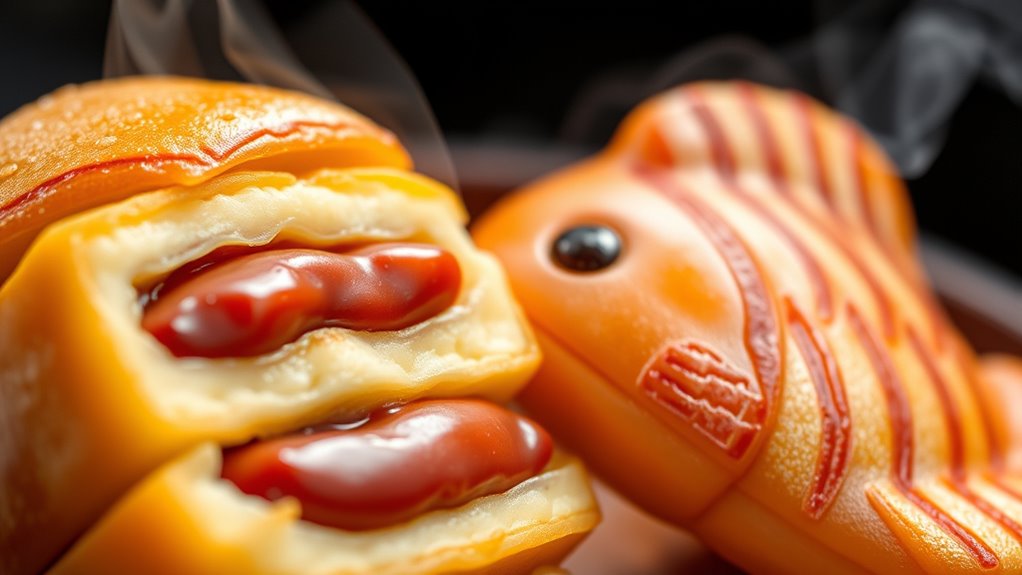
Japanese sweets like dorayaki and taiyaki are beloved treats that showcase the country’s rich culinary tradition. These confections are more than just desserts; they reflect Japan’s history of combining simplicity with artistry. When you think of Japanese street food, these sweets immediately come to mind, often found at bustling festivals or tucked into small shops along busy streets. Their popularity stems from their delightful flavors and the skillful methods used in their creation, rooted in traditional baking techniques passed down through generations.
Dorayaki consists of two fluffy, pancake-like layers filled with sweet red bean paste. The batter is made from simple ingredients like flour, eggs, sugar, and honey, which are mixed carefully to achieve the perfect consistency. The batter is cooked on a griddle, much like making pancakes, but the technique involves precise temperature control to ensure the outer layers are golden-brown while the interior remains soft and moist. This process demands traditional baking techniques, emphasizing consistency and craftsmanship. As you watch the process, you notice how the batter is poured and spread evenly, then flipped at just the right moment to develop a tender, slightly chewy texture that’s uniquely Japanese.
Taiyaki, on the other hand, is shaped like a fish, inspired by the taiyaki mold that’s used to cook the batter. The batter is similar to that of dorayaki but is poured into a fish-shaped mold and filled with sweet fillings like red bean paste, custard, or chocolate. As it cooks, the batter expands and crisps at the edges, creating a crunchy exterior that contrasts with the soft, sweet interior. The traditional baking technique involves carefully monitoring the heat and flipping the mold to ensure an even cook. This meticulous process highlights the craftsmanship behind each piece, reflecting Japanese attention to detail and mastery of traditional baking techniques.
Both dorayaki and taiyaki exemplify how Japanese street food is rooted in tradition, blending simple ingredients with skillful preparation. Their popularity isn’t just about taste — it’s about the experience of watching these sweets come to life, knowing each step is crafted with care. Whether you’re grabbing a warm taiyaki from a street vendor or enjoying dorayaki at a festival, you’re tasting centuries of culinary tradition. These treats continue to delight locals and visitors alike, embodying the Japanese spirit of precision, artistry, and delicious simplicity.
Frequently Asked Questions
Are There Regional Variations of Dorayaki and Taiyaki in Japan?
Yes, you’ll find regional variations of dorayaki and taiyaki across Japan. In different areas, locals use regional ingredients like sweet potato or matcha, adding unique flavors. During festival traditions, vendors often serve special versions with local fillings or toppings, making each region’s treats distinctive. Exploring these differences lets you enjoy authentic flavors and cultural heritage, highlighting Japan’s diverse culinary landscape.
What Are the Traditional Fillings Used in Authentic Recipes?
You’ll find traditional fillings like sweet red bean paste in authentic recipes, which provide a rich, nostalgic flavor. Modern flavor twists include custard, chocolate, or fruit fillings, offering a delightful variation. When making these treats, you can stick to the classic ingredients for authenticity or experiment with new fillings to create unique, enjoyable versions. Both traditional and modern fillings make these Japanese sweets versatile and delicious.
How Has Modern Cuisine Influenced Dorayaki and Taiyaki Flavors?
Modern cuisine has introduced fusion flavors and international adaptations to dorayaki and taiyaki, making them more diverse. You’ll now find fillings like matcha, chocolate, and fruit jams, blending traditional tastes with global influences. Chefs experiment with unique ingredients, creating innovative options that appeal to a wider audience. These updates keep the sweets fresh and exciting, allowing you to enjoy classic favorites with a modern twist.
Are There Vegan or Gluten-Free Options Available?
Imagine biting into a dorayaki or taiyaki that’s just as delightful but fits your dietary needs. Yes, vegan fillings like sweetened bean paste or fruit are now common, and some places offer gluten-free batter options. You can find these choices at specialty shops or even make them at home. So, you don’t have to miss out—modern options make these traditional treats accessible for everyone.
What Is the History Behind the Popularity of These Sweets?
You might find it fascinating that the history origins of these sweets trace back to Edo-period Japan, where they gained popularity as street foods. Their cultural significance grew as they became symbols of comfort and tradition, often enjoyed during festivals. The appealing combination of flavors and textures helped them become beloved treats. Today, their popularity endures, showcasing Japan’s rich culinary history and the timeless appeal of these pancake-filled delights.
Conclusion
Once you taste Japanese dorayaki and taiyaki, you’ll realize they’re nothing short of magical. These pancake-filled sweets transform simple ingredients into an explosion of flavor that can brighten even the gloomiest day. With each bite, you’re transported to a world where tradition and delight collide in perfect harmony. Trust me, once you indulge in these treats, you’ll crave them more than words can say—truly a culinary adventure you won’t forget anytime soon.