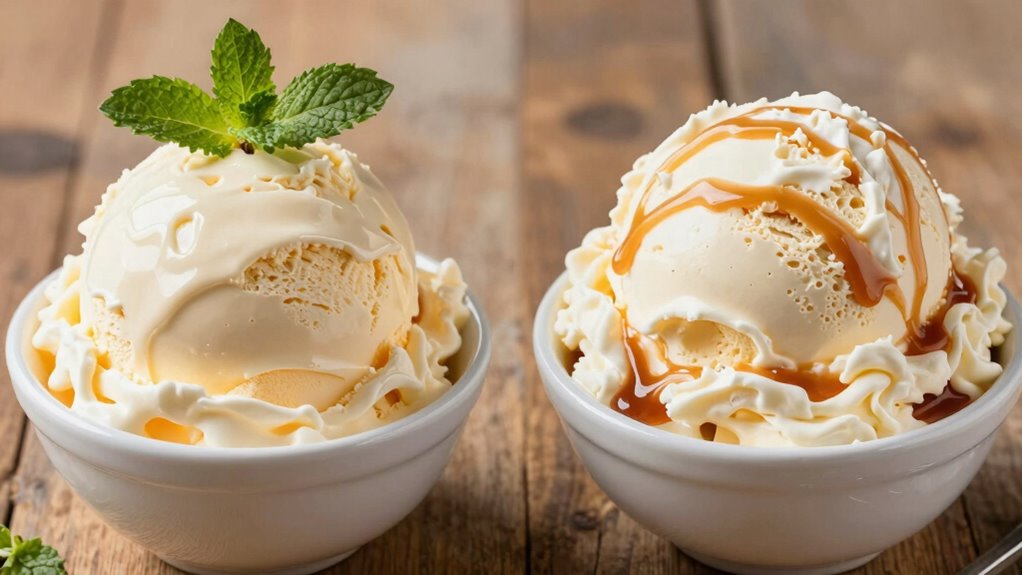

Choosing between no-churn and churned ice cream depends on your taste preferences. If you prefer a rich, dense, and velvety treat, no-churn offers that indulgent experience. For a lighter, airy, and smooth texture, churned ice cream is your best bet. Both can be flavored creatively, but the texture and flavor effects of the churning process influence which one sounds more appealing. To uncover more differences and find your perfect scoop, keep exploring these options.
Key Takeaways
- No-churn ice cream offers a dense, creamy texture with concentrated flavors, while churned ice cream is lighter and more aerated.
- Churned ice cream tends to have a more complex flavor profile due to thorough mixing of ingredients.
- No-churn is quicker and easier to prepare, producing a smooth, velvety consistency.
- Churned ice cream provides a fluffier, melt-in-the-mouth experience with a lighter texture.
- Preference for taste depends on whether you prioritize richness and simplicity or lightness and complexity.
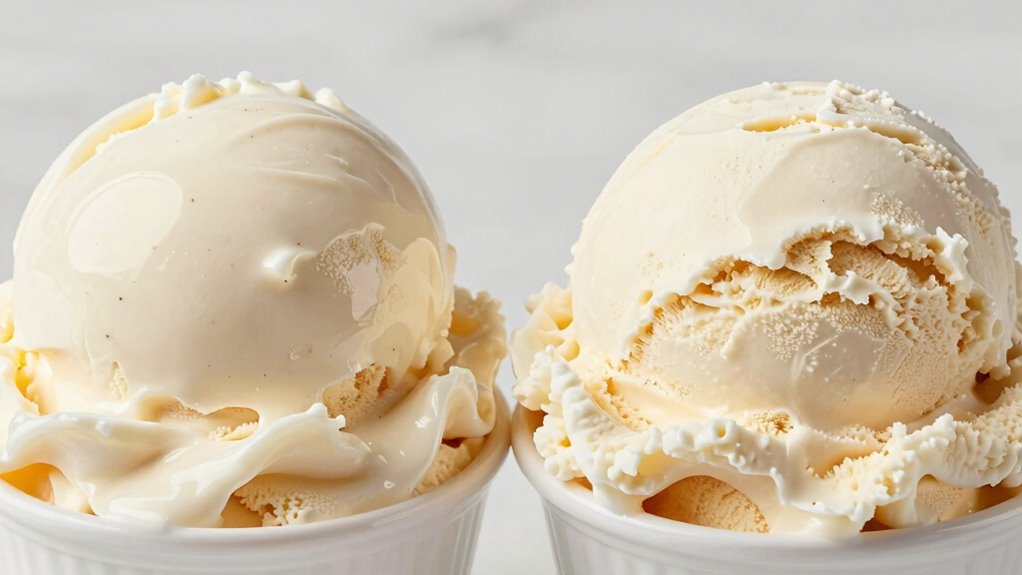
When choosing between no-churn and churned ice cream, understanding their differences can help you pick the best option for your preferences. Both types have unique qualities that influence your overall experience, especially regarding ice cream texture and flavor consistency. No-churn ice cream is quick and easy to make at home, requiring just a few ingredients like cream, sweetened condensed milk, and flavorings. It’s known for its smooth, creamy texture, which closely resembles store-bought varieties. Because it doesn’t involve churning, the atmosphere of the mixture remains uniform, resulting in consistent flavor throughout. You won’t find any icy or grainy bits in no-churn ice cream; instead, it maintains a rich, velvety feel that makes each spoonful satisfying.
On the other hand, churned ice cream is traditionally made with an ice cream maker that continuously stirs the mixture as it freezes. This process creates tiny air pockets, giving the ice cream a lighter, fluffier texture that melts smoothly on your tongue. The churning process also influences flavor distribution, allowing ingredients to blend thoroughly and evenly. As a result, churned ice cream often boasts a more complex flavor profile because the ingredients are mixed more thoroughly during churning. Many people prefer this method because it produces a more authentic, artisanal feel, with a texture that’s both airy and creamy. If you appreciate a consistent, smooth mouthfeel with a slightly lighter weight, churned ice cream might be your go-to.
However, the difference in texture and flavor consistency isn’t just about the process—it also impacts your enjoyment. No-churn varieties tend to be denser and richer, which might appeal if you love a more indulgent, custard-like experience. Meanwhile, churned ice cream’s lighter, airier quality can be preferable if you want a softer, melt-in-your-mouth treat. Both types can be flavored endlessly—whether it’s adding fruits, chocolate, or nuts—but their base textures influence how those flavors integrate. No-churn recipes often retain a more intense flavor because of their concentrated creaminess, while churned ice cream can offer a more balanced taste due to thorough mixing.
In the end, your choice depends on what kind of ice cream experience you prefer. If you value simplicity and a rich, smooth texture with consistent flavor, no-churn is a fantastic option. If you desire a light, airy texture with a well-blended flavor profile, churned ice cream might suit you better. Either way, understanding these differences helps you decide which method aligns with your taste and the kind of dessert you want to enjoy.
Frequently Asked Questions
How Do Preservatives Affect the Flavor of No-Churn Versus Churned Ice Cream?
Preservatives can alter the flavor of no-churn and churned ice cream by adding subtle preservative flavors or masking natural ones. They extend shelf life, but may impact taste, making ice cream less fresh and vibrant. No-churn varieties often contain more preservatives, which can influence flavor more noticeably. Churned ice cream usually has a shorter shelf life, so preservatives might be less prominent, preserving a more authentic flavor.
Can Homemade No-Churn Ice Cream Match Store-Bought Churned Varieties?
You can absolutely enjoy homemade no-churn ice cream that rivals store-bought churned varieties. With fresh ingredients and thoughtful homemade techniques, you’ll find your ice cream bursting with flavor and freshness. While store-bought may have a smoother texture, your homemade creations offer a delightful, personalized touch. Embrace the process, and you’ll discover that with a little effort, your no-churn ice cream can be just as satisfying and delicious.
Which Type of Ice Cream Has a Longer Shelf Life?
You’ll find that churned ice cream generally has a longer shelf stability and storage duration because of its traditional pasteurization and added stabilizers. No-churn varieties, made with fresh ingredients and no stabilizers, tend to have a shorter shelf life. To keep them fresh longer, store both types in airtight containers and maintain consistent freezing temperatures. Churned ice cream’s processing helps it stay good for several months, whereas no-churn is best enjoyed sooner.
Are There Health Differences Between No-Churn and Churned Ice Cream?
Like two sides of the same coin, no-churn and churned ice cream have subtle health differences. You might notice that no-churn often contains more sugar and relies on dairy quality, which can affect your health. Churned ice cream might have added stabilizers or preservatives. So, if you’re health-conscious, check labels for sugar content and dairy quality, as these factors influence your overall well-being more than the churn method itself.
How Does the Texture Differ Between No-Churn and Churned Ice Cream?
You’ll notice that no-churn ice cream often has a creamier consistency, thanks to its dense, whipped texture. Churned ice cream, on the other hand, usually exhibits more textural variations, with a smoother, aerated feel from the churning process. The difference lies in the method: no-churn tends to be richer and more uniform, while churned offers a lighter, more complex texture with small ice crystals for added bite.
Conclusion
So, whether you prefer no-churn or churned ice cream, remember it all comes down to your personal taste. No-churn might surprise you with its creamy, homemade magic, while churned can deliver that perfectly smooth, professional finish. No matter your choice, it’s like tasting a slice of heaven—each spoonful can feel like a moment of pure bliss. So go ahead, indulge and savor every delicious, ice-cold bite!