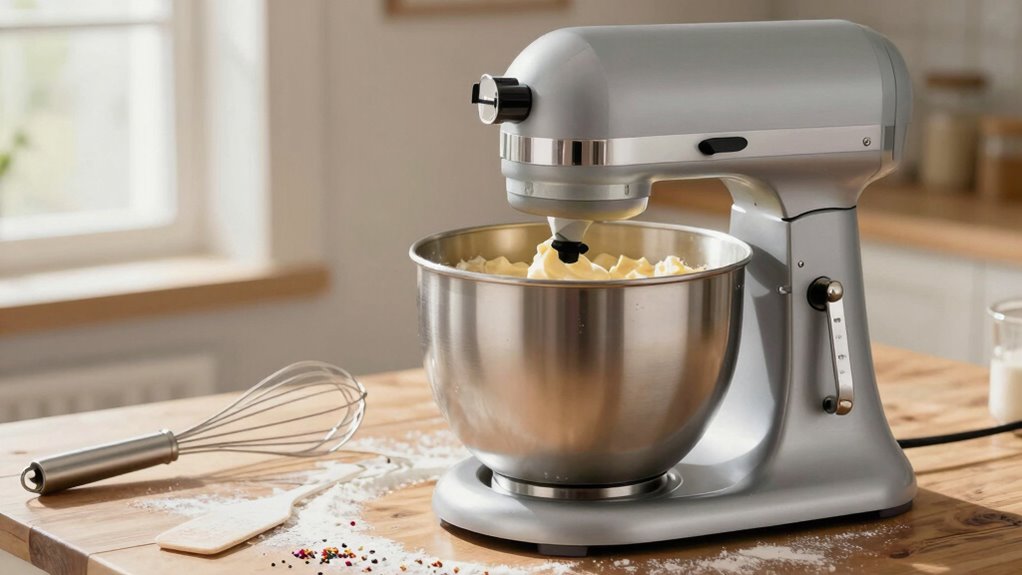

To make perfect cakes and cookies, you need to master key stand mixer habits. Start with low or medium-low speed to prevent splattering, then gradually increase as ingredients combine. Maintain a steady rhythm to guarantee even mixing, and remember to scrape down the bowl regularly for uniform results. These habits prevent overmixing and produce better textures. Keep these tips in mind, and you’ll discover how small adjustments can transform your baking success.

Get kitchen staples and gadgets delivered free with Prime
- Fast, free delivery on millions of items
- Prime Video, Amazon Music and more included
- Member-only deals all year
Key Takeaways
- Start mixing on low or medium-low to prevent splattering and ensure even ingredient incorporation.
- Maintain a steady rhythm to achieve consistent batter or dough texture.
- Regularly scrape down the bowl to prevent unmixed pockets and ensure thorough blending.
- Adjust speed gradually as ingredients thicken for optimal mixing without overworking the batter.
- Use proper mixing habits to prevent overmixing, promoting better rise, texture, and appearance of baked goods.
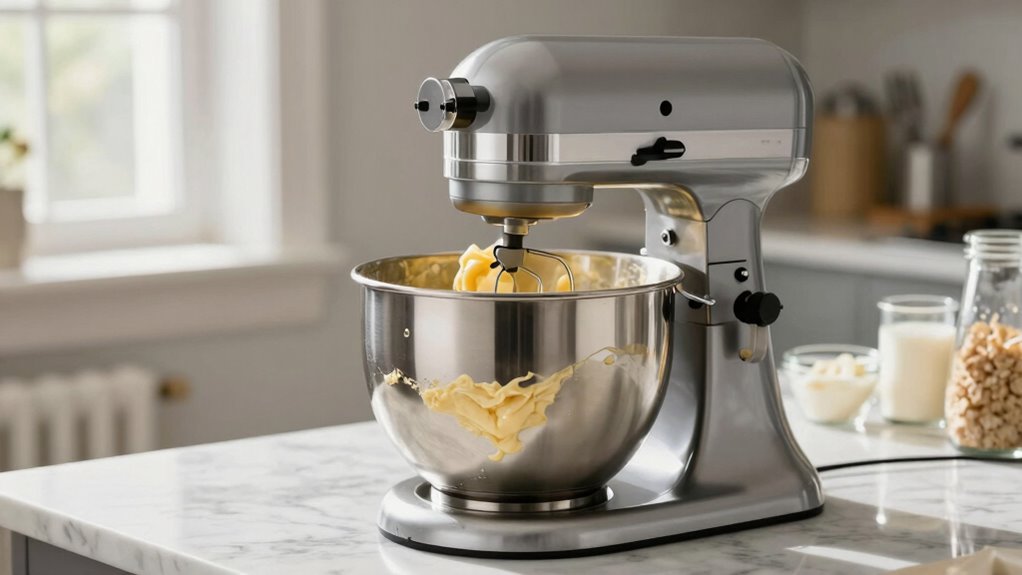
Using a stand mixer can greatly improve your baking, but mastering the right habits guarantees perfect cakes and cookies every time. One of the most important habits is paying careful attention to your mixing speed. You want to start on a low or medium-low setting to prevent ingredients from splattering or incorporating too quickly. As the ingredients begin to combine and thicken, you can gradually increase the speed to medium or medium-high, depending on the recipe. High speeds are best reserved for whipping cream or egg whites, not for beating batter. Consistently adjusting the mixing speed ensures you don’t overmix or undermine the ingredients, which can affect texture and rise. By controlling the speed, you help develop the desired structure in your baked goods, whether that’s a light, airy cake or dense, chewy cookies. Additionally, paying attention to the appropriate mixing techniques can further enhance your baking results. Developing a good mixing rhythm can also help you maintain steady control over the process and achieve more consistent results.
Another habit that can’t be overlooked is bowl scraping. As your mixer runs, ingredients tend to stick to the sides and bottom of the bowl, especially when working with thick batters or doughs. Regularly stopping the mixer to scrape down the bowl with a rubber spatula guarantees all ingredients are evenly incorporated. This prevents pockets of flour or butter from remaining unmixed, which could lead to uneven texture or inconsistent baking results. Bowl scraping also helps in avoiding overmixing, as you can better gauge the consistency of your batter or dough. Make it a routine to pause your mixer every few minutes, especially during critical stages like adding dry ingredients or fats, to scrape the sides thoroughly. Incorporating the right mixing techniques can make a noticeable difference in the final product. This habit promotes uniformity and saves time in the long run by reducing the need for additional mixing later.
Combining these habits—adjusting mixing speed thoughtfully and regularly scraping the bowl—sets a solid foundation for successful baking. They work together to ensure ingredients are properly blended without overworking the batter. Overmixing can develop gluten in flour, leading to tough cookies or dense cakes, so these habits help you strike the perfect balance. As you become more consistent with controlling speed and maintaining a clean bowl, you’ll notice improvements in the overall quality of your baked goods. Your cakes will rise beautifully, and your cookies will have the perfect texture. The key is staying attentive throughout the mixing process, making small adjustments, and developing a routine that keeps your ingredients evenly combined. Mastering these habits ultimately turns your stand mixer into a powerful tool for baking perfection every time.
stand mixer with multiple speed settings
As an affiliate, we earn on qualifying purchases.
As an affiliate, we earn on qualifying purchases.
Frequently Asked Questions
How Do I Prevent My Stand Mixer From Overheating?
To prevent your mixer from overheating, avoid overloading it with heavy dough or multiple batches at once. Allow the motor to cool down between uses by turning off the mixer and giving it a break. Keep the ventilation clear to promote effective motor cooling. If you notice it’s getting hot, stop and let it cool down before continuing. Regular maintenance helps keep your mixer running smoothly and prevents overheating issues.
What’s the Best Speed Setting for Mixing Different Ingredients?
Think of your stand mixer as a skilled dancer, moving gracefully through each step. For best speed consistency and ingredient incorporation, start on low to combine ingredients gently. Gradually increase to medium for creaming or whipping, and use high only when necessary, like for aerating batters. Adjust speed carefully to prevent splattering or overmixing, ensuring your ingredients blend smoothly without losing their structure.
How Often Should I Clean and Maintain My Stand Mixer?
You should clean and maintain your stand mixer regularly, ideally after every use, to keep it in top shape. Focus on your cleaning routines by washing mixer accessories, such as beaters and bowls, thoroughly. Wipe down the mixer’s body to remove any residue. Check for debris around moving parts and lubricate if necessary. Regular maintenance guarantees your mixer runs smoothly and extends its lifespan.
Can I Use My Stand Mixer for Bread Dough?
Yes, you can use your stand mixer for bread dough. Use the dough hook attachment and knead using proper techniques, like mixing until the ingredients are just combined before switching to kneading. Be mindful of flour types; high-protein flours like bread flour work best for gluten development. Avoid overloading the mixer, and let it knead until the dough is smooth and elastic, ensuring perfect bread texture.
How Do I Troubleshoot Common Stand Mixer Problems?
When your stand mixer acts up, you’re hitting a snag, but don’t give up yet. First, check if the mixer attachments are properly secured and clean. Make sure the power cord is plugged in firmly. If it’s overheating, let it rest. For inconsistent mixing, adjust the speed settings or replace worn-out parts. Regularly maintaining your mixer guarantees it runs smoothly, helping you perfect your baking recipes without a hitch.
Conclusion
Mastering your stand mixer habits can truly elevate your baked goods. By consistently measuring ingredients, avoiding overmixing, and properly cleaning your mixer, you guarantee perfect cakes and cookies every time. Did you know that bakers who follow these habits report a 30% increase in recipe success? Small changes make a big difference. So, stick to these habits, and watch your baked treats turn out consistently delicious, impressing everyone with your skill and confidence.
Fall Picks
fall essentials
As an affiliate, we earn on qualifying purchases.