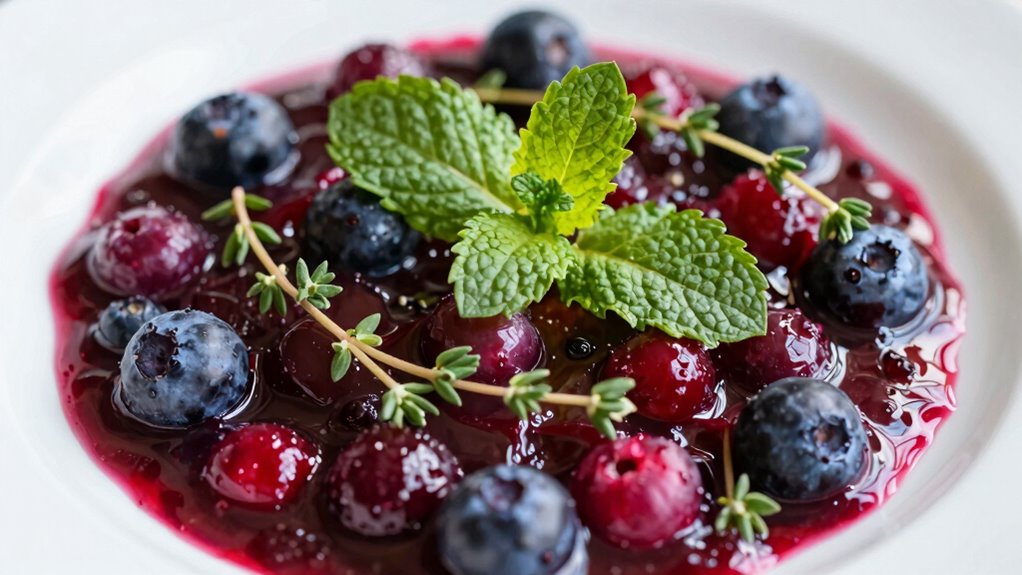

To use herbs in desserts without making them feel weird, choose familiar herbs like basil, mint, or lavender and use them sparingly. Infuse creams or syrups to distribute flavors evenly, and add fresh herbs as gentle garnishes for aroma and visual appeal. Always taste as you go and adjust amounts to maintain balance. Proper technique and subtlety help herbs enhance your dessert naturally—stick around to discover more tips for perfect herbal harmony.

Get kitchen staples and gadgets delivered free with Prime
- Fast, free delivery on millions of items
- Prime Video, Amazon Music and more included
- Member-only deals all year
Key Takeaways
- Choose familiar herbs like basil, mint, or thyme that complement sweet flavors naturally.
- Use small amounts of herbs and taste frequently to prevent overpowering the dessert.
- Infuse creams, syrups, or batters with herbs for even, subtle flavor distribution.
- Pair herbs thoughtfully with ingredients (e.g., lemon, berries) for harmonious combinations.
- Garnish with fresh herbs for aroma and visual appeal without overwhelming the dish.
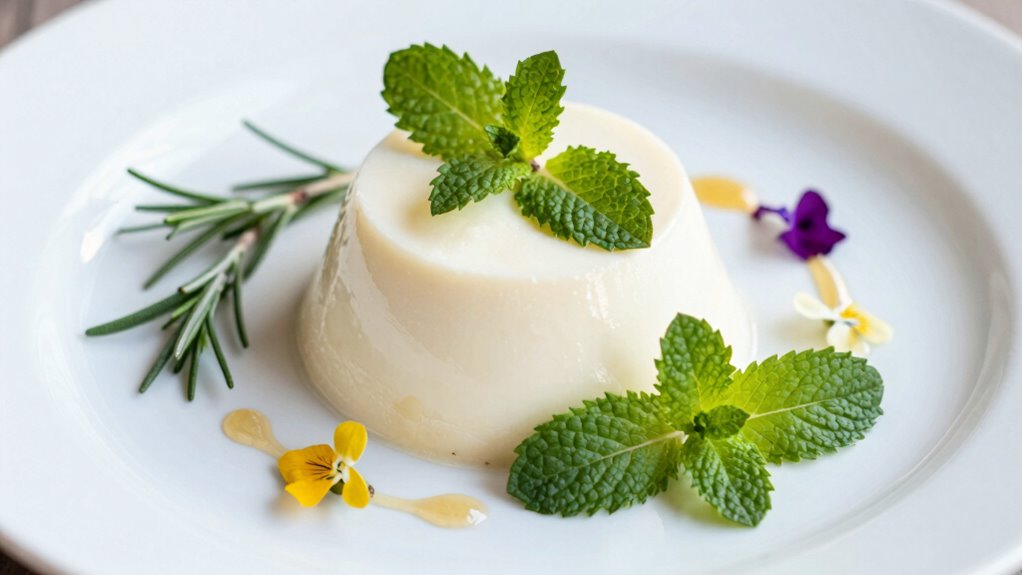
Have you ever wondered how herbs can elevate the flavor of your desserts? It’s more than just adding a sprig of mint or a twist of lemon; it’s about understanding herb pairing and creating a harmony of flavors. When you use herbs thoughtfully, they can enhance sweetness, add depth, and even introduce unexpected notes that make your desserts memorable. The key is to focus on flavor balance—matching herbs with ingredients in a way that complements rather than overpowers.
Start with familiar herbs like basil, thyme, or mint, which can be surprisingly versatile in desserts. For example, basil pairs beautifully with strawberries or lemon, creating a fresh, aromatic burst that isn’t overpowering. When you incorporate herbs, think about how their flavors will interact with the sweetness. A little goes a long way; too much herb can make your dessert taste herbal rather than sweet. The goal is to subtly enhance, not dominate.
Familiar herbs like basil, thyme, and mint subtly enhance desserts without overpowering their sweetness.
Herb pairing is vital for achieving flavor balance. For instance, rosemary’s piney notes work well with lemon or honey, giving your desserts an earthy sophistication. Conversely, delicate herbs like chamomile or lavender should be used sparingly, as their floral qualities can easily overwhelm. You might infuse cream or syrup with herbs to distribute their flavor evenly, ensuring they meld seamlessly into your dessert. This technique helps you maintain a cohesive taste profile and prevents any one herb from standing out too much. Additionally, understanding how to balance flavors ensures your desserts remain harmonious and appealing. Exploring the science of flavor pairing can also help you create more innovative combinations.
Another way to keep your herb-infused desserts from feeling weird is to think about the texture and temperature. Fresh herbs can be chopped and sprinkled on top of ice cream or panna cotta for a burst of aroma with each bite. Dried herbs or infused oils can be mixed into batters or custards, subtly altering the flavor without making the dish seem herbal. Remember, the goal isn’t to mimic a savory dish but to enhance the overall flavor experience.
Finally, taste as you go. Adjusting the amount of herbs during the preparation ensures you hit that perfect flavor balance. Experiment with small amounts first, then build up gradually. When you strike that harmony—where the herbs elevate the sweetness without overshadowing it—you’ll find that using herbs in desserts can be both innovative and delicious. With careful herb pairing and a focus on flavor balance, you can create desserts that are intriguing, refined, and utterly enjoyable.
As an affiliate, we earn on qualifying purchases.
Frequently Asked Questions
Can I Substitute Fresh Herbs With Dried Ones in Desserts?
Yes, you can substitute fresh herbs with dried ones in desserts. Keep in mind that dried herbs are more concentrated, so use about one-third of the amount called for fresh. For best results, utilize herb infusion techniques like steeping dried herbs in liquids to extract flavor without overpowering your dessert. Dried herb alternatives work well in recipes where gentle infusion and subtle flavor are desired, ensuring your dessert remains balanced and flavorful.
Which Herbs Work Best With Chocolate Desserts?
You’ll find that herbs like mint, basil, and rosemary work beautifully with chocolate desserts. Herb flavor combinations can enhance richness and complexity, especially when you use herbal infusion techniques—like steeping herbs in cream or melting them with chocolate. Mint adds freshness, basil offers a sweet, aromatic note, and rosemary provides a subtle earthiness. Experiment with these herbs to create balanced, memorable chocolate treats that surprise and delight.
How Do I Prevent Herbs From Overpowering the Dessert Flavor?
To prevent herbs from overpowering your dessert, focus on achieving herb flavor balance by using small amounts and tasting as you go. Choose complementary herb pairings that enhance your dessert’s main flavors without overwhelming them. Start with fresh herbs, finely chop or muddle them, and add gradually. This way, you maintain a subtle herbal note that enhances, rather than dominates, your sweet creation.
Are There Herbs Suitable for Both Sweet and Savory Desserts?
Herb flavor pairing and culinary herb versatility make some herbs perfect for both sweet and savory desserts. Basil, for example, offers fresh, aromatic notes that complement strawberries and chocolate, while mint adds brightness to ice creams and fruit salads. Rosemary’s woody flavor pairs beautifully with citrus and chocolate, and thyme brings a subtle earthiness to both fruit tarts and creamy desserts. These herbs seamlessly bridge the gap between sweet and savory, enhancing your dessert creations.
How Should I Store Herbs to Keep Them Fresh for Baking?
To keep herbs fresh for baking, follow herb preservation techniques like wrapping them in a damp paper towel and storing them in a plastic bag in the fridge. Choose fresh herb selection tips by checking for vibrant color, firm stems, and a fragrant aroma. Regularly trim the stems and use herbs promptly to maximize flavor. Proper storage guarantees your herbs stay lively and flavorful for your dessert creations.
Conclusion
Remember, a little herb can go a long way—less is often more. When you experiment with herbs in desserts, start small and taste as you go. Trust your palate and don’t be afraid to try new combinations. As the saying goes, “Variety is the spice of life,” so embrace herbs as a way to add unexpected flavor and elevate your sweet creations. Happy experimenting, and let your taste buds be your guide!
NFL season / tailgating Picks
team gear
As an affiliate, we earn on qualifying purchases.