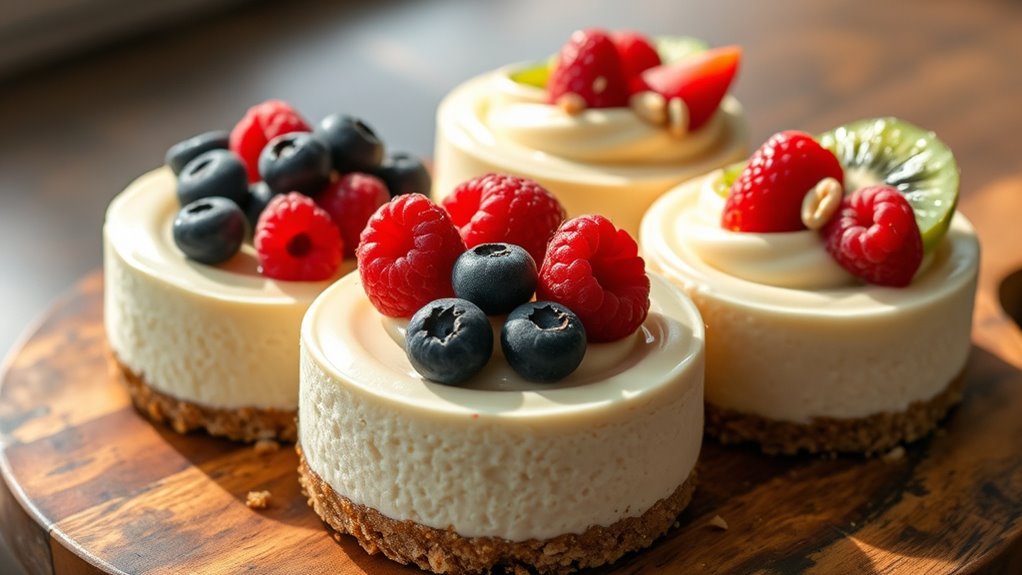

To make vegan cheesecakes with cashew-based creaminess, soak cashews overnight until soft, then blend them with plant-based milk, lemon juice, and sweeteners like maple syrup until smooth. Customize your flavors with vanilla, cocoa, or fruit purees, and pour the mixture onto a prepared crust. Chill the cheesecake for several hours until firm and creamy. Want to discover more tips and flavor ideas? Keep exploring for all the delicious details.
Key Takeaways
- Cashews provide a rich, creamy texture that closely mimics traditional cream cheese in vegan cheesecakes.
- Soaking cashews softens them, ensuring smooth blending for a velvety filling.
- Flavored with lemon juice and sweeteners, cashew-based fillings achieve the classic tangy and sweet profile.
- Customizable with various flavorings and fruit additions enhances the cheesecake’s versatility.
- Chilling the assembled cheesecake allows it to firm up, developing its signature creamy consistency.
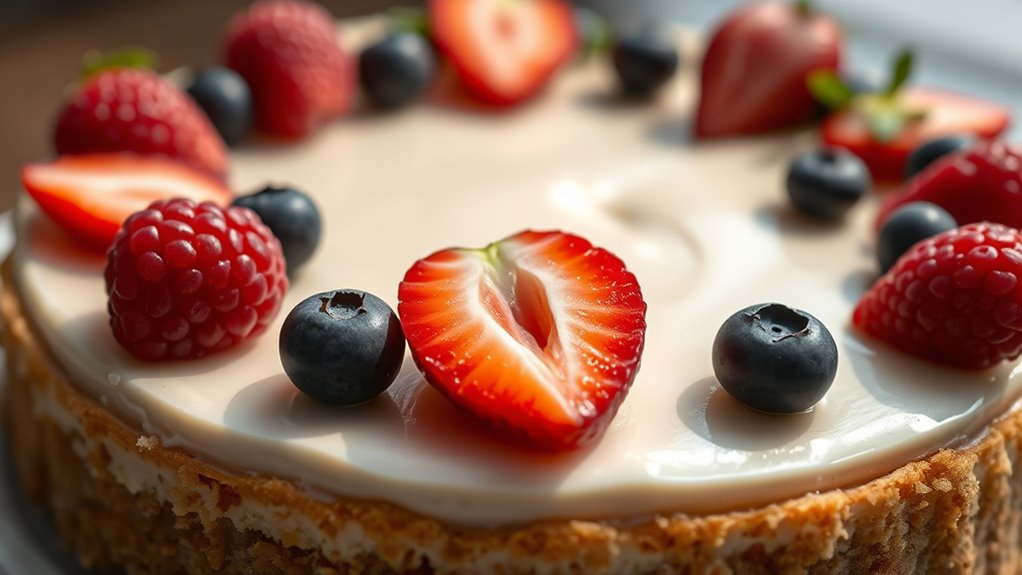
Have you ever wondered how to enjoy a rich, creamy cheesecake without using dairy or eggs? The secret lies in harnessing dairy alternatives that deliver the same luscious texture and flavor. Cashew-based cheesecakes have become a popular choice among plant-based desserts because they mimic the smoothness of traditional cream cheese so well. When you choose plant-based desserts like these, you’re not only satisfying your sweet tooth but also embracing a kinder, more sustainable way to indulge. Cashews are naturally creamy and blend effortlessly into a velvety filling, making them an ideal base for vegan cheesecakes.
Cashew-based cheesecakes offer a creamy, dairy-free alternative that mimics traditional smoothness and flavor.
To get started, soak your cashews for at least four hours or overnight. This step softens them and ensures your filling turns out silky smooth. After soaking, drain the cashews and blend them with a splash of plant-based milk—such as almond, coconut, or soy milk—and a touch of lemon juice or vinegar to add brightness and tang. This combination creates that familiar cheesecake tang without the need for traditional dairy. You can add natural sweeteners like maple syrup or agave nectar to achieve the perfect level of sweetness. The beauty of using cashews is that they have a neutral flavor, allowing you to experiment with different flavorings like vanilla, cocoa, or fruit purees to customize your dessert.
Once blended, the mixture should be thick, creamy, and smooth, ready to pour over a vegan crust. You can opt for a base made from crushed graham crackers, nuts, or gluten-free options, depending on your preference. Once assembled, chill your vegan cheesecake in the refrigerator for several hours or until it firms up. The cooling process helps develop the rich texture you’re aiming for, making it just as satisfying as traditional cheesecake. Because plant-based desserts like these rely on wholesome, natural ingredients, they often contain fewer processed additives, giving you a cleaner, more nourishing treat.
Not only are dairy alternatives like cashew cream versatile, but they also open up a world of creative possibilities for plant-based desserts. You can layer flavors, incorporate fresh fruit, or even swirl in chocolate or caramel for added decadence. Whether you’re vegan or simply looking to explore healthier dessert options, cashew-based cheesecakes prove that you don’t need dairy or eggs to enjoy a luscious, satisfying treat. With a little preparation and the right ingredients, you can indulge in a creamy, dairy-free dessert that rivals traditional cheesecakes in every way.
Frequently Asked Questions
How Long Do Vegan Cheesecakes Last in the Refrigerator?
You can store vegan cheesecakes in the refrigerator for up to 3 to 4 days. Keep an eye out for spoilage signs like sour smell, mold, or an off taste, which indicate it’s time to toss it. To keep it fresh longer, cover it tightly with plastic wrap or store it in an airtight container. Proper storage helps prevent spoilage and maintains the creamy texture you love.
Can Cashew-Based Cheesecakes Be Frozen for Later Use?
Freezing a cashew-based cheesecake is like preserving a little piece of heaven. You can definitely freeze it for later, using proper freezing techniques to maintain its texture and flavor. Wrap it tightly and store it in an airtight container. This method extends its shelf life, usually up to 1-2 months. When ready to enjoy, thaw it in the fridge overnight for the best taste and consistency.
Are There Gluten-Free Options for Vegan Cheesecakes?
Yes, you can find gluten-free options for vegan cheesecakes. Use gluten-free crusts made from almond flour, coconut flour, or gluten-free oats. You can also incorporate alternative flours like chickpea or rice flour in the filling or crust for added flexibility. These options guarantee your cheesecake stays gluten-free, so you enjoy a delicious, allergen-friendly treat without sacrificing flavor or texture.
What Are Some Common Flavor Variations for Vegan Cheesecakes?
You can enjoy a variety of flavor variations for vegan cheesecakes, like adding fruit toppings such as strawberries, blueberries, or raspberries for a fresh burst. Chocolate swirls are also popular, offering a rich, indulgent twist. You might experiment with lemon or key lime zest for tanginess or incorporate spices like cinnamon or vanilla for warmth. These options let you customize your vegan cheesecake to suit your taste perfectly.
How Do I Prevent Cracks in My Vegan Cheesecake?
To prevent cracks in your vegan cheesecake, focus on moisture control and proper baking techniques. Avoid overbaking, which dries out the filling, and use a water bath to provide gentle, even heat. Keep the oven door slightly ajar during cooling to minimize temperature shocks. Also, blend your ingredients thoroughly for a smooth consistency, and don’t rush the cooling process—these steps help guarantee a crack-free, creamy finish.
Conclusion
Now that you’ve mastered making cashew-based vegan cheesecakes, you hold the power to create guilt-free indulgence whenever you crave it. Remember, each slice is a reminder that compassion and flavor can coexist beautifully—like two sides of the same coin. So, embrace your culinary creativity and let your desserts be a demonstration to kindness. After all, isn’t life sweetest when we nourish both body and soul, blending compassion with deliciousness?