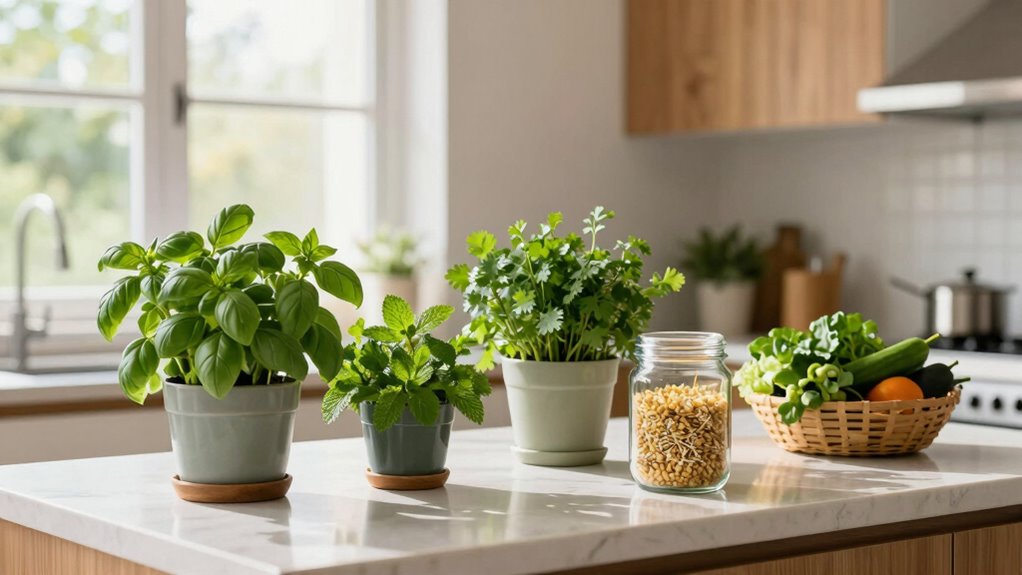

The smartest way to add more plants without going full vegan is to make small, gradual changes that fit your lifestyle. You can start by adding a handful of spinach to breakfast eggs, snacking on fruit instead of processed treats, or swapping pasta for zucchini noodles once a week. Focus on seeing plants as essential ingredients rather than sides. Keep exploring simple tips that make plant-based eating easy and enjoyable—there’s plenty more to discover.

Get kitchen staples and gadgets delivered free with Prime
- Fast, free delivery on millions of items
- Prime Video, Amazon Music and more included
- Member-only deals all year
Key Takeaways
- Gradually incorporate more plant-based ingredients into familiar meals without fully eliminating animal products.
- Use versatile, simple additions like spinach or extra vegetables in everyday dishes.
- Focus on flexible, sustainable changes rather than strict vegan commitments.
- Grow herbs and seasonal produce to increase fresh, plant-rich options easily.
- View plants as integral ingredients, not just side dishes, to naturally boost plant intake.

Adding more plants to your diet doesn’t mean you have to become fully vegan. You can enjoy the benefits of increased plant intake without making drastic lifestyle changes. One common obstacle is the misconception surrounding plant-based myths, which often paint plant-heavy eating as overly restrictive or complicated. In reality, integrating more plants can be simple and flexible. The key lies in understanding that you don’t need to overhaul your entire diet overnight. Instead, you can gradually incorporate more vegetables, fruits, nuts, and grains into your meals, making the process enjoyable rather than overwhelming.
Many people think that eating more plants requires buying specialized products or following strict vegan recipes. But that’s a myth. You’re already familiar with many plant-based options—think salads, smoothies, stir-fries, or even adding extra vegetables to your sandwiches. It’s about shifting your mindset to see plants as versatile ingredients rather than side dishes or afterthoughts. With a little creativity, you can discover new flavors and textures that make your meals more exciting. This approach also aligns with sustainable gardening principles, which emphasize growing your own food or choosing produce from local sources. By participating in sustainable gardening, you reduce your carbon footprint and gain fresh, nutrient-rich ingredients straight from your backyard or community farm.
Incorporating more plants doesn’t mean you have to give up your favorite foods or meal routines. You can start small—add a handful of spinach to your morning eggs, snack on apple slices instead of processed snacks, or replace pasta with zucchini noodles once a week. These small changes add up over time, making your diet more plant-focused without feeling restrictive. Plus, sustainable gardening practices can support this shift. When you grow your own herbs or vegetables, you’re more likely to eat them regularly, and you’ll enjoy the satisfaction of knowing where your food comes from. Gardening also encourages you to explore seasonal produce, which is often more flavorful, affordable, and eco-friendly. Developing an understanding of biodiversity and conservation can further enhance your awareness of how sustainable practices benefit the environment and your health. Incorporating local sourcing into your routine can also make a significant positive impact. Embracing gardening allows you to enjoy fresh, organic ingredients and fosters a deeper connection to the food you eat. Additionally, understanding the importance of sustainable practices can help you make more environmentally conscious choices in your food habits. Recognizing how biodiversity supports resilient ecosystems can motivate you to choose diverse, locally grown options that benefit both your health and the planet.
stainless steel zucchini spiralizer
As an affiliate, we earn on qualifying purchases.
As an affiliate, we earn on qualifying purchases.
Frequently Asked Questions
Can I Add More Plants Without Changing My Current Diet?
Yes, you can add more plants without changing your current diet by incorporating plant-based snacks and indoor gardening. Snack on nuts, seeds, or dried fruits to boost plant intake effortlessly. Meanwhile, indoor gardening allows you to grow herbs, small vegetables, or decorative plants in your home, enhancing your environment and increasing your plant exposure without altering your eating habits. It’s a simple way to enjoy more plants daily.
What Are the Easiest Plants for Beginners to Incorporate?
You can start with easy-to-care-for succulent varieties and herb gardening, which are perfect for beginners. Succulents like aloe vera and jade thrive on minimal water and sunlight, making them low-maintenance. Herbs such as basil and mint grow quickly and require simple care, giving you instant gratification. These plants prove that adding greenery is achievable without much effort, boosting your confidence in cultivating even more plants over time.
Do Plant-Based Supplements Help Meet Nutrient Needs?
Plant-based supplements can help you meet nutrient needs, especially if you’re concerned about deficiencies. Synthetic nutrients in supplements are formulated to boost your intake of vitamins and minerals like B12, iron, and omega-3s. However, supplement efficacy varies; some are highly effective, while others might not absorb as well. It’s best to select high-quality options and consult a healthcare professional to make certain you’re covering your nutritional bases.
How Can I Ensure My Plants Thrive Indoors?
To guarantee your indoor plants thrive, focus on providing proper light requirements and maintaining ideal indoor humidity. Place your plants where they get adequate natural light, or supplement with grow lights if needed. Keep humidity levels steady by misting or using a humidifier, especially in dry environments. Regularly check soil moisture and avoid overwatering. With these steps, your plants will stay healthy, vibrant, and flourish indoors.
Are There Any Environmental Benefits to Adding More Plants?
Adding more plants offers notable environmental benefits, like improving air purification and reducing carbon dioxide levels. You help filter toxins and increase oxygen in your space, contributing to a healthier environment. Plants also absorb carbon, aiding in carbon reduction efforts. By incorporating more greenery, you support cleaner air and mitigate climate change impacts, making your home more sustainable and eco-friendly. Plus, you enjoy a more calming, natural atmosphere.
Conclusion
By effortlessly weaving more plants into your life, you open a culinary universe so vibrant and nourishing, it could rival the very gardens of Eden. You’ll astonish your taste buds, impress your friends, and elevate your health—all without sacrificing your favorite dishes or adopting a full vegan lifestyle. Embrace these simple changes, and watch as your meals transform into majestic, verdant feasts that seem almost too good to be true. The plant-powered revolution is just one step away—are you ready to lead it?
Halloween Picks
halloween
As an affiliate, we earn on qualifying purchases.