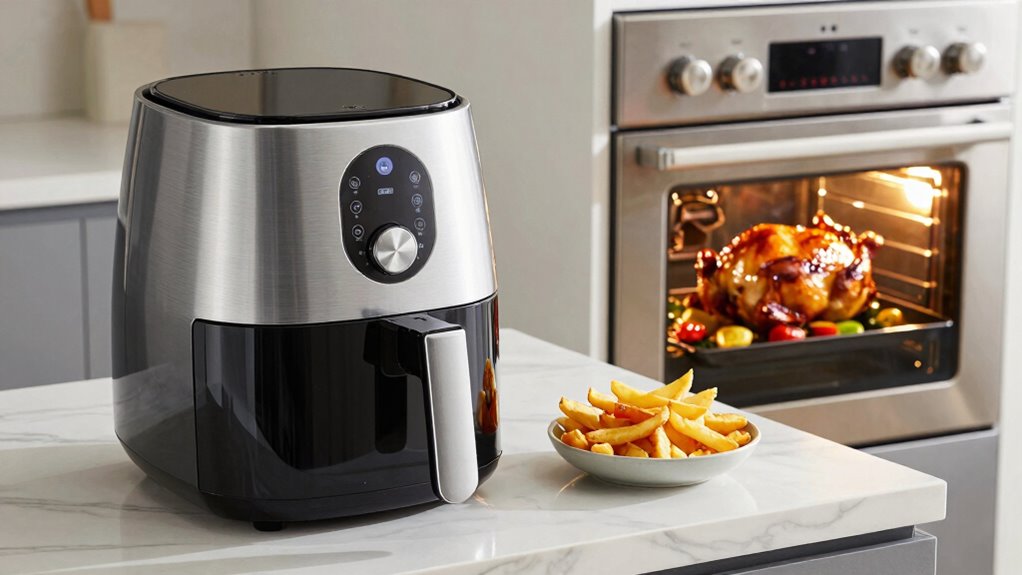

If you’re aiming for a healthier option, an air fryer often wins over an oven because it uses much less oil and cooks food faster with hot air circulation. This reduces fat content and maintains flavor without extra calories. Plus, its quick cooking time lowers energy use. While ovens can prepare larger meals, a quick, crispy dish is more health-conscious in an air fryer. Keep exploring to see how each appliance can best suit your lifestyle and health goals.
Key Takeaways
- Air fryers use less oil, reducing fat and calorie intake, making them healthier for quick, crispy meals.
- Ovens allow for baking and roasting with minimal fats, supporting balanced, healthy cooking.
- Faster cooking in air fryers conserves energy, decreasing overall environmental impact and promoting eco-friendly eating.
- For larger, complex meals, ovens can be healthier by avoiding added fats from frying.
- Both appliances can support healthier eating habits depending on cooking methods and food choices.

When choosing between an air fryer and an oven, you’ll want to contemplate how each appliance fits into your cooking style and kitchen space. One of the most noticeable differences is cooking speed. An air fryer heats up quickly, often in just a few minutes, and can cook food faster than a traditional oven due to its compact size and intense circulation of hot air. This means you spend less time waiting for your meal to be ready, making it ideal for busy weekdays or when you’re craving a quick snack. Ovens, particularly conventional ones, take longer to preheat and cook, especially for small batches, which can slow down your meal prep process. However, they excel when you’re cooking larger quantities or multiple dishes at once, providing versatility beyond the capabilities of most air fryers.
Energy efficiency is another essential aspect to consider. Air fryers are generally more energy-efficient because they are smaller and heat up faster, requiring less power overall. Their rapid cooking times mean they consume less energy per use, which can add up to noticeable savings over time. If you’re environmentally conscious or looking to cut down on utility bills, an air fryer might be the smarter choice for daily use. Ovens, especially older models or those that need preheating, tend to use more electricity and take longer to cook food. While modern, energy-efficient ovens exist, they still require more energy due to their larger size and longer heating periods. This makes the air fryer not only a quicker option but also a more eco-friendly one for small, quick meals. Additionally, advancements in home appliance technology are contributing to more energy-efficient cooking options across both device types.
Despite these differences, both appliances can help you make healthier choices. Air fryers use considerably less oil compared to traditional frying, which can reduce fat intake and lower calorie content. Ovens, on the other hand, allow for baking and roasting with minimal added fats, giving you flexibility without sacrificing health benefits. When weighing cooking speed and energy efficiency, an air fryer clearly shines for quick, small meals and everyday convenience. It’s perfect if you want to save time and energy while still enjoying crispy, tasty dishes. An oven, however, remains a versatile tool capable of handling larger meals and more complex cooking tasks. By understanding these differences, you can select the appliance that best aligns with your lifestyle, kitchen space, and health goals, making your cooking both easier and healthier.
Frequently Asked Questions
Can Air Fryers Replace Ovens Entirely?
You can’t fully replace your oven with an air fryer because it offers countertop convenience and appliance versatility, but it’s limited in size and capacity. While air fryers excel at quick, crispy snacks, they can’t handle large meals or baking multiple dishes at once. For everyday cooking, your oven remains essential, but for quick, smaller tasks, an air fryer is a handy, space-saving addition.
Which Appliance Is Better for Baking?
Choosing the oven for baking is like picking a reliable workhorse. It offers superior baking versatility and precise temperature control, making it your best bet for a variety of baked goods. An oven can handle larger batches and more delicate recipes, giving you consistent results. While air fryers excel at quick, crispy snacks, an oven’s steady heat makes it the better choice for baking everything from bread to pastries.
Do Air Fryers Consume Less Energy Than Ovens?
Yes, air fryers generally consume less energy than ovens because of their smaller size and faster cooking times. Their design allows for higher cooking efficiency, meaning you use less power for the same tasks. If you’re looking to save energy, an air fryer is a smart choice. It heats up quickly, cooks food faster, and uses less electricity overall, making it a more energy-efficient appliance for everyday use.
Are Air Fryers Suitable for Large Families?
Air fryers are generally less suitable for large families because they have limited family capacity and slower cooking speed compared to traditional ovens. While they excel at quick, small batches, their compact size means you have to cook multiple rounds for bigger groups. If you need to prepare large meals efficiently, an oven offers more space and faster overall cooking, making it a better choice for bigger families.
How Do Cleaning and Maintenance Differ?
Cleaning an air fryer is simpler because it often has non-stick coatings that make wiping easy, and you only need to clean the basket and tray regularly. You’ll also need to check and clean the filter if your model has one. Ovens require more effort, with larger surfaces to wipe and more frequent filter cleaning in vent systems. Both need regular maintenance to keep them functioning efficiently.
Conclusion
In the end, whether you choose an air fryer or an oven, it all boils down to your lifestyle and preferences. Both appliances can help you eat healthier, but neither is a magic bullet. It’s important to remember that you’re the one calling the shots in the kitchen. So, pick what suits you best and don’t put all your eggs in one basket—balance is key to truly making healthier choices.