
TL;DR

Get kitchen staples and gadgets delivered free with Prime
- Fast, free delivery on millions of items
- Prime Video, Amazon Music and more included
- Member-only deals all year
Air fryers use hot air circulation to create crispy foods with less oil. While they can support healthier eating, overall meal choices and portion sizes are key. They’re not magic, but they can be a helpful tool.
If you’re looking for a way to enjoy crispy, satisfying foods without the greasy aftermath, an air fryer might be your new best friend. It promises healthier versions of fried favorites—think crispy chicken or crunchy fries—using a fraction of the oil. But before you toss your deep fryer or get carried away with assumptions, let’s clarify what an air fryer really does and how it fits into your healthy eating plans.
Many people jump in thinking an air fryer automatically makes meals nutritious. The truth? It’s a tool. Its real power lies in helping you cook with less oil, which can cut calories and saturated fat. But the overall health impact depends heavily on your ingredients, portion sizes, and cooking habits. Ready to see how this little device can fit into your kitchen and your health goals? Let’s break down the facts, tips, and common questions.
Using an air fryer can cut your oil use by up to 70%, significantly reducing added fats in your meals.
Choose whole, minimally processed ingredients to maximize health benefits when air frying.
Leave space around food, shake during cooking, and aim for a golden color to improve texture and safety.
Air fryers are handy for making vegetables more appealing, encouraging more plant-based eating.
Remember: the health impact depends more on what you eat and how much than on the appliance itself.
What Exactly Does an Air Fryer Do for Your Health?
An air fryer is a compact convection oven that uses hot air circulated by a fan to crisp food. It doesn’t soak food in oil like traditional frying. Instead, a light coating of oil or none at all can create that golden-brown crunch we all love.
This method can cut down on added fat and calories—by up to 70% compared to deep frying, according to some studies. For example, a serving of homemade air-fried chicken wings can have around 200 calories, compared to 400+ in deep-fried versions. That’s a big difference, especially if you’re trying to watch your intake.
But remember, it doesn’t automatically make everything healthy. Chips from frozen packages or breaded snacks still pack plenty of sodium and saturated fats. The appliance is a cleaner, faster way to cook, but the ingredients you choose matter more than the device itself. This means that while air frying reduces fat content, it still requires mindful ingredient choices—using fresh, whole foods rather than processed options—to truly support health. The tradeoff is that relying solely on the appliance without attention to what you cook can lead to unhealthy outcomes, such as crispy but overly salty or processed snacks. So, its benefit is maximized when combined with nutritious ingredients and balanced eating habits.
best air fryer for healthy cooking
As an affiliate, we earn on qualifying purchases.
As an affiliate, we earn on qualifying purchases.
How Using an Air Fryer Can Help You Eat More Vegetables
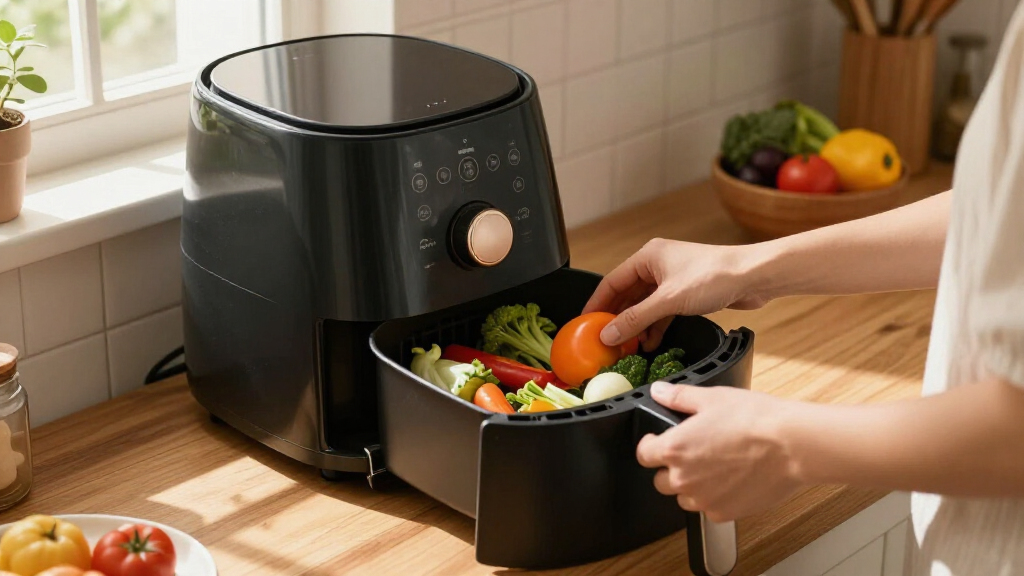
One of the biggest hurdles to eating vegetables is their texture and flavor. An air fryer changes that. Roasting vegetables like Brussels sprouts, carrots, or zucchini in the air fryer turns them irresistibly crispy on the outside while keeping the inside tender.
For instance, tossing broccoli florets with a teaspoon of olive oil and a sprinkle of garlic powder before air frying can turn a boring side into a crunchy, flavorful treat. The crispness makes vegetables more appealing, especially for kids or picky eaters.
Plus, quick cooking and minimal cleanup make it easier to include veggies regularly. It’s like turning a once-dull task into a snack-worthy moment. The key is to season well and avoid overloading the basket, which can cause uneven cooking. This approach not only boosts the intake of nutrient-rich foods but also influences eating habits by making vegetables more enjoyable and less like a chore. However, it’s important to recognize that while air frying can make vegetables more tempting, it’s still essential to balance overall diet quality—adding a variety of raw, steamed, or boiled vegetables along with air-fried options for maximum health benefits.
The Real Benefits of Air Fryers vs Traditional Cooking
| Cooking Method | Oil Usage | Speed | Texture | Health Impact |
|---|---|---|---|---|
| Deep Frying | High (immersion in oil) | Fast, but messy | Very crispy, greasy | High in saturated fat and calories |
| Baking | Minimal, controlled | Moderate | Less crispy, tender | Depends on ingredients |
| Air Frying | Less oil, often 1-2 tsp | Quick, no preheat needed | Crispy on outside, tender inside | Lower in fat, but still depends on ingredients |
Compared to deep frying, air frying uses significantly less oil—sometimes 70% less—making it a better choice for reducing calorie intake. It also cooks faster than traditional baking, and the result is a satisfyingly crispy outside without the excess grease. However, it’s important to understand that while air frying reduces fat and calorie content, it does not automatically make foods healthy. The health benefits depend heavily on the ingredients used and portion control. For example, air frying processed frozen snacks can still result in high sodium and unhealthy fats. The tradeoff is that it offers a way to enjoy textures and flavors that might otherwise be off-limits in a calorie-conscious diet, but it’s not a substitute for overall healthy eating habits. The key is moderation and ingredient awareness to maximize the benefits.
5 Simple Tips to Make Your Air-Fried Meals Healthier
- Choose whole or minimally processed ingredients. Think fresh vegetables, unbreaded chicken, or fish fillets. Avoid pre-fried or heavily processed snacks.
- Use measured oil sparingly. A teaspoon or two is enough for browning. Measure it out to keep calories in check.
- Don’t overcrowd the basket. Leave space around food for hot air to circulate. Cooking in batches ensures even crispiness.
- Turn or shake food during cooking. This helps prevent sogginess and promotes uniform browning. Use tongs or shake the basket gently.
- Keep an eye on color. Aim for a golden hue. Dark brown or burnt spots indicate excessive heat or cooking time, which can increase acrylamide formation in starchy foods.
For example, when roasting sweet potato fries, tossing them in a teaspoon of olive oil, spreading them out, and shaking halfway through results in crispy, sweet-tasting fries without excess oil.
Remember to check labels on packaged foods for sodium and saturated fat. Regular cleaning of your air fryer basket also keeps it functioning well and prevents flavor transfer. Implementing these tips helps ensure that your air-fried meals are as healthy as they can be, balancing flavor, texture, and nutritional value. It’s about making smart ingredient choices and mindful cooking practices that support your overall health goals.
Common Questions About Air Frying & Health
Are air fryers actually healthy? Yes, they support cooking with less oil, which can cut calories and saturated fat. But the healthiness depends on what you cook and how much you eat.
Is air frying better than deep frying? Usually, yes. It uses much less oil, reducing fat and calorie content. The difference varies with recipes and ingredients.
Can I cook frozen foods in an air fryer? Absolutely. Follow package instructions and check that foods reach safe internal temperatures—especially for meats. Frozen snacks like mozzarella sticks or chicken tenders come out crispy and hot in minutes.
Does air frying destroy nutrients? Cooking always affects some nutrients, but air frying doesn’t rob food of everything. It makes some foods easier to digest, and the temperature control helps prevent nutrient loss.
Is an air fryer safe from a cancer risk? There’s no direct evidence linking air fryers to cancer. However, cooking starchy foods at high temps can form acrylamide, a potential carcinogen. Cooking to a golden color and avoiding burnt spots reduces this risk.
Do I need oil to cook in an air fryer? Not always. Some foods cook well without it, especially those with natural fats or moisture. A small amount of oil can improve browning and texture but isn’t mandatory.
What are the best foods for air frying? Vegetables, potatoes, fish, tofu, chicken, and leftovers all work well. Just avoid overcrowding and ensure proper seasoning for flavor and texture.
Remember, while air frying is a healthier alternative to some cooking methods, it’s still important to focus on overall dietary patterns—emphasizing whole foods, balanced meals, and moderation—to truly support your health goals.
Conclusion
An air fryer is a handy tool that makes lower-oil, crispy foods easier than ever. But it’s not a magic wand—your choices matter. Focus on whole ingredients, watch your portions, and use the device as a helper, not a shortcut to health.
Imagine that satisfying crunch on a roasted veggie or a tender piece of fish—without the guilt or excess calories. That’s the real win. Use your air fryer wisely, and it can become a key part of your journey to healthier eating.
NFL season / tailgating Picks
team gear
As an affiliate, we earn on qualifying purchases.