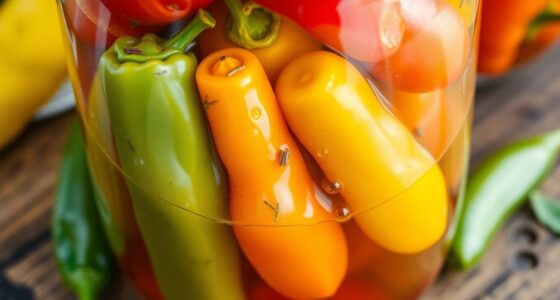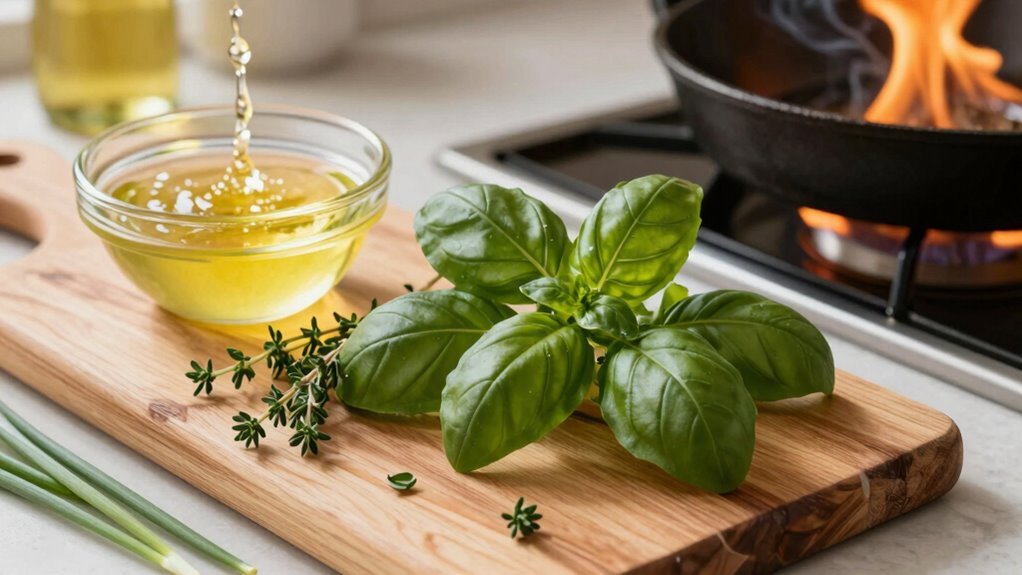

To wake up healthy food, use acid like lemon juice or vinegar to brighten flavors and slow spoilage. Add fresh herbs such as basil, cilantro, or thyme for aromatic complexity—some can be added raw, or gently heated to release oils. Apply heat through roasting or simmering to intensify flavors and improve texture. Combining these elements strategically boosts both taste and nutrition, helping you create vibrant, nourishing meals. Keep exploring to discover even more ways to enhance your dishes.

Get kitchen staples and gadgets delivered free with Prime
- Fast, free delivery on millions of items
- Prime Video, Amazon Music and more included
- Member-only deals all year
Key Takeaways
- Incorporate fresh herbs and acidic ingredients like lemon or vinegar to brighten flavors and boost nutritional absorption.
- Use gentle heat or roasting to enhance natural flavors without overcooking, preserving nutrients.
- Combine acid, herbs, and heat strategically to create vibrant, flavorful dishes that stimulate the palate.
- Apply preservation techniques like pickling to maintain nutrient levels and add tangy flavor.
- Use heat to activate herbs’ aromatic oils and release their health benefits, making food both tasty and nourishing.
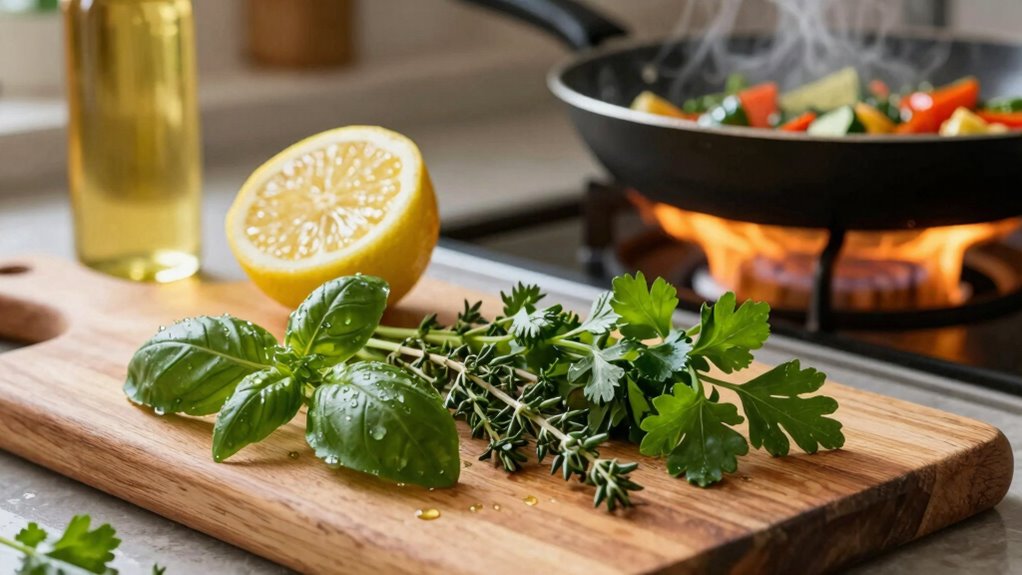
Revealing the full flavor and nutritional potential of healthy foods often depends on the right combination of acid, herbs, and heat. When you master these elements, you discover new layers of taste while also extending the shelf life of your ingredients. Flavor enhancement isn’t just about adding salt or sugar; it’s about understanding how acid, herbs, and heat work together to bring out the best in your ingredients. For example, a splash of lemon juice or vinegar can brighten up vegetables, making their natural flavors pop. This simple addition not only elevates taste but also acts as a preservation technique, slowing down spoilage and bacterial growth. Similarly, tossing fresh herbs like basil, cilantro, or thyme into your dishes introduces aromatic complexity that transforms a bland meal into a vibrant one. The key is knowing when and how to add these herbs—some are best used raw for maximum aroma, while others benefit from a gentle heat to release their oils. Additionally, understanding the properties of biodiversity and conservation can inspire more sustainable choices in your kitchen, helping to preserve diverse plant varieties and promote eco-friendly practices. Heat plays a pivotal role in both flavor enhancement and preservation. Searing, roasting, or simmering foods alters their texture and intensifies their natural flavors. For instance, lightly roasting vegetables caramelizes their sugars, creating a sweet, savory depth that raw versions lack. This process also helps preserve nutrients by reducing moisture content, which inhibits bacteria. When you apply heat thoughtfully, you can discover richer flavors without overcooking, which might diminish nutritional value. Combining heat with acid and herbs can create a balanced dish where each element complements the others. A simple vinaigrette made with vinegar, fresh herbs, and a touch of heat from warm roasted garlic exemplifies this synergy—bright, fragrant, and satisfying. Furthermore, understanding preservation techniques can help you make the most of seasonal produce and reduce food waste. Properly applying food preservation methods can extend the usability of ingredients without sacrificing their health benefits. For example, pickling vegetables with vinegar not only preserves them but also infuses them with tangy flavor and beneficial probiotics. Incorporating proper storage methods can further maximize the longevity and quality of your ingredients. Using heat to cook foods thoroughly destroys harmful bacteria, making them safer to eat and more digestible. Herbs used in cooking can also act as natural preservatives, thanks to their antimicrobial properties. Additionally, exploring different cooking techniques can unlock new flavors and textures that enhance both taste and nutritional value. When you combine these techniques with strategic use of acid and heat, you guarantee your healthy foods retain their nutritional integrity while tasting their best. Mastering these methods lets you turn simple ingredients into flavorful, preserved, and nourishing meals that fuel your body and delight your palate.
As an affiliate, we earn on qualifying purchases.
Frequently Asked Questions
Can These Methods Improve the Nutritional Value of My Meals?
Yes, these methods can improve your meals’ nutritional value by enhancing flavor and preserving ingredients. Using acid, herbs, and heat boosts flavor enhancement, making healthy foods more appealing and satisfying. They also help retain nutrients during cooking, preventing nutrient loss. By incorporating these techniques, you guarantee your meals stay nutritious and delicious, encouraging healthier eating habits and maximizing the benefits of your ingredients.
Are There Specific Acid Types Best for Different Foods?
Yes, certain acid variations work better with specific foods. For example, lemon juice enhances fish, while vinegar complements salads and vegetables. You can experiment with herb combinations like basil and thyme to boost flavor and nutrients. Matching acid types to foods helps reveal flavors and preserve nutrients. So, choose your acid variations and herb combinations thoughtfully to maximize both health benefits and taste in your meals.
How Long Should Herbs Be Infused for Optimal Flavor?
Imagine herbs as whispers of flavor, slowly revealing their secrets. To unveil their full potential, you should infuse herbs for about 15 to 30 minutes, allowing their potency to develop without losing their delicate essence. This infusion duration strikes the perfect balance, enhancing your dishes with vibrant aroma and taste. Keep an eye on the clock, and you’ll craft a dish that sings with fresh, lively herb notes.
Is There a Risk of Overcooking When Using Heat?
Yes, there’s a risk of overcooking when using heat. Overcooking hazards include losing nutrients and altering flavors. To avoid this, you should practice heat control techniques like simmering instead of boiling vigorously, and monitor cooking times closely. Adjust heat levels to maintain gentle warmth, ensuring herbs and acids don’t break down too quickly. This way, you preserve the food’s integrity and maximize flavor without overdoing it.
Can These Techniques Be Applied to Everyday Cooking?
Yes, you can definitely apply these cooking techniques daily. Using acid, herbs, and heat enhances flavor and keeps your meals interesting. Incorporate acids like lemon juice or vinegar during cooking to brighten dishes. Add herbs for freshness, and control heat carefully to avoid overcooking. These methods boost flavor enhancement naturally, making your everyday cooking more vibrant and healthy without risking loss of nutrients or overcooking.
Conclusion
By combining acid, herbs, and heat, you’re like a culinary magician transforming simple ingredients into vibrant, healthy dishes. These techniques awaken flavors and boost nutrition, making your meals both exciting and nourishing. Just as a sunrise brightens the sky, your creative use of these elements can energize your cooking and your health. So go ahead—experiment and enjoy the delicious, revitalizing magic you create in your kitchen every day.
Halloween Picks
halloween
As an affiliate, we earn on qualifying purchases.