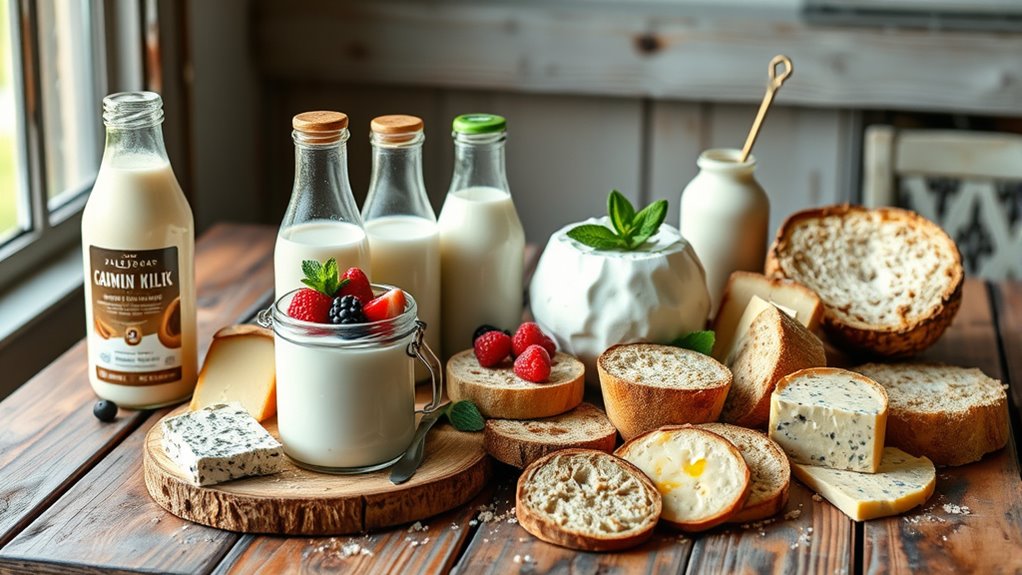

Dairy alternatives like nut milks, coconut yogurt, and vegan cheese offer tasty, plant-based options that suit your dietary needs and support sustainability. Nut milks are naturally lactose-free and rich in healthy fats, while coconut yogurt provides a creamy, probiotic-rich treat. Vegan cheeses mimic traditional flavors and textures using nuts or soy, often with less saturated fat. Exploring these options helps you enjoy familiar flavors in a more eco-friendly way—if you keep exploring, you’ll discover more of what makes them special.
Key Takeaways
- Nut milks like almond, cashew, and walnut are lactose-free, rich in healthy fats, and offer creamy textures suitable for various uses.
- Coconut yogurt provides a dairy-free, probiotic-rich alternative with a thick, tangy flavor mimicking traditional yogurt.
- Vegan cheeses made from nuts, soy, or roots provide meltable, flavorful options for baking, melting, and spreading.
- These dairy alternatives are often fortified with vitamins B12 and D, supporting nutritional needs in plant-based diets.
- Emphasizing clean ingredients and minimal processing, they cater to health-conscious consumers seeking sustainable, dairy-free options.
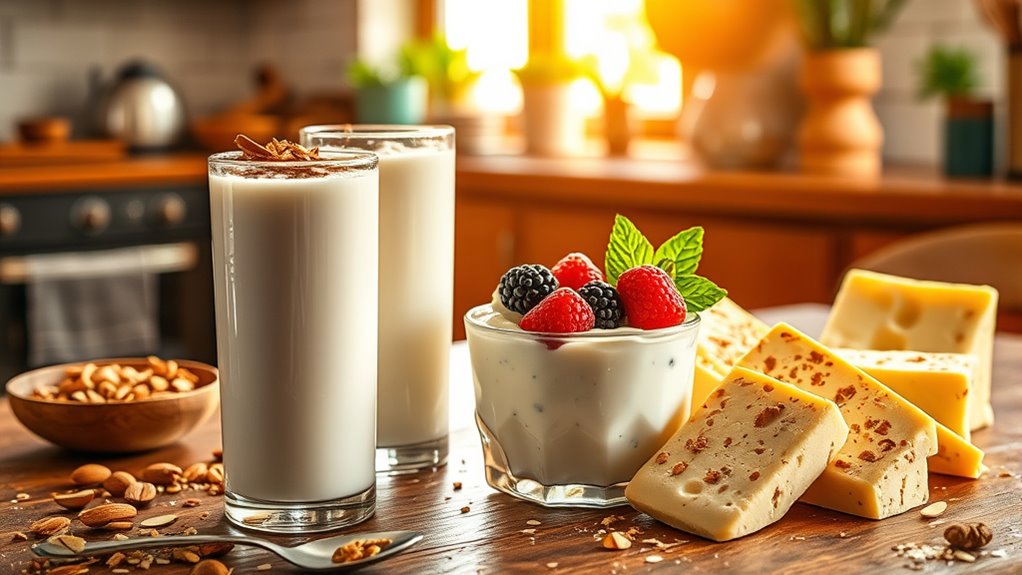
Have you ever wondered what options are available if you’re looking to replace traditional dairy products? If you’re lactose intolerant or simply trying to cut back on dairy, there’s a whole world of alternatives designed to meet your needs. These dairy substitutes often rely on plant-based proteins, making them suitable for vegans and those seeking more sustainable choices. You can enjoy the same textures and flavors you love, without the discomfort caused by lactose, or the environmental impact of animal-based products.
Looking to replace dairy? Discover plant-based, lactose-free options that taste great without harming the environment.
Plant-based proteins form the backbone of many dairy alternatives. Nut milks like almond, cashew, and walnut milk are popular choices because they’re naturally free of lactose and rich in healthy fats. They provide a creamy texture and subtle flavor that works well in coffee, cereal, or baking. Coconut milk and yogurt offer a different experience, with a rich, tropical flavor and thick consistency that can mimic traditional dairy products. These are often fortified with vitamins like B12 and D to guarantee you get essential nutrients, especially if you’re avoiding dairy altogether.
Vegan cheeses are another innovative option. Made from nuts, soy, or root vegetables, they come in a variety of textures—from sliced and shredded to spreadable. Some vegan cheeses melt just like dairy cheese, making them perfect for pizza or grilled sandwiches. Many are flavored with nutritional yeast, herbs, and spices to enhance their taste, giving you the cheesy flavor you crave without any animal products. These products are often lower in saturated fat and free of cholesterol, making them a heart-healthy alternative.
Coconut yogurt is a favorite among dairy substitutes because it offers a tangy flavor similar to traditional yogurt, with a creamy, smooth texture. It’s usually fermented with probiotics, which can support gut health, just like dairy yogurt. While it’s naturally lactose-free, some varieties are sweetened or flavored, so it’s worth checking labels if you’re aiming for a healthier option. Additionally, the contrast ratio of coconut yogurt can influence its perceived richness and mouthfeel, making it more appealing to those accustomed to dairy products.
As you explore dairy alternatives, you’ll find that many brands now focus on clean ingredients and minimal processing. They’re designed to deliver familiar flavors and textures while aligning with your dietary choices and health goals. Whether you’re avoiding lactose, seeking plant-based proteins, or reducing environmental impact, these options make it easier to enjoy your favorite dishes without compromise. So, you don’t have to give up comfort or taste—there’s a dairy-free version waiting to be part of your daily routine.
Frequently Asked Questions
Are Nut Milks Suitable for People With Nut Allergies?
Nut milks aren’t suitable if you have nut allergies because they contain nuts that can trigger allergic reactions. You should always follow nut allergy precautions and avoid products made from nuts like almonds or cashews. If you’re seeking alternative nut sources, consider options like oat or rice milk, which don’t pose the same allergy risks. Always read labels carefully and consult your doctor if you’re unsure about safe choices.
How Do Coconut Yogurts Compare Nutritionally to Dairy Yogurt?
Coconut yogurt generally has fewer proteins and calcium than dairy yogurt, but it often contains added probiotics for gut health. Nutritional differences include higher fat content in coconut yogurt, mainly saturated fats, while dairy yogurt provides more protein and vitamins like B12. If you’re choosing for probiotics, check the label—many coconut yogurts are fortified with beneficial bacteria, making them a good probiotic source, but naturally, dairy yogurt tends to have a more consistent probiotic profile.
Can Vegan Cheese Provide the Same Protein Content as Dairy Cheese?
You’ll find that vegan cheese typically has less protein than dairy cheese, averaging around 2-4 grams per serving compared to 7 grams in dairy. While plant-based proteins are improving nutritional comparisons, most vegan cheeses don’t match dairy’s protein content yet. If you’re seeking similar protein levels, check labels carefully, as some brands fortify their products. Overall, vegan cheese offers a good alternative but usually falls short on protein when compared to dairy cheese.
What Are the Environmental Impacts of Producing Nut Milks?
You might notice that producing nut milks impacts the environment through significant water usage and a notable carbon footprint. Nuts like almonds require a lot of water during cultivation, especially in dry regions, which can strain local water resources. Additionally, transportation and processing contribute to greenhouse gas emissions. While nut milks are popular, being mindful of their environmental effects helps you make more sustainable choices.
How Do I Choose the Best Dairy Alternative for My Dietary Needs?
To choose the best dairy alternative, consider your dietary needs and flavor preferences. If you have nut allergies, avoid options like almond or cashew milk and opt for soy, rice, or oat milk instead. Test different flavors to find what suits your taste buds, and check labels for added sugars or additives. Ultimately, pick a product that fits your nutritional needs while aligning with your taste and allergy considerations.
Conclusion
Switching to dairy alternatives like nut milks, coconut yogurt, and vegan cheese can be a tasty, sustainable choice. Did you know that the plant-based dairy market is expected to grow by over 12% annually through 2027? By exploring these options, you’re not only enjoying delicious products but also reducing your environmental footprint. So go ahead, try something new—you might find your new favorite dairy-free treat while making a positive impact on the planet.