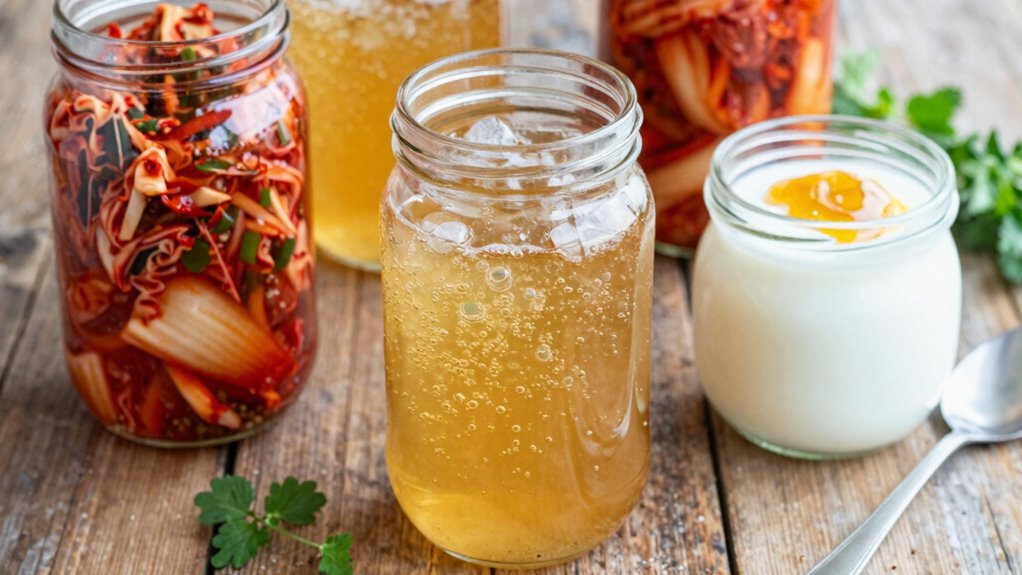

To boost your gut health, start with simple fermentation staples like sauerkraut, kimchi, and yogurt. These foods are easy to make and packed with probiotics that help improve digestion and strengthen your immune system. You can ferment vegetables with saltwater or make homemade yogurt using probiotic cultures. Maintaining proper environment conditions guarantees healthy bacteria thrive. Keep exploring these beginner-friendly techniques, and you’ll discover even more ways to support your gut wellness along the way.
Key Takeaways
- Begin with simple lacto-fermentation of vegetables like cabbage or cucumbers to create probiotic-rich foods such as sauerkraut and pickles.
- Use saltwater brine to cultivate beneficial bacteria while inhibiting harmful microbes during fermentation.
- Incorporate probiotic-rich dairy like homemade yogurt to boost gut flora and improve digestion.
- Experiment with fermented beverages like kombucha, ensuring proper environment control for probiotic development.
- Maintain cleanliness and proper timing to ensure safe and effective fermentation that supports gut health.
Have you ever wondered how fermentation can boost your gut health? It’s a fascinating process that transforms simple ingredients into powerful allies for your digestive system. The secret lies in probiotic strains—beneficial bacteria that support balance in your gut microbiome. When you consume fermented foods, these probiotics can help improve digestion, reduce inflammation, and even strengthen your immune system. But to get started, you should understand the basics of fermentation techniques that make these foods so effective.
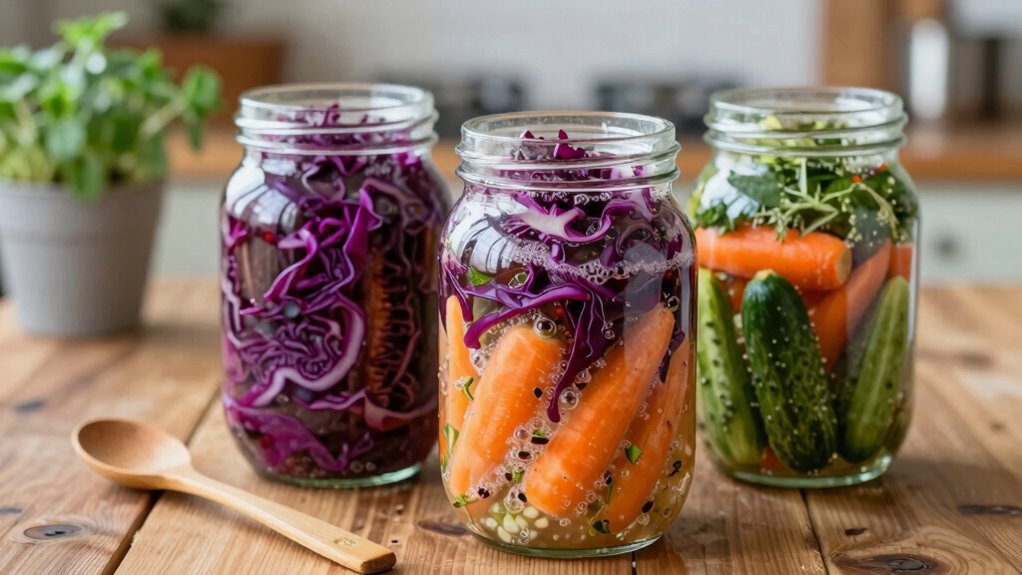
Fermentation techniques vary, but they all aim to cultivate probiotic strains through controlled microbial activity. For beginners, the most straightforward method is lacto-fermentation, which involves submerging vegetables or other ingredients in saltwater brine. This creates an environment that encourages naturally occurring probiotic bacteria to thrive while inhibiting harmful microbes. Think of it as giving friendly bacteria a safe space to multiply. This technique is especially popular for making sauerkraut, kimchi, and pickles. It’s simple, doesn’t require fancy equipment, and can be customized with your favorite vegetables and spices.
Lacto-fermentation uses saltwater brine to cultivate probiotics in vegetables and spices.
Another common fermentation technique is yogurt-making, which involves fermenting milk with specific probiotic strains like Lactobacillus acidophilus and Bifidobacterium bifidum. These strains are chosen for their proven benefits to gut health and their ability to survive the harsh environment of your digestive tract. Using a starter culture or a small amount of store-bought plain yogurt with active cultures makes it easy to begin. The process involves maintaining a steady temperature, usually around 110°F, to encourage the probiotics to multiply. Once fermented for several hours, you’ll have a creamy, probiotic-rich yogurt ready to boost your gut flora.
Kombucha is another popular fermented beverage that you can make at home with fermentation techniques involving sweet tea and a symbiotic culture of bacteria and yeast, known as a SCOBY. This culture hosts various probiotic strains that, when brewed properly, deliver a tangy, bubbly drink packed with gut-friendly microbes. The key to all these techniques is maintaining a clean environment and precise timing, ensuring the probiotic strains develop fully while preventing contamination. Additionally, understanding microbial activity helps you optimize fermentation conditions for better probiotic growth.
Starting with these beginner staples gives you a practical way to introduce beneficial probiotic strains into your diet. By mastering simple fermentation techniques, you not only enjoy delicious, health-boosting foods but also gain control over the fermentation process. Over time, you’ll understand how different probiotic strains work and how to customize your foods for *ideal* gut health. This approach makes fermentation accessible, empowering you to support your digestive well-being with each homemade batch.
Frequently Asked Questions
Can Children Safely Consume Fermented Foods Regularly?
Yes, children can safely consume fermented foods regularly, but you should consider fermentation safety and their digestion. Start with small amounts to see how their bodies react, as fermented foods contain beneficial probiotics that support gut health. Always choose high-quality, properly prepared options, and consult with a pediatrician if you have concerns about allergies or sensitivities. Gradually incorporating fermented foods can help improve their digestion and boost immunity.
How Do Fermentation Levels Affect Probiotic Benefits?
Think of fermentation levels as a musical playlist—too much or too little can change the entire tune. Higher fermentation levels often boost probiotic diversity, enhancing gut health benefits. However, over-fermentation can reduce probiotic potency. You want a balanced level that maximizes probiotic benefits without compromising safety. By paying attention to fermentation levels, you guarantee your gut gets the right mix of healthy bacteria for ideal digestion and immunity.
Are Store-Bought Fermented Foods as Beneficial as Homemade?
Store-bought fermented foods can be just as beneficial as homemade fermentation, especially if they contain live probiotics. The advantages include convenience, consistent quality, and safety standards. However, homemade fermentation often offers more control over ingredients and fermentation levels, potentially leading to higher probiotic counts. To maximize benefits, choose reputable brands with live cultures or try fermenting at home for fresher, customizable options.
What Are Signs of Over-Fermentation or Spoilage?
If you notice a strong, foul odor or mold on your fermented foods, you’re likely seeing signs of spoilage or over-fermentation. Around 60% of home fermenters report off smells or discoloration as common indicators. Over fermentation indicators include excessive bubbling, a sour or yeasty smell, and a slimy texture. Trust your senses—if it looks or smells off, it’s best to discard to stay safe and enjoy healthy fermentation.
Can Fermentation Help With Specific Digestive Conditions?
Yes, fermentation can help with specific digestive conditions by enhancing microbial diversity and supporting gut health. Different fermentation types, like yogurt, kimchi, or sauerkraut, introduce beneficial probiotics that may alleviate symptoms of IBS, bloating, or constipation. By increasing microbial diversity, you strengthen your gut barrier and improve digestion. Just make sure you’re choosing high-quality, properly fermented foods, and consult a healthcare professional for personalized advice.
Conclusion
As you begin your fermentation journey, it’s amazing to think that just a simple jar of sauerkraut or a sip of kefir can transform your gut health. Sometimes, the smallest changes—like adding these staples—bring the biggest benefits. You might find yourself feeling more energized, happier, and truly connected to your food. It’s a comforting coincidence: nourishing your gut often leads to better days, reminding you that good health can start with something as simple as fermentation.