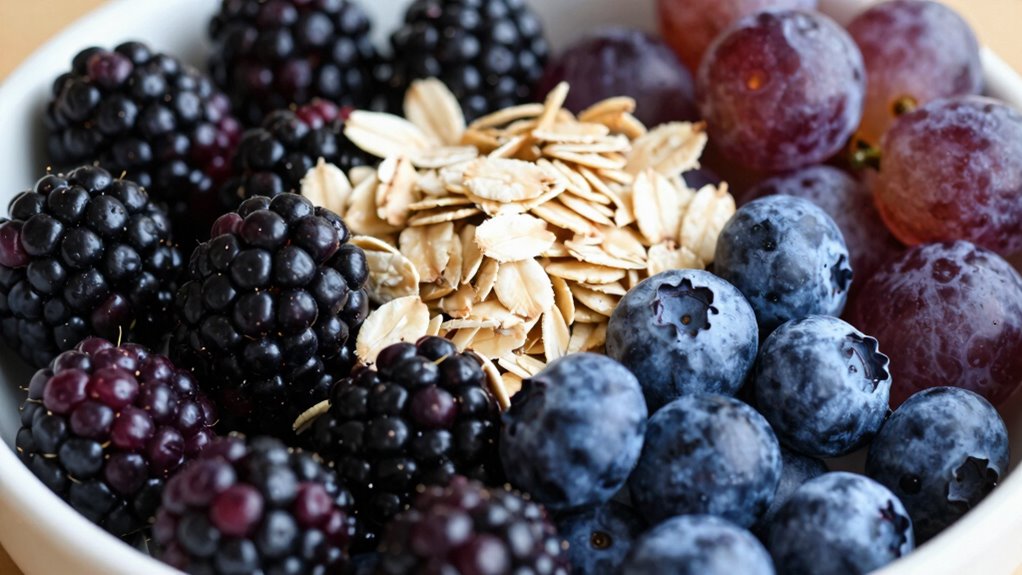

Adding more dietary fiber to your meals can make you feel full longer, sometimes more than protein does. Soluble fiber, found in oats, beans, and fruits, forms a gel-like substance that slows digestion and stabilizes blood sugar, boosting satiety. Insoluble fiber adds bulk, promoting regularity and fullness. Combining both types supports overall gut health and long-lasting satisfaction. If you’re curious how this simple shift can enhance your fullness and health, there’s more to discover below.

Get kitchen staples and gadgets delivered free with Prime
- Fast, free delivery on millions of items
- Prime Video, Amazon Music and more included
- Member-only deals all year
Key Takeaways
- Soluble fiber forms a gel-like substance that enhances feelings of fullness more effectively than some proteins.
- Fiber slows digestion, prolonging the sensation of satiety beyond what protein alone can achieve.
- Combining soluble and insoluble fiber stabilizes blood sugar and suppresses hunger more sustainably.
- High-fiber foods promote gut health and beneficial bacteria, supporting long-term fullness.
- Fiber-rich diets often lead to reduced calorie intake and better appetite control compared to protein-only approaches.
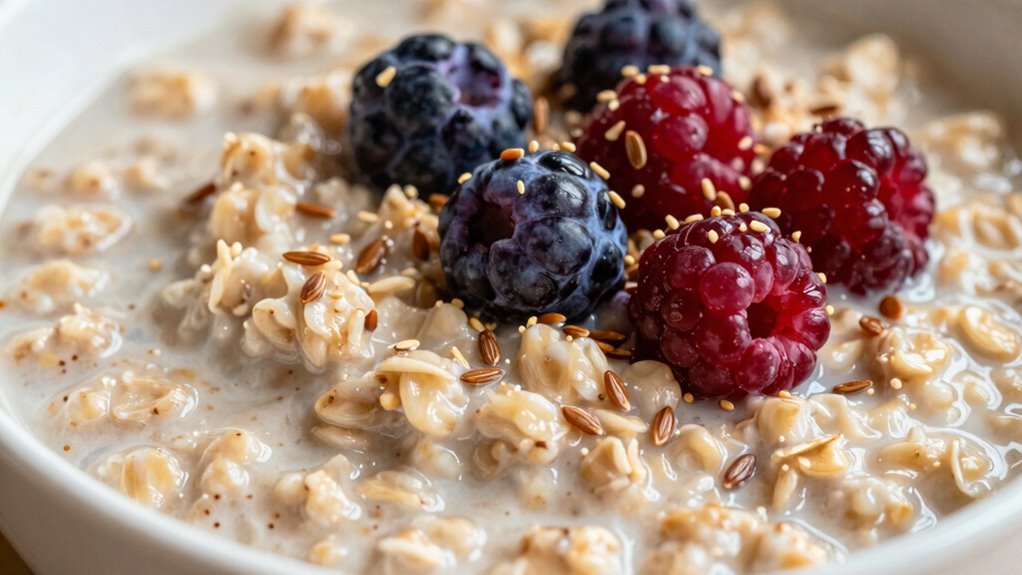
If you’re looking to feel fuller longer and improve your digestion, upgrading your fiber intake can make a significant difference. Dietary fiber plays an essential role in supporting digestive health and managing hunger. Unlike protein, which also promotes fullness, fiber offers unique benefits that can sometimes be more effective, especially when it comes to sustained satiety. When you increase your fiber intake, you help slow down the digestion process, giving your body more time to register fullness and preventing those quick hunger crashes. This means you can enjoy longer-lasting energy and fewer cravings throughout the day.
Boost your digestion and stay full longer with increased fiber intake for sustained energy and fewer cravings.
Fiber is a type of carbohydrate that your body can’t digest, but it interacts with your digestive system in beneficial ways. Soluble fiber, found in oats, beans, and fruits, dissolves in water and forms a gel-like substance in your gut. This slows gastric emptying and helps control blood sugar spikes, which keeps you feeling full after meals. Insoluble fiber, present in whole grains, nuts, and vegetables, adds bulk to your stool and promotes regular bowel movements. The combination of these fibers enhances digestive health by preventing constipation and supporting a healthy gut environment. Supporting digestive health is a key benefit of increasing your fiber intake. Incorporating more fiber-rich foods can also contribute to nutrient density in your diet, ensuring you get essential vitamins and minerals along with fiber.
When you focus on incorporating more dietary fiber into your meals, you’re giving your digestive system a boost that goes beyond just feeling full. Fiber acts like a natural regulator, helping to stabilize blood sugar levels and reducing the likelihood of overeating later. It also fosters good gut bacteria, which is essential for overall digestive health and immune function. Plus, foods rich in fiber tend to be nutrient-dense, meaning you’re not just filling up on empty calories but nourishing your body with vitamins, minerals, and antioxidants. Incorporating a variety of fiber sources can further enhance these benefits by supporting diverse gut bacteria populations.
You might notice that high-fiber foods help you feel satisfied sooner and stay full longer without needing to eat large portions of protein or fats. This is especially useful if you’re trying to manage your weight or improve your metabolic health. As you make fiber a regular part of your diet, you’ll likely experience fewer digestive discomforts, like bloating or irregularity, because fiber helps maintain a balanced gut environment.
Ultimately, upgrading your fiber intake isn’t just about adding bulk to your diet; it’s about enhancing your digestive health and optimizing fullness. When you choose fiber-rich foods consistently, you’re supporting better digestion, controlling appetite naturally, and promoting long-term health. This simple dietary shift can be a game-changer, often providing more satisfying and lasting fullness than relying solely on protein, making it an essential component of a balanced, healthy lifestyle. Making conscious fiber choices can also contribute to overall health by reducing the risk of chronic illnesses linked to poor digestion.
As an affiliate, we earn on qualifying purchases.
Frequently Asked Questions
Does Fiber Intake Affect Blood Sugar Levels Significantly?
Yes, fiber intake markedly affects blood sugar levels. When you consume fiber-rich foods, fiber digestion slows down, which helps stabilize your blood sugar regulation. This means your body absorbs sugars more gradually, preventing spikes after meals. Including soluble fiber, like oats or beans, can improve your blood sugar control, especially if you have diabetes or insulin resistance. So, increasing your fiber intake supports better blood sugar management and overall health.
Can Fiber Supplements Replace Dietary Fiber From Food Sources?
Fiber supplements can’t fully replace dietary fiber from food sources, despite fiber supplement myths suggesting they do. You need dietary fiber diversity because whole foods offer a broader range of nutrients, antioxidants, and phytochemicals that supplements can’t match. While supplements can support your fiber intake, they lack the complexity and benefits of fiber-rich foods, so prioritize eating a variety of fiber-rich fruits, vegetables, and grains for maximum health.
How Quickly Can I Expect to Feel Fuller After Increasing Fiber?
You can expect to feel fuller within about 15 to 30 minutes after increasing your fiber intake. Fiber digestion slows down your stomach emptying, which boosts satiety timing and helps you feel satisfied longer. The type of fiber matters; soluble fiber tends to work faster in promoting fullness, while insoluble fiber adds bulk over time. Consistent intake enhances these effects, making it easier to control hunger throughout the day.
Are There Any Risks Associated With Consuming Too Much Fiber?
Consuming too much fiber can cause digestive discomfort, like bloating or gas, but it’s usually manageable if you increase intake gradually. Excessive fiber might also interfere with nutrient absorption, leading to deficiencies. To avoid risks, stay within recommended daily limits and drink plenty of water. Listening to your body helps prevent discomfort, so adjust your intake accordingly to enjoy fiber’s benefits without adverse effects.
Is Fiber Intake Recommended for Weight Loss or Muscle Gain?
Fiber intake is recommended for weight loss because it enhances satiety signals, helping you feel full longer and reducing overeating. It also supports fiber digestion, which promotes a healthy gut. For muscle gain, fiber isn’t directly impactful but contributes to overall health and digestion. Including a variety of fiber-rich foods can improve your diet, support weight management, and keep your digestion smooth while you work toward your fitness goals.
Conclusion
As you reach for that breakfast bar, imagine the fibers swelling like tiny balloons in your stomach, creating a feeling of fullness that’s more reliable than even protein. It’s a small upgrade, but one that can turn your meal into a lasting comfort, much like how a single seed can grow into a towering tree. Sometimes, it’s the simple change—like adding more fiber—that transforms your hunger into satiety, quietly shaping your day one meal at a time.
Fall Picks
fall essentials
As an affiliate, we earn on qualifying purchases.