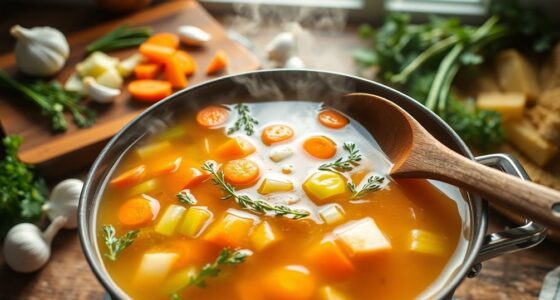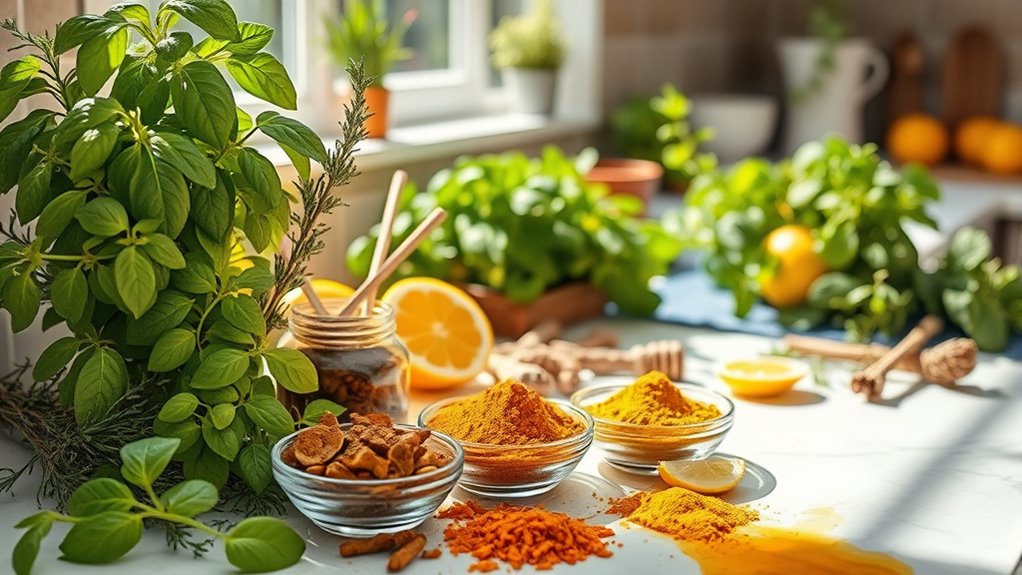

Incorporating adaptogens like holy basil, ginseng, and ashwagandha, along with immune-boosting herbs such as garlic, ginger, and turmeric, can boost your health while adding flavor to your meals. Using these herbs responsibly and sustainably guarantees their potency and protects plant populations. By integrating traditional herbal remedies into your cooking, you support your body’s resilience and embrace a holistic, environmentally mindful approach to well-being. Exploring this further reveals how to make these powerful herbs a natural part of your diet.
Key Takeaways
- Incorporate adaptogenic herbs like holy basil, ginseng, and ashwagandha into soups and teas to enhance stress resilience.
- Use immune-boosting herbs such as garlic, ginger, and turmeric regularly in cooking for holistic health support.
- Source herbs responsibly through sustainable harvesting or cultivation to preserve their medicinal potency and environmental health.
- Integrate herbal remedies mindful of traditional practices to promote balance and long-term immune function.
- Combining medicinal herbs with everyday meals transforms cooking into a natural, holistic approach to immune support.
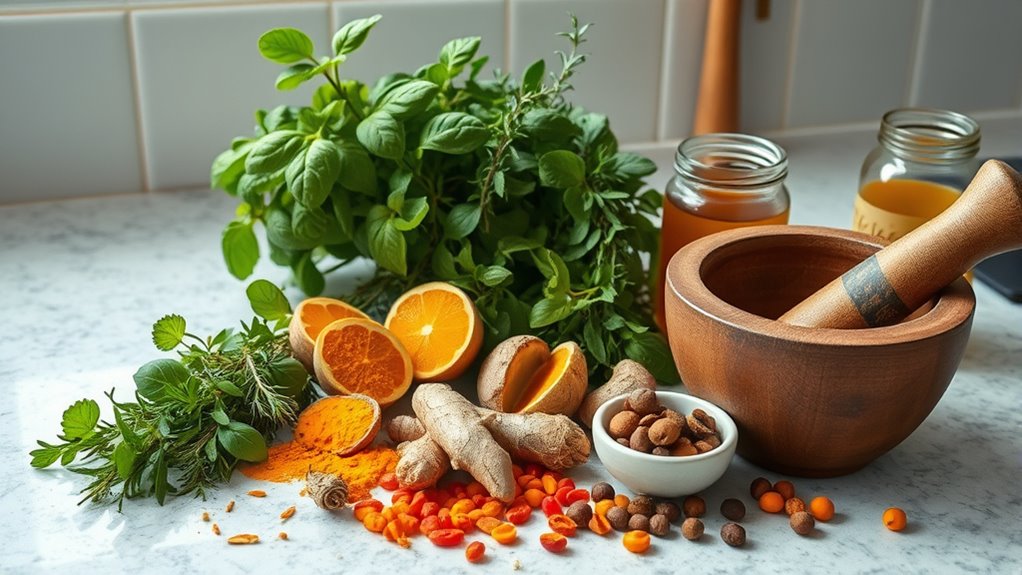
Herbal remedies have been a natural part of cooking for centuries, offering more than just flavor—they can also support your health. When you incorporate herbs into your meals, you’re tapping into a rich tradition rooted in traditional medicine, where plants are used to promote wellness and prevent illness. But it’s essential to take into account how these herbs are sourced. Sustainable harvesting ensures that wild herbs are collected responsibly, allowing the plants to thrive for generations to come. This practice not only preserves biodiversity but also guarantees that you’re using herbs that are potent and free from overexploitation. When you choose herbs cultivated with sustainable methods, you’re respecting the environment and supporting ethical practices, which ultimately benefits your health as well.
Sustainable harvesting of herbs preserves biodiversity and ensures potent, ethically sourced plants for your health.
Many herbs used in traditional medicine possess adaptogenic properties, meaning they help your body adapt to stress and restore balance. Incorporating adaptogens like holy basil, ginseng, or ashwagandha into your cooking can enhance your resilience against daily stressors. These herbs are often integrated into soups, stews, or teas, making it easy to enjoy their health benefits without complicating your meals. As you prepare your dishes, think about how these herbs not only add depth to your flavors but also bolster your immune system. For example, garlic and ginger are both common kitchen staples with immune-boosting properties that have been valued in traditional medicine for centuries. Including them regularly in your cooking can help you ward off illness and recover faster if you do get sick.
Furthermore, understanding the role of herbal remedies in your diet encourages you to explore a broader range of plants with medicinal qualities. You might find that adding turmeric, known for its anti-inflammatory effects, or echinacea, often used to prevent colds, can make a noticeable difference in your overall health. When sourcing these herbs, prioritize products that are responsibly harvested, ensuring their potency and your peace of mind. By doing so, you support sustainable practices that protect plant populations and promote the long-term availability of these valuable resources. This mindful approach to cooking not only enhances your meals but also aligns with a holistic view of health—where nourishing your body with carefully selected, ethically sourced herbs becomes an integral part of your lifestyle.
Incorporating herbal remedies into your cooking isn’t just about flavor; it’s a conscious choice to support your well-being through traditional wisdom and sustainable practices. When you pay attention to how herbs are harvested and prepared, you’re honoring centuries of herbal medicine while taking an active role in your health. This fusion of tradition and sustainability can transform your kitchen into a space of healing, where each meal becomes an opportunity to strengthen your body’s natural defenses and maintain balance.
herbal adaptogen tea blends
As an affiliate, we earn on qualifying purchases.
As an affiliate, we earn on qualifying purchases.
Frequently Asked Questions
Are Herbal Remedies Safe for Children and Pregnant Women?
Herbal remedies can be risky for children and pregnant women if you’re not careful. Safety considerations are essential, so you should always consult a healthcare provider before use. Follow dosage guidelines strictly, as even small amounts can cause adverse effects. Avoid herbs known to stimulate uterine contractions or affect fetal development. Your best bet is to prioritize safety and get professional advice to guarantee these remedies are appropriate and safe for your situation.
How Do Herbal Adaptogens Interact With Prescription Medications?
Be aware that herbal adaptogens can complicate your medication routine through unpredictable drug interactions. They may enhance or diminish your prescription’s effectiveness, so always consider dosage considerations carefully. You should consult a healthcare professional before combining adaptogens with medications, as they can influence how your body processes drugs. Staying cautious helps prevent potential side effects and ensures safe, synergistic support for your health and well-being.
Can Herbal Immune Boosters Replace Vaccines?
Herbal immune boosters can’t substitute vaccines, as vaccines provide targeted immunity against specific diseases. While herbal immune boosters may support your immune system, they don’t offer the same level of protection. Relying solely on herbal remedies as vaccine alternatives leaves you vulnerable to illnesses. Always follow medical advice and get vaccinated to ensure safety and effective disease prevention, rather than replacing herbal immune boosters for proven vaccines.
What Are the Best Herbal Remedies for Chronic Stress?
For chronic stress, you should consider herbal remedies like ashwagandha, Rhodiola, and holy basil, which support stress management. These adaptogens help balance your mood and energy levels. Be mindful of herbal supplement interactions, especially if you’re on medication, and consult a healthcare professional. Incorporating these herbs into your routine can promote relaxation and resilience, but always use them responsibly and as part of a holistic stress management plan.
How Should Herbal Remedies Be Stored to Maintain Potency?
Think of your herbal remedies as precious treasures that need protection. To maintain their potency, follow storage guidelines by keeping herbs in airtight containers, away from direct sunlight, heat, and moisture. Store dried herbs in a cool, dark place, and avoid frequent exposure to air. Proper storage preserves their strength and effectiveness, ensuring you get the full benefits whenever you need them.
sustainable organic turmeric powder
As an affiliate, we earn on qualifying purchases.
As an affiliate, we earn on qualifying purchases.
Conclusion
Incorporating herbal remedies like adaptogens and immune boosters into your cooking can genuinely boost your well-being. Did you know that 60% of people who regularly use herbal ingredients report feeling more energetic and less stressed? So, next time you cook, consider adding these powerful herbs — your body will thank you. Small changes in your meals can lead to big health benefits, making your everyday dishes both tasty and nourishing.
immune-boosting garlic supplements
As an affiliate, we earn on qualifying purchases.
As an affiliate, we earn on qualifying purchases.
holy basil cooking herbs
As an affiliate, we earn on qualifying purchases.
As an affiliate, we earn on qualifying purchases.