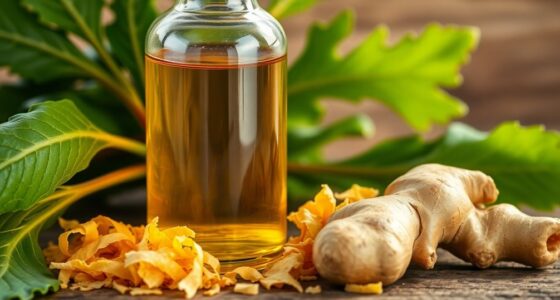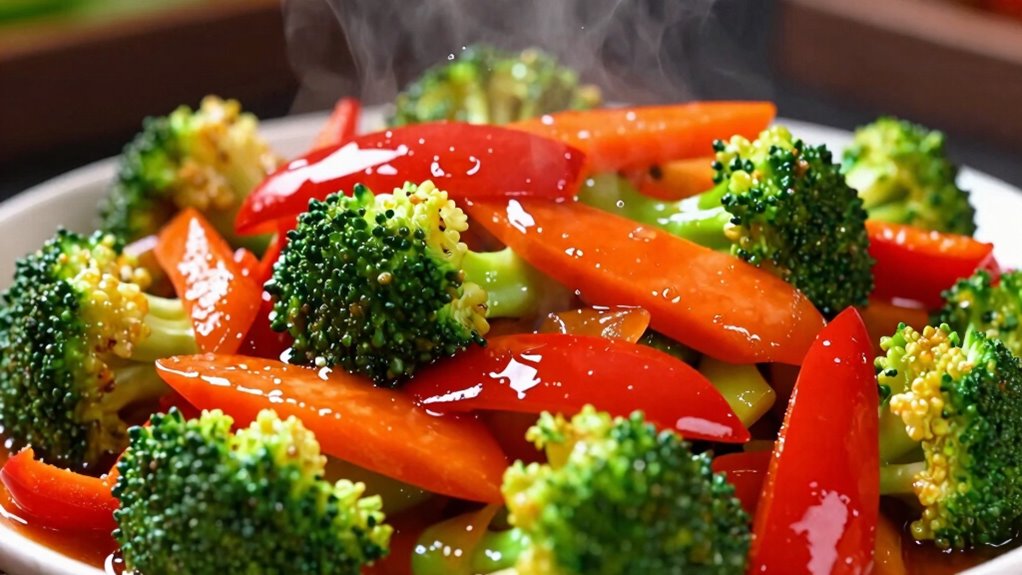
To make low-oil dishes taste rich, try using emulsions like vinaigrettes or thickened sauces. Whisk oil with lemon juice, broth, or yogurt to create a stable, flavorful coating that enhances texture and depth without adding excess fat. Incorporate herbs, spices, and umami ingredients like soy or miso to amplify flavor. With these easy techniques, you can enjoy satisfying, healthy meals—continue exploring to discover more tips on mastering this trick.
Key Takeaways
- Use vinegar, lemon juice, or broth with minimal oil to create flavorful emulsions for dressings and sauces.
- Whisk small amounts of tahini, nut butters, or yogurt into liquids to add richness without extra oil.
- Incorporate herbs, spices, and aromatics into emulsions to boost flavor and depth.
- Add splash of emulsion to vegetables and proteins during cooking to enhance moisture and taste.
- Focus on vigorous whisking and flavor combinations to mimic richness while reducing fat content.
Cooking with less oil is an effective way to improve your health without sacrificing flavor. One of the most powerful techniques you can use is the emulsion trick, which allows you to create rich, flavorful dishes with minimal oil. Instead of relying on large amounts of oil for moisture and taste, you can incorporate healthy substitutions and leverage the science of emulsification to enhance flavor without adding unnecessary fat. This approach not only reduces calorie intake but also boosts the nutritional profile of your meals.
The key to mastering low-oil cooking through the emulsion trick is understanding how to combine ingredients that naturally blend together into a stable mixture. Think of dressings or sauces that use a small amount of oil combined with vinegar, lemon juice, or water. When you whisk these ingredients vigorously, you create a temporary emulsion—an evenly mixed suspension that coats your ingredients just like a full-bodied sauce. This technique allows you to distribute flavor evenly and give your dishes a rich, satisfying mouthfeel without the need for excess oil.
Healthy substitutions play an essential role here. Instead of pouring oil directly onto your sautéed vegetables or proteins, consider adding a splash of broth, lemon juice, or yogurt to your pan. These substitutions add moisture and flavor, creating a luscious coating that mimics the richness of oil. You can also incorporate ingredients like tahini or nut butters, which are naturally high in healthy fats but can be used sparingly to boost flavor and texture. These options allow you to maintain depth and complexity in your dishes while cutting down on added fats.
For flavor enhancement, focus on combining the emulsion with aromatic herbs, spices, and umami-rich ingredients. Fresh garlic, ginger, soy sauce, or miso paste can elevate a simple dish into something savory and satisfying. When you whip up a quick emulsion with these elements, you amplify their flavors and create a more dynamic eating experience. The emulsification process traps air and flavors, making each bite more intense and satisfying, even with less oil.

Salad Maker Italian Salad Dressing Seasoning Packet – All-Natural, Clean Ingredients, Keto, Vegan, Dairy-Free, Sugar-Free, Quick & Easy Powder Mix – 15 packets
AUTHENTIC ITALIAN FLAVOR IN MINUTES: Bring the taste of Italy to your kitchen with this easy-to-use powdered mix….
As an affiliate, we earn on qualifying purchases.
As an affiliate, we earn on qualifying purchases.
Frequently Asked Questions
Can Low-Oil Cooking Methods Preserve Nutrients Better?
Yes, low-oil cooking methods can preserve nutrients better because they minimize oil absorption, which often carries away water-soluble nutrients. When you cook with less oil, you reduce nutrient loss and maintain more of the food’s original vitamins and minerals. Techniques like steaming, boiling, or stir-frying with minimal oil help retain nutrients while still delivering rich flavors, especially when you use emulsification tricks to boost taste without adding extra oil.
What Are the Best Oils for Low-Oil Recipes?
Imagine drizzling golden olive oil over fresh vegetables, its rich aroma enhancing every bite. For low-oil recipes, opt for oils like extra virgin olive oil, avocado oil, or nut oils—they provide flavor enhancement without excess. These oils have a high smoke point and distinct taste, making your dishes both healthier and more delicious. Choose quality oils to elevate your cooking, adding depth and richness with just a small amount.
How Does Emulsion Affect Flavor in Low-Oil Dishes?
Emulsification techniques help you blend liquids smoothly, which enhances flavor in low-oil dishes. When you create a stable emulsion, it distributes fats evenly, intensifying richness without excess oil. This flavor enhancement makes your dish taste more satisfying and well-rounded. By mastering emulsification, you boost the depth and aroma of your recipes, giving you rich-tasting results with minimal oil. It’s a simple trick that elevates your cooking considerably.
Are There Specific Utensils That Improve Low-Oil Cooking?
You’ll want non-stick pans and silicone spatulas for low-oil cooking. Non-stick pans prevent sticking and allow you to use less oil without sacrificing flavor, while silicone spatulas help you stir and combine ingredients gently, maintaining emulsions and ensuring even cooking. These utensils make it easier to control oil use, enhance flavors, and keep your dishes delicious without excess fat. Plus, they’re easy to clean and durable for everyday cooking.
How Long Do Low-Oil Dishes Typically Take to Cook?
Low-oil dishes generally take about 15 to 30 minutes of cooking time, depending on the ingredients and preparation duration. You should plan for a quick cooking process that emphasizes efficiency, especially if you’re using techniques like emulsification to enhance flavor without extra oil. Keep an eye on the texture and don’t overcook, so your dish retains its richness and freshness. Adjust the cooking time based on your specific recipe and ingredient sizes.

Beast Mini 600 Stainless Steel | Mini Countertop Kitchen Blender | Insulated Stainless Steel Vessel | Smoothies, Shakes, Dressings, Sauces, Dips | Portable Straw Caps and Lids | 600W (Sand)
BLENDED IN STEEL: Blend in a pure stainless steel environment that keeps contents cold for up to 12…
As an affiliate, we earn on qualifying purchases.
As an affiliate, we earn on qualifying purchases.
Conclusion
Remember, a little goes a long way—especially with oil. By mastering the emulsion trick, you can enjoy rich-tasting dishes without the guilt. It’s all about working smarter, not harder, in the kitchen. So next time you’re cooking low-oil, keep this handy tip in mind, and you’ll be surprised at how flavorful healthy eating can be. After all, the proof of the pudding is in the eating—deliciousness doesn’t have to come with a hefty oil price tag.

Stainless Steel Egg Whisk, Hand Push Rotary Whisk Blender, Versatile Milk Frother, Hand Push Mixer Stirrer for Blending, Whisking, Beating & Stirring (12in)
★FOOD GRADE STAINLESS STEEL – The hand push whisk is made of food grade stainless steel, so it’s…
As an affiliate, we earn on qualifying purchases.
As an affiliate, we earn on qualifying purchases.

Simple Girl Salad Dressing-3 Bottle Pack- Sweet Vinaigrette, Sweet Mustard And Citrus Ginger
100% SUGAR FREE – Made With Organic Ingredients, our Sweet Vinaigrette, Sweet Mustard, and Citrus Ginger salad dressings…
As an affiliate, we earn on qualifying purchases.
As an affiliate, we earn on qualifying purchases.