To control portions without counting, try the plate method. Fill half your plate with vegetables or fruits, a quarter with lean protein, and a quarter with healthy carbs. This visual approach helps you eat balanced, nutritious meals naturally, without calorie tracking or deprivation. It encourages mindful eating and builds sustainable habits, making healthy choices easier and more enjoyable. Keep exploring, and you’ll discover simple ways to make this method work for your lifestyle.
Key Takeaways
- Use the plate method by filling half with vegetables/fruits, a quarter with lean protein, and a quarter with healthy carbs.
- Pre-portion meals using containers that match plate sections to maintain visual balance.
- Practice mindful eating by paying attention to hunger cues and savoring each bite to avoid overeating.
- Focus on nutrient-dense foods to naturally control portions without calorie counting.
- Develop sustainable habits by combining portion control, meal prep, and mindful eating for long-term success.
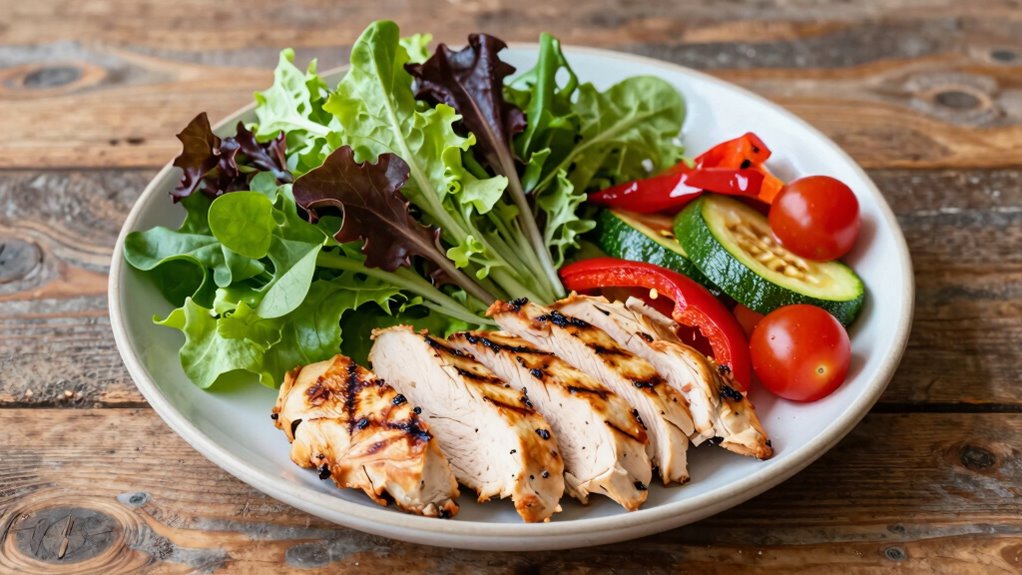
While counting every calorie can feel overwhelming, mastering portion control offers a simpler way to manage your eating habits. Instead of obsessing over every number, you can focus on how much you’re putting on your plate. One effective strategy is the plate method, which helps you visualize balanced meals without the need for constant tracking. It’s a straightforward approach that encourages mindful eating, making it easier to enjoy your food while still supporting your health goals. This method aligns with the principles of nutrient-dense foods, ensuring you get the most nutritional value from your meals.
Getting started with the plate method means dividing your plate into sections. Fill half of it with vegetables and fruits—these are nutrient-dense, filling, and low in calories. This guarantees you’re getting plenty of fiber, vitamins, and minerals, which help you stay full longer. A quarter of your plate should be lean protein, like chicken, fish, beans, or tofu. Protein is essential for muscle repair and keeps hunger at bay. The remaining quarter is reserved for healthy carbs, such as whole grains, sweet potatoes, or legumes. This balance helps you control portions naturally, without feeling deprived.
Divide your plate: half vegetables and fruits, a quarter lean protein, and a quarter healthy carbs for balanced eating.
Meal prep plays an essential role in maintaining portion control. When you prepare your meals ahead of time, you’re less likely to make impulsive choices or overeat. Portioning out servings during meal prep ensures you stick to the right sizes and prevents overeating when you’re hungry and tired. Using containers or bowls that match your plate’s sections can reinforce the visual cue, making it easier to follow the method consistently. Meal prep also reduces the temptation to grab quick, less nutritious options, supporting your overall health and weight management goals.
Mindful eating is another key component of successful portion control. When you eat mindfully, you pay close attention to your hunger and fullness cues, which helps you avoid eating out of boredom or emotion. Take time to savor each bite, chew slowly, and notice the flavors and textures. This practice not only enhances your enjoyment of food but also signals to your brain that you’re full, preventing overeating. Combining mindful eating with the plate method creates a powerful synergy—you’re more aware of your intake and better able to stick with appropriate portions.
Ultimately, mastering portion control doesn’t mean sacrificing flavor or satisfaction. It’s about creating habits that support a healthier relationship with food. By using the plate method, preparing your meals thoughtfully, and practicing mindful eating, you gain control over your portions without the stress of counting calories. This approach simplifies your eating routine and promotes sustainable habits, making healthy choices feel natural rather than restrictive.
Frequently Asked Questions
Can the Plate Method Help With Long-Term Weight Loss?
Yes, the plate method can help with long-term weight loss by promoting portion control and balanced eating habits. When you fill half your plate with vegetables, a quarter with lean proteins, and a quarter with whole grains, you naturally reduce calorie intake without counting. This simple visual guide encourages sustainable habits, supporting your long-term success and making healthy eating easier to maintain over time.
Is the Plate Method Suitable for Children and Teenagers?
Yes, the plate method is suitable for children and teenagers. It supports healthy child nutrition by encouraging balanced meals without complicated counting. By visually dividing the plate into sections for vegetables, grains, and proteins, you help shape teen eating habits that promote better portion control. This approach makes it easier for young people to develop healthy eating patterns, fostering lifelong habits that contribute to their growth and well-being.
How Does the Plate Method Compare to Calorie Counting?
The plate method often outperforms calorie counting because it promotes portion awareness and meal satisfaction without obsessing over numbers. You focus on balanced portions of vegetables, proteins, and grains, helping you naturally eat less and feel full longer. Unlike calorie counting, which can be tedious and restrictive, this approach encourages healthier habits and intuitive eating, making it easier to maintain your goals while enjoying your meals.
Can I Use the Plate Method for Specific Diets Like Keto or Vegan?
Yes, you can adapt the plate method for specific diets like keto or vegan. It offers flexibility for diet compatibility and meal customization, allowing you to focus on appropriate food choices within each section of your plate. For keto, prioritize healthy fats and low-carb veggies. For vegan, include plant-based proteins and grains. This approach helps you stay on track without counting calories, making healthy eating simpler and more sustainable.
What Are Common Mistakes to Avoid When Using the Plate Method?
To avoid portion mistakes with the plate method, be mindful of overflowing your plate, which leads to plate misjudgments. Don’t rely solely on visual cues—measure your portions if needed. Avoid assuming all food groups are equal in quantity; fill half your plate with vegetables, a quarter with protein, and a quarter with carbs. Staying attentive helps you maintain balanced portions and prevents overeating.
Conclusion
Now that you’ve got the plate method in your toolkit, portion control becomes a breeze, like steering a gentle boat through calm waters. No more counting every calorie or stressing over every bite — just fill your plate with colorful balance and let your habits do the heavy lifting. Imagine your plate as a canvas, painting a picture of health with each meal. With this simple approach, you’re crafting a sustainable path to wellness, one balanced plate at a time.