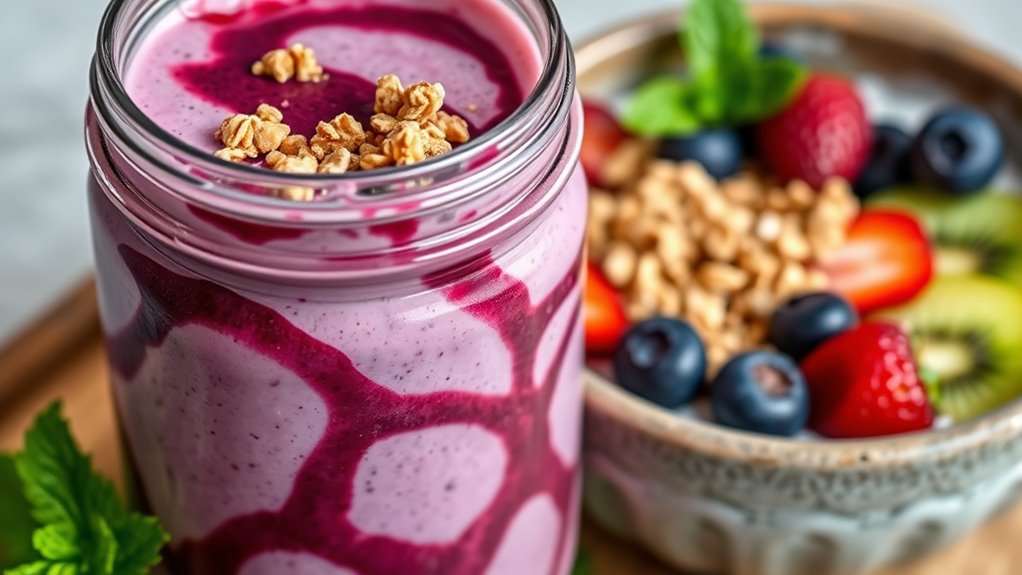

Incorporating probiotic-rich recipes like kefir smoothies and yogurt bowls into your daily routine is simple and effective for supporting gut health. These foods are fermented using beneficial bacteria, which boost their probiotic levels and help improve digestion, immunity, and mood. You can customize them with fruits and toppings to suit your taste. To learn more about fermentation techniques and selecting the best ingredients, keep exploring, as more helpful tips are ahead.

Get kitchen staples and gadgets delivered free with Prime
- Fast, free delivery on millions of items
- Prime Video, Amazon Music and more included
- Member-only deals all year
Key Takeaways
- Incorporate kefir and yogurt into smoothies and bowls for a natural probiotic boost.
- Customize recipes with fruits, nuts, and seeds to enhance flavor and nutritional value.
- Use fermented dairy products to support gut health and improve digestion.
- Follow fermentation techniques to maximize probiotic content in homemade recipes.
- Refer to resources like farmhouse1807.com for tips on preparing probiotic-rich dairy dishes.
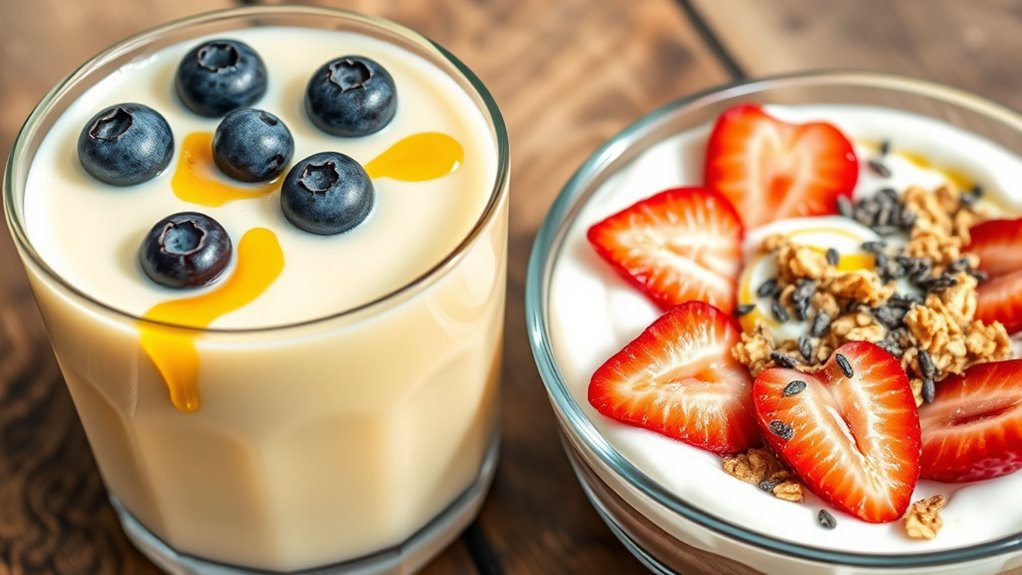
Fermentation techniques involve the process of culturing milk with beneficial bacteria. When you prepare kefir or yogurt, you introduce specific strains of bacteria that ferment the milk sugars, transforming the texture and flavor while enriching it with probiotics. These live microorganisms are what make kefir smoothies and yogurt bowls so effective for gut health. They help restore the balance of good bacteria in your digestive tract, which can improve digestion, boost immunity, and even enhance your mood. Incorporating these recipes into your routine is an easy way to enjoy the probiotic benefits without needing supplements or complicated preparations. Understanding the role of fermentation can help you select the best ingredients and techniques for maximizing probiotic content.
Products Worth Considering

Cuisinart 10-Cup Thermal Classic Programmable Coffeemaker, Black (DCC-1170BKNAS)

KitchenAid 5-Ply Clad Stainless Steel Roaster with Rack, 15 x 11.5 Inches

Le Creuset Signature Deep Round Enameled Cast Iron Dutch Oven, 6.5 qt, Oyster
As an affiliate, we earn on qualifying purchases.
Frequently Asked Questions
How Long Do Homemade Probiotic Smoothies Stay Fresh?
Homemade probiotic smoothies stay fresh for about 24 to 48 hours. To maximize their shelf life, store them in an airtight container in the refrigerator promptly after blending. Make sure to keep the temperature consistent and avoid opening the container frequently, as exposure to air can reduce probiotic potency. For best taste and probiotic benefits, consume the smoothie within this timeframe and always check for any signs of spoilage before drinking.
Can I Substitute Dairy With Plant-Based Alternatives?
Yes, you can substitute dairy with plant-based alternatives in probiotic recipes. Use plant-based probiotics like coconut yogurt, almond kefir, or cashew-based options for dairy-free alternatives. These options maintain the probiotic benefits while catering to your dietary preferences. Just verify the products are labeled with live and active cultures to get the full gut health benefits. Experiment with different plant-based probiotics to find your favorite dairy-free alternative.
Are There Any Allergens in Kefir or Yogurt?
Yes, kefir and yogurt can contain allergens, especially if you have dairy allergies or lactose intolerance. Kefir is typically made from milk, which may cause reactions if you’re sensitive. Yogurt also contains dairy proteins and lactose. Always check labels for added ingredients or choose lactose-free or dairy-free options if you’re avoiding dairy due to allergies or intolerance. Consult your healthcare provider for personalized advice.
How Much Probiotic Is in a Typical Smoothie or Bowl?
You might be surprised by the probiotic potency in your smoothie or bowl—it can vary widely. Typically, a serving contains between 1 to 10 billion CFUs, but storage considerations matter; keep your dairy products refrigerated to preserve their probiotic benefits. If you want maximum health benefits, choose freshly made or properly stored options. Don’t underestimate this little boost—your gut will thank you for it!
What Are the Best Fruits to Pair With Probiotics?
You should pair probiotics with fruits like berries, bananas, and mangoes for the best flavor enhancement. These fruits naturally complement the tangy taste of kefir and yogurt, creating a delicious and balanced flavor profile. Their sweetness and acidity help elevate the probiotic’s subtle tang, making your smoothie or bowl more enjoyable. Plus, they add extra nutrients, making your probiotic-rich meal both tasty and nourishing.
Conclusion
Now that you’ve opened the magic of probiotic-rich recipes like kefir smoothies and yogurt bowls, your mornings will feel like a lively dance of flavors and health. Think of these recipes as your gut’s best friends, gently guiding it to harmony and essentiality. With every spoonful, you’re fueling your body’s natural symphony. So go ahead—embrace these tasty, nourishing creations and let your wellness journey bloom with delicious confidence.