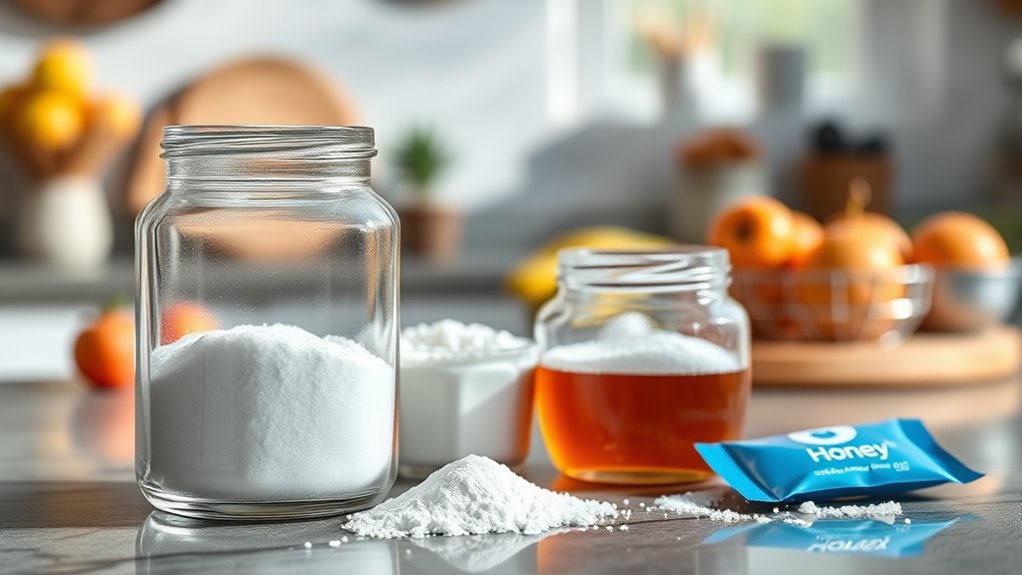

When choosing sugar substitutes, stick to options backed by research like stevia, monk fruit, and erythritol, which are generally considered safe and natural. Artificial sweeteners like aspartame and sucralose are approved but may cause side effects for some individuals. Sugar alcohols can cause digestive discomfort if overdone. Carefully weigh the benefits and potential drawbacks to find what works best for your health. Keep exploring to discover more about safe sweetening choices for your lifestyle.
Key Takeaways
- Artificial sweeteners like aspartame and sucralose are extensively tested and generally considered safe by health authorities.
- Natural alternatives such as stevia and monk fruit are plant-based, low-calorie, and typically safe with minimal side effects.
- Sugar alcohols like erythritol are better tolerated but can cause digestive issues if consumed excessively.
- Long-term health effects of some sweeteners remain under study, so individual health conditions should guide choices.
- Consulting healthcare professionals is recommended to determine the safest sweetener based on personal health needs.
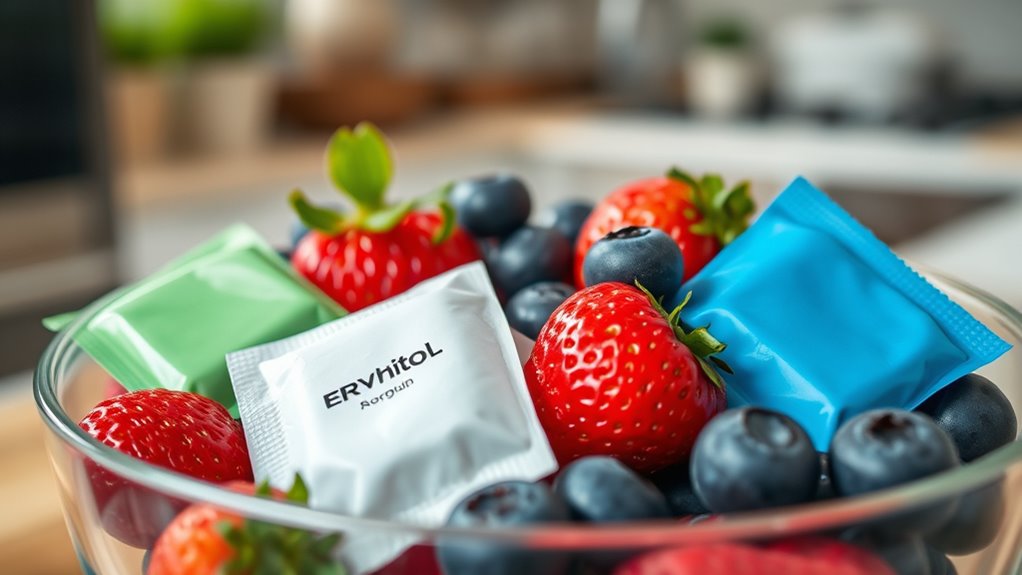
Have you ever wondered if you can enjoy sweet foods without the health risks of sugar? The good news is, there are numerous sugar substitutes available that can help satisfy your sweet tooth without adding extra calories or causing blood sugar spikes. But not all substitutes are created equal, so it’s essential to understand which ones are safe and effective for you.
Many people turn to artificial sweeteners like aspartame, sucralose, and saccharin because they provide intense sweetness without the calories. These are approved by health authorities and have been extensively tested for safety. However, some individuals report side effects such as headaches, digestive discomfort, or a lingering aftertaste, which can make these options less appealing. *Furthermore*, ongoing debates about their long-term health impacts keep some consumers cautious.
Natural alternatives like stevia and monk fruit extract are gaining popularity because they come from plant sources and are generally considered safe. Stevia, derived from the leaves of the Stevia plant, offers a natural sweetness that doesn’t raise blood sugar levels and has been used for centuries in South America. Monk fruit extract is another natural sweetener that’s gaining traction, praised for its sweet flavor and minimal aftertaste.
Both are low-calorie and suitable for various dietary needs, including keto and diabetic diets. Despite their benefits, some people notice a slightly bitter or licorice-like aftertaste with stevia, which can be off-putting. Monk fruit, on the other hand, tends to have a cleaner taste but can be more expensive and less widely available.
Then there are sugar alcohols like erythritol, xylitol, and sorbitol, which are found naturally in fruits and vegetables but are often manufactured for use as sweeteners. These tend to have fewer calories than sugar and don’t cause rapid blood sugar spikes. However, they can cause digestive issues such as gas, bloating, or diarrhea if consumed in large amounts.
Erythritol is generally better tolerated than others, but it’s still wise to use these in moderation. Interestingly, wicks and containers used in candle making are often made from similar waxes or substitutes that require careful selection to ensure safety and quality, much like choosing the right sugar substitute for your health. Ultimately, the safest choice depends on your individual health and taste preferences. While some substitutes have decades of research supporting their safety, others may still be under scrutiny or cause unwanted side effects.
It’s wise to consult with a healthcare professional if you have underlying health conditions or concerns about specific sweeteners. By understanding the pros and cons of each option, you can enjoy sweet foods without compromising your health.
Frequently Asked Questions
Are Sugar Substitutes Suitable for Children?
You wonder if sugar substitutes are suitable for children. While some options like stevia and erythritol are generally considered safe in moderation, it’s best to consult your child’s healthcare provider before including them regularly.
Kids have different needs, and excessive use of artificial sweeteners might impact their taste preferences or health. Focus on balanced diets with natural sugars from fruits to guarantee your child’s well-being and healthy development.
Can Diabetics Consume All Types of Sugar Substitutes?
You might wonder if all sugar substitutes are safe for diabetics. Not all options are suitable, as some can affect blood sugar or cause digestive issues.
It’s best to check labels and consult your healthcare provider before choosing a sweetener. Stevia and erythritol are generally safe, but artificial ones like aspartame may have risks for some.
Always prioritize moderation and personalized advice to manage your diabetes effectively.
Do Sugar Substitutes Cause Allergic Reactions?
Think of sugar substitutes as guests at a party—you never quite know how they’ll react. While most are safe, some can trigger allergic reactions in sensitive individuals.
You might experience symptoms like hives, swelling, or difficulty breathing. Always check labels and consult with your doctor if you suspect an allergy.
Staying informed helps you navigate your options safely, ensuring your health doesn’t take a backseat to sweetness.
Are Natural Sweeteners Safer Than Artificial Ones?
You wonder if natural sweeteners are safer than artificial ones. Generally, natural options like honey, maple syrup, and stevia are considered better because they’re less processed and contain fewer artificial chemicals. However, some natural sweeteners can still cause allergies or digestive issues for certain people.
Artificial sweeteners are often scrutinized for potential health risks, but they’re usually safe when consumed in moderation. Always check labels and listen to your body.
How Do Sugar Substitutes Affect Gut Health?
You might wonder how sugar substitutes impact your gut health. Some artificial sweeteners can disrupt your gut bacteria, leading to bloating or digestive discomfort.
Natural options like stevia or monk fruit generally have a milder effect, but everyone’s gut is different. It’s best to monitor how your body reacts and choose substitutes that don’t cause issues.
Moderation is key to maintaining a healthy gut while satisfying your sweet cravings.
Conclusion
As you navigate the colorful aisle of sugar substitutes, remember that not all options sparkle equally. Some promise a sweet escape without the crash, while others might leave a bitter aftertaste. Trust your senses—look beyond the labels, and choose the ones that harmonize with your health. Like a gentle breeze guiding you through a garden of sweetness, make informed choices that nourish your body and satisfy your cravings, turning every bite into a mindful, flavorful moment.