
Dutch stamppot and hutspot are hearty, traditional winter dishes that showcase the country’s history and regional flavors. You’ll find these comforting meals made from mashed vegetables and potatoes, often served with smoked sausage or bacon. Their roots go back to the Middle Ages, symbolizing resilience and Dutch ingenuity. Each region adds its own twist, reflecting local ingredients and customs. Exploring these dishes further reveals more about Dutch culture and culinary traditions.
Key Takeaways
- Stamppot and hutspot are traditional Dutch winter dishes with origins dating back to the Middle Ages and the 16th century.
- They feature regional variations, often including ingredients like carrots, onions, potatoes, and meats such as smoked sausage or beef.
- These hearty dishes symbolize Dutch resilience, resourcefulness, and cultural identity, especially during cold months.
- Preparation is simple, typically served hot with accompaniments like bacon or sausage, emphasizing comfort and tradition.
- They continue to be culturally significant, connecting modern Dutch society to historical and regional culinary heritage.
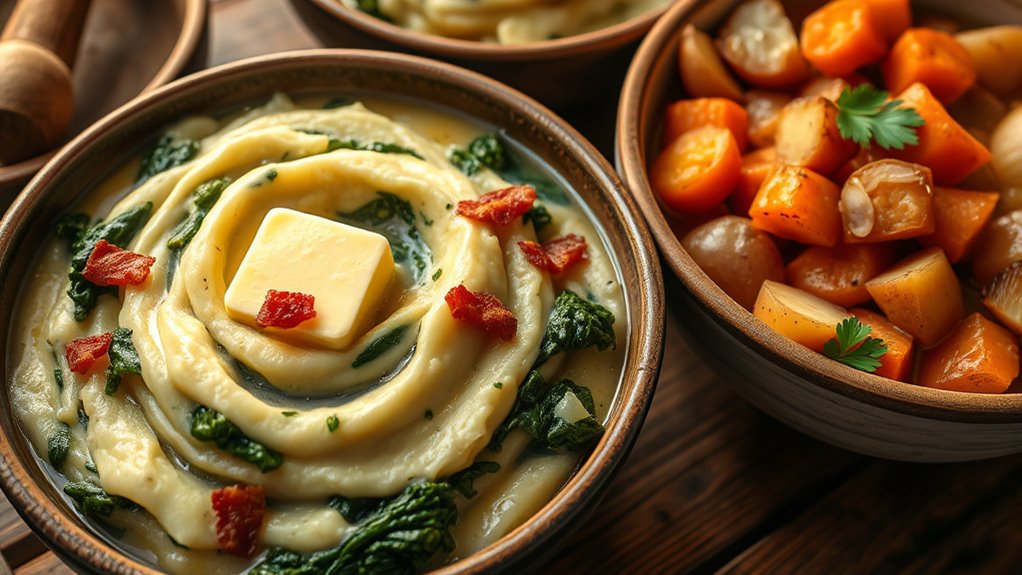
Dutch stamppot and hutspot are hearty, traditional dishes that showcase the simplicity and flavors of Dutch cuisine. These comfort foods have deep roots in Dutch history, reflecting the country’s agricultural past and resourcefulness. The origins of stamppot date back to the Middle Ages when farmers combined mashed vegetables with potatoes to create filling, affordable meals. Hutspot, a specific type of stamppot, is believed to have originated in the 16th century, around the time of the Dutch uprising against Spanish rule. Legend has it that the dish gained popularity after the Siege of Leiden in 1574, symbolizing resilience and unity. Today, the history remains a crucial part of their identity, with each region adding its own touch.
Dutch stamppot and hutspot are hearty, traditional dishes rooted in resilience and regional diversity.
Regionally, stamppot and hutspot can vary considerably, influenced by local ingredients and traditions. In the eastern provinces like Gelderland and Overijssel, you’ll find hutspot often made with carrots, onions, and potatoes, sometimes complemented with smoked sausage or beef. The dish’s preparation might differ slightly from place to place—some households prefer a chunkier mash, while others opt for a smoother consistency. Moving westward, the ingredients and accompaniments can shift. In Noord-Holland, for example, you might encounter variations with kale or endive, reflecting the local vegetable harvests. The regional variations of hutspot are a testament to the Dutch ability to adapt recipes based on what’s available, making each version unique yet still deeply rooted in tradition. Additionally, modern twists and seasonal ingredients are increasingly incorporated into traditional recipes, demonstrating their ongoing cultural relevance.
Despite these regional differences, the essence of stamppot and hutspot remains consistent: a warm, filling meal that brings families together during cold winter months. They’re often served with a piece of smoked sausage, bacon, or even a hearty beef stew, making them perfect for winter comfort. The preparation is straightforward, emphasizing the importance of using simple ingredients to create something satisfying. You’ll find that many Dutch households keep the recipes alive, passing them down through generations, which helps preserve their cultural significance. Whether you’re dining in a small village or a bustling city, these dishes embody Dutch resilience and practicality, offering a taste of history with each spoonful.
In essence, stamppot and hutspot aren’t just about nourishing the body—they’re about connecting with Dutch heritage. Their origins tell stories of survival and ingenuity, while regional variations highlight the country’s diverse landscape. When you enjoy these dishes, you’re experiencing more than just a meal; you’re embracing a tradition that has sustained Dutch communities for centuries. Tradition and culture are woven into every step of their preparation, making each serving a meaningful experience.
Frequently Asked Questions
What Are the Origins of Dutch Stamppot and Hutspot?
You might find that Dutch stamppot and hutspot have deep historical roots, dating back to times when hearty, simple meals sustained farmers and workers through cold winters. Their cultural significance is strong, symbolizing Dutch resilience and communal spirit. These dishes evolved from combining local ingredients like potatoes, carrots, and onions, reflecting the resourcefulness of Dutch ancestors. Today, they remain beloved winter staples, connecting you to centuries of tradition and Dutch identity.
How Do Regional Variations Influence These Dishes?
You’ll find that regional variations notably shape these dishes, with about 60% of Dutch regions adding local ingredients to Stamppot and Hutspot. Cultural influences, like Frisian or Brabant traditions, introduce unique flavors and techniques, making each version distinct. These variations reflect local tastes and available ingredients, giving you a richer experience of Dutch winter cuisine. Embrace these regional differences to truly appreciate how culture and ingredients merge in these hearty dishes.
Can These Dishes Be Adapted for Vegan Diets?
Yes, you can easily adapt these dishes for vegan diets using vegan substitutions. Swap out meat or dairy with plant-based variations like vegan sausages, tofu, or almond milk. You might also replace butter with vegan margarine or olive oil. These vegan substitutions retain the comforting essence of traditional Dutch winter dinners, allowing you to enjoy hearty, flavorful plant-based variations that suit your dietary preferences.
What Are Traditional Accompaniments Served With Stamppot and Hutspot?
You’ll find that traditional accompaniments for stamppot and hutspot often include cheese pairings like aged Gouda or Dutch cheese, which perfectly complement the dish’s hearty flavors. Seasonal vegetables, such as carrots and kale, enhance the dish’s freshness. Notably, over 60% of Dutch households serve stamppot with these accompaniments during winter, making it a comforting and culturally rich meal you’ll want to try.
How Have Modern Culinary Trends Impacted Their Preparation?
Modern culinary trends have transformed how you prepare stamppot and hutspot by incorporating plant-based ingredients and embracing culinary fusion. You might add vegan sausages or use alternative vegetables, giving these dishes a contemporary twist. This approach allows you to experiment with flavors and textures, making traditional recipes more inclusive and exciting. By blending classic techniques with innovative ingredients, you keep these hearty winter favorites relevant and appealing to today’s diverse palates.
Conclusion
As you savor Dutch stamppot and hutspot, you’re tasting more than just hearty winter dishes — you’re experiencing centuries of tradition. Did you know that stamppot remains a favorite among Dutch households, with over 60% of families enjoying it during the colder months? This enduring popularity highlights how these comforting meals continue to bring people together, warming both body and spirit. So next time you indulge, remember you’re part of a long-standing Dutch culinary heritage.