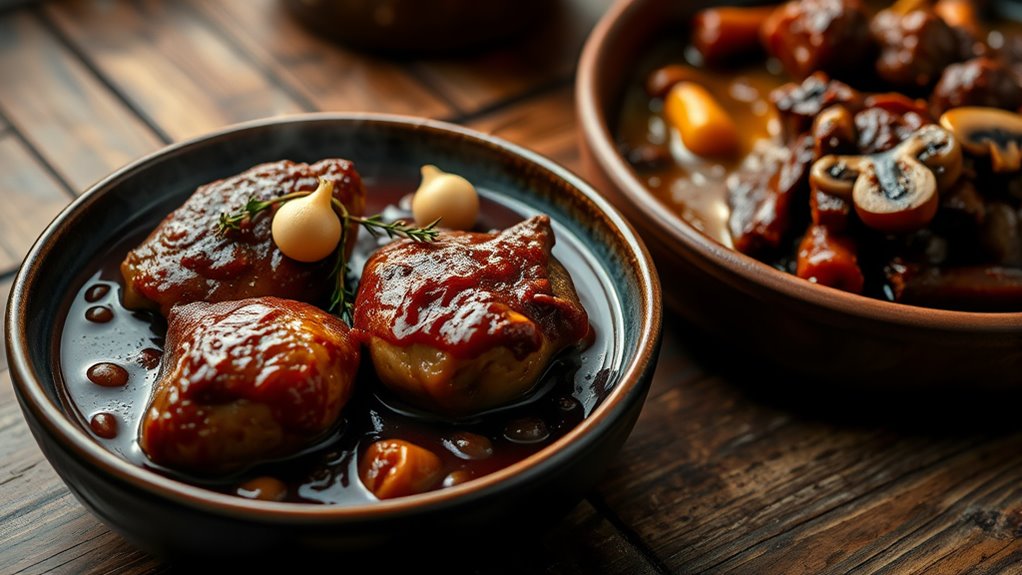

French Coq Au Vin and Boeuf Bourguignon are iconic wine-braised dishes that showcase the artistry of slow cooking. You’ll find that browning the meat and vegetables creates rich flavors, and simmering them gently in quality Burgundy or Pinot Noir enhances depth and complexity. Proper technique and timing are key to tender, flavorful results. Keep exploring, and you’ll uncover the secrets behind crafting these authentic dishes that highlight French culinary mastery.
Key Takeaways
- Both dishes rely on slow braising in wine to develop deep, complex flavors and tender textures.
- Proper browning and sautéing techniques enhance flavor foundation before slow cooking.
- Quality, flavorful wine like Burgundy or Pinot Noir is essential for authentic taste and rich sauce development.
- The choice of ingredients and precise timing during cooking are crucial for authentic French flavor profiles.
- The dishes exemplify how wine integrates into the cooking process, elevating simple ingredients into luxurious, comforting meals.
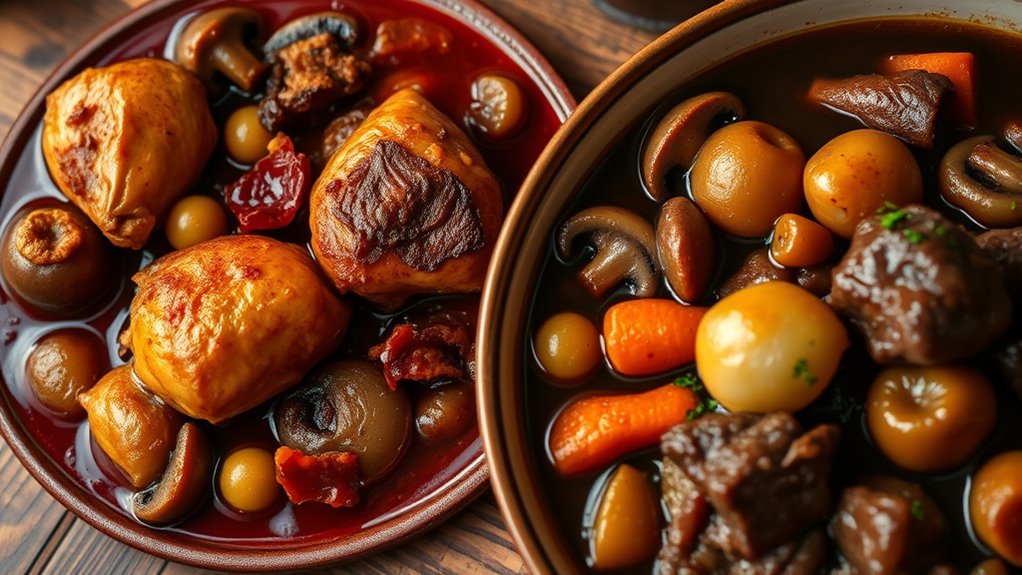
French cuisine boasts rich, hearty dishes like Coq Au Vin and Boeuf Bourguignon that have become culinary classics around the world. These dishes exemplify the artistry of slow cooking and meticulous flavor development, making them favorites for anyone eager to explore authentic French comfort food. When preparing these dishes, you’re engaging in more than just cooking—you’re mastering essential techniques that reveal deep, complex flavors. The key to success lies in your choice of ingredients, your method of cooking, and the wine you use, which all work together to elevate the final dish.
French comfort food shines through slow-cooked dishes like Coq Au Vin and Boeuf Bourguignon, emphasizing technique, ingredients, and wine.
For both dishes, the foundation begins with proper cooking techniques. You’ll start by browning the meat to develop a savory crust, which enhances flavor through a process called Maillard reaction. This step is vital because it builds the base for a rich sauce. Once browned, the meat is slow-cooked in a mixture of wine and broth, allowing flavors to meld and deepen over time. This slow braising is essential; it tenderizes tougher cuts of meat and infuses the dish with a complex, layered taste. During cooking, you might sauté vegetables like onions, carrots, and garlic, adding aroma and sweetness. These ingredients absorb the wine’s richness, making every bite more satisfying. Additionally, the use of quality ingredients and precise timing further ensures an authentic and flavorful result.
Wine pairing plays an integral role in these classics. You don’t just cook with wine—you select a variety that complements the dish’s flavors. For Coq Au Vin, red Burgundy or Pinot Noir works beautifully, as their lightness and fruity notes balance the chicken’s delicate texture. For Boeuf Bourguignon, a fuller-bodied Burgundy or a similar red wine with good acidity enhances the beef’s richness and the dish’s hearty nature. When choosing your wine, pick one you’d enjoy drinking; it’s the backbone of the sauce, so quality matters. As you cook, the wine reduces and concentrates, so using a good wine ensures the final dish has depth and complexity.
The way you incorporate the wine and execute your cooking techniques determines the dish’s authenticity and flavor profile. You should simmer gently, allowing the flavors to develop gradually without boiling away all the wine’s nuances. Properly braising your meat in wine ensures tender, flavorful results that are deeply satisfying. These techniques, paired with thoughtful wine pairing, transform simple ingredients into a luxurious, comforting meal. With patience and attention to detail, you’ll craft dishes that not only taste authentic but also tell a story of French culinary tradition at its finest. Remember, the choice of quality wine directly impacts the richness and depth of your finished dish.
Frequently Asked Questions
What Are the Origins of Coq Au Vin and Boeuf Bourguignon?
You’ll find that coq au vin and boeuf bourguignon have rich historical roots in France’s Burgundy region, dating back centuries. These dishes evolved from regional variations of slow-braised meats flavored with local wines and ingredients. Over time, they became iconic French classics, reflecting local traditions and culinary techniques. Their origins highlight France’s love for wine-infused stews, showcasing regional flavors that have been passed down through generations.
Can These Dishes Be Made With Alternative Wines?
Yes, you can make these dishes with alternative wine options. When choosing, consider flavor profile adjustments; for instance, using a dry red wine like Merlot or Zinfandel can add richness, while a Pinot Noir offers a lighter touch. If you prefer white wine, opt for a dry Chardonnay or Sauvignon Blanc to maintain acidity. Just keep in mind that the wine you choose influences the depth and character of your dish.
How Long Can Leftover Braised Dishes Be Stored Safely?
Think of leftover braised dishes like a precious gem—best preserved carefully. You can store them safely in the fridge for up to 3-4 days, following proper food preservation and storage guidelines. If you want to keep them longer, freeze them for up to 2-3 months. Always reheat thoroughly, and when in doubt, trust your senses—sour smell or slimy texture means it’s time to toss.
Are There Vegetarian Versions of These Classic Recipes?
Yes, you can make vegetarian versions of these classics using plant-based alternatives. Vegetarian substitutes like mushrooms, eggplant, and seitan mimic the texture and flavor of meat, making them perfect for recreating the rich, wine-braised experience. You can also explore plant-based proteins and tofu. These options allow you to enjoy the hearty, comforting essence of the dishes while keeping them vegetarian-friendly, without sacrificing flavor or depth.
What Side Dishes Best Complement These Wine-Braised Meats?
You should serve potato gratin and crusty baguette alongside wine-braised meats. The creamy, cheesy potato gratin complements the rich flavors, while the crusty baguette is perfect for soaking up the flavorful sauce. These sides add texture and balance to your meal, enhancing the deep, wine-infused taste of the meats. With these accompaniments, your dish becomes a hearty, satisfying, and beautifully balanced experience.
Conclusion
As you savor these timeless French classics, remember they’re more than just meals—they’re stories simmered in history and tradition. Like a well-aged wine, each bite offers depth, warmth, and a touch of elegance. So, embrace the journey of slow braising, and let these dishes transport you to a cozy corner of Burgundy. After all, good things—like great food—are worth the wait, revealing their true character with time.