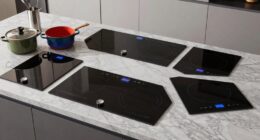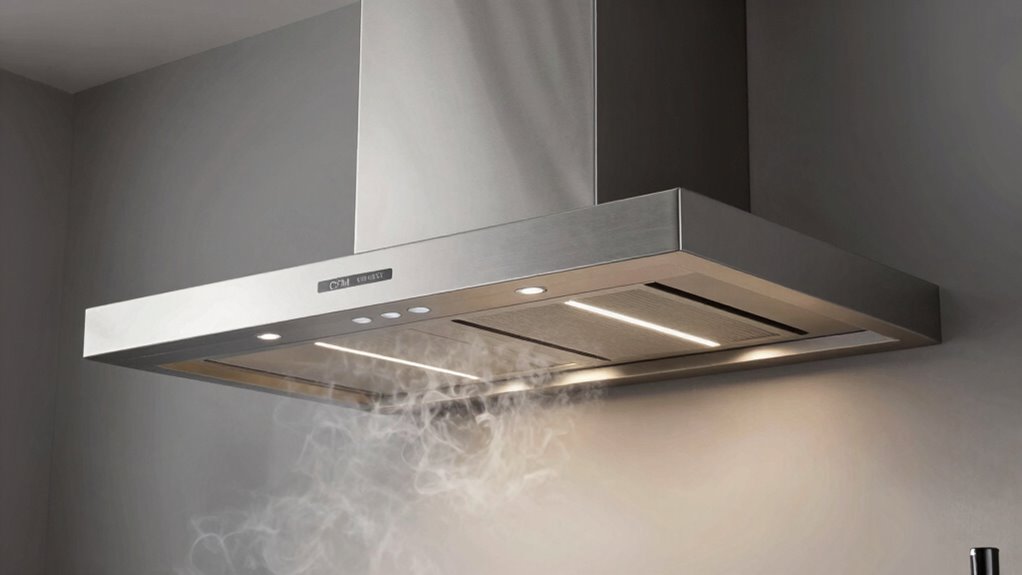
Choosing the right CFM for your range hood is key to removing smoke, odors, and grease effectively. Generally, a typical cooktop needs around 300 CFM, but if you cook often or use high heat, closer to 600 CFM may be better. Too low, and smoke lingers; too high, and it becomes noisy and wasteful. Balancing CFM with noise levels and kitchen size guarantees a comfortable, clean cooking environment—learn how to find your perfect match.
Key Takeaways
- Match CFM to your kitchen size and cooking frequency for effective smoke removal without excess noise.
- Typical cooking needs are around 300 CFM; high-heat or smoky cooking may require closer to 600 CFM.
- Proper CFM ensures odors and grease are effectively vented, preventing buildup and lingering smells.
- Higher CFM hoods can be noisier; look for models with noise-reduction features for comfortable operation.
- Balancing CFM, noise, and kitchen size optimizes ventilation efficiency and overall cooking comfort.
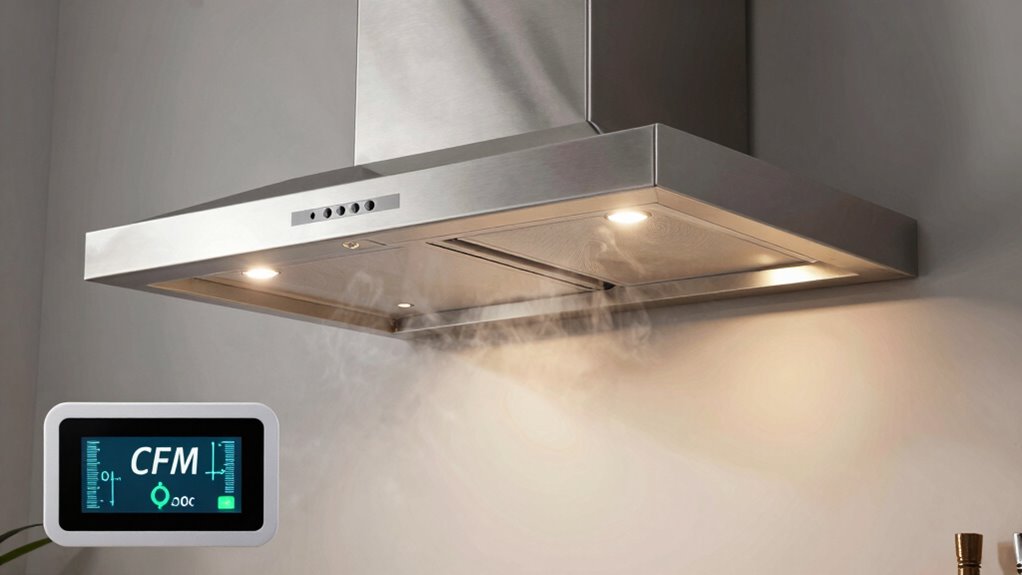
Have you ever wondered how to keep your kitchen air clean and odor-free? It all comes down to understanding how your range hood works, especially when it comes to ventilation efficiency. The right hood can effectively remove smoke, steam, and cooking odors, but only if it’s properly matched to your cooking space. One key factor is the airflow, measured in cubic feet per minute (CFM). A hood with too low a CFM won’t clear out smoke efficiently, leaving your kitchen stuffy and smelling, while one with excessively high CFM can be noisy and disruptive. Striking the right balance ensures your kitchen stays fresh without creating an unbearable racket.
Ventilation efficiency depends on choosing a range hood with a proper CFM rating for your cooking habits and kitchen size. For typical cooking, a hood with 300 CFM often suffices, but if you cook frequently or prepare smoky dishes, you might need something closer to 600 CFM. A hood that’s too weak won’t capture all the fumes, causing lingering odors and potential grease buildup. Conversely, an overly powerful vent can be excessive, wasting energy and making the environment uncomfortable. To maximize ventilation efficiency, consider your stove’s size and how much you cook — larger cooktops or high-heat methods demand higher CFM ratings for effective smoke removal.
Choosing the right CFM ensures effective ventilation tailored to your cooking habits and kitchen size.
But ventilation efficiency isn’t the only concern. Noise levels also play a essential role in your overall kitchen comfort. Some high-CFM hoods can be surprisingly loud, turning your cooking space into a noisy environment. That’s why it’s necessary to look for models that balance airflow with quieter operation. Many modern range hoods incorporate noise-reduction features, like insulated fans and sound-dampening materials, so you can enjoy effective ventilation without the constant drone. When shopping, pay attention to decibel ratings; a hood operating below 60 decibels will keep noise levels manageable, even during intensive cooking sessions. Additionally, proper ventilation system design can significantly impact overall performance and noise levels.
In the end, choosing a range hood isn’t just about grabbing the one with the highest CFM rating. You need to take into account ventilation efficiency, noise levels, and your specific cooking needs. Properly matching your hood’s airflow to your kitchen’s size and your culinary style ensures you keep your space fresh, odor-free, and comfortable. This balance helps you avoid an overly loud environment or inefficient smoke removal, making your time in the kitchen more enjoyable and healthier. Understanding these factors empowers you to select the right range hood, saving you trouble and enhancing your cooking experience.
Frequently Asked Questions
How Often Should I Clean My Range Hood Filters?
You should clean your range hood filters every 1 to 3 months, depending on how often you cook. Following a consistent filter cleaning schedule helps prevent grease buildup, which can reduce efficiency and pose fire hazards. Regular cleaning guarantees your range hood works effectively, keeps your kitchen cleaner, and extends the lifespan of the filters. If you cook frequently or notice grease accumulation, clean the filters more often.
Can I Install a Range Hood Myself?
Think of installing a range hood like assembling a puzzle—possible if you have the right pieces and patience. You can do a DIY installation if you’re handy with tools and follow instructions carefully. However, professional installation guarantees safety, proper fit, and peak performance, especially with venting and electrical work. If you’re unsure or uncomfortable, it’s better to hire a pro to avoid future headaches and ensure your kitchen stays smoke-free.
What Is the Ideal CFM for a Small Kitchen?
For a small kitchen, you should aim for a range hood with at least 100 CFM, following ventilation standards that recommend 1 CFM per square foot of kitchen space. If your kitchen is very compact, you might get away with slightly less, but generally, 100-150 CFM guarantees effective smoke and odor removal. Always consider your specific kitchen size and cooking habits to select the perfect CFM level.
How Loud Should a Range Hood Be?
Imagine a whisper of wind as you cook — that’s the ideal noise level for a range hood, around 40–60 decibels. You want it quiet enough to focus but loud enough to mask cooking sounds. When installing, follow tips like secure mounting and proper venting to keep noise down. A well-installed, quieter range hood enhances your cooking experience without drowning out conversation or the sizzle of your skillet.
Are There Energy-Efficient Range Hoods Available?
Yes, you can find energy-efficient range hoods that help you save power and reduce emissions. Look for models with energy-saving features like adjustable fan speeds, LED lighting, and eco-friendly designs. These eco-friendly models consume less electricity and often have better filtration systems, making them a smart choice for your kitchen. By choosing an energy-efficient range hood, you’ll enjoy effective ventilation while minimizing your environmental impact.
Conclusion
Now, next time you cook, remember that understanding CFM isn’t just math — it’s the secret to keeping smoke and odors at bay. The moment you choose the right range hood, you’ll notice the difference, almost as if the kitchen is whispering back with cleaner air. It’s funny how a simple calculation can turn a smoky chaos into a fresh, inviting space. Trust the math, and enjoy cooking in a kitchen that feels just right.