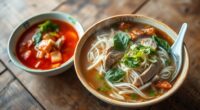
For Indian curry night, explore regional gravies and spice profiles to create authentic flavors. North Indian dishes often use garam masala with cinnamon, cloves, and cardamom, while South Indian recipes feature tangy sambar powder. Techniques like tempering spices in hot oil and slow simmering build depth. Understanding regional ingredients, such as mustard seeds in Bengali curries or dried spices in Rajasthani dishes, helps capture true authenticity. Keep exploring to uncover more flavorful secrets.
Key Takeaways
- Familiarize with regional spice blends like garam masala, sambar powder, and their authentic flavor profiles.
- Use traditional techniques such as tempering spices and slow simmering to develop depth in gravies.
- Incorporate regional ingredients like mustard seeds for Bengali or dried spices for Rajasthani dishes.
- Customize spice freshness by grinding your own blends for vibrant, authentic flavors.
- Explore diverse recipes to appreciate India’s culinary diversity through regional gravies and spices.

Have you ever wondered how to bring the vibrant flavors of India right into your home? One of the best ways to do that is by exploring regional gravies and spice profiles. Indian cuisine is incredibly diverse, with each region offering its own unique blends and cooking methods. To truly capture the essence of these flavors, you need to understand how to use regional spice blends and apply traditional cooking techniques. This approach not only elevates your curry but also deepens your appreciation for India’s culinary heritage.
Start by familiarizing yourself with the concept of regional spice blends. These are carefully crafted mixtures of spices that each region uses to define its signature dishes. For example, North Indian curries often feature garam masala, a warm, aromatic blend of cinnamon, cloves, cardamom, and other spices. South Indian dishes, on the other hand, lean on sambar powder and curry leaves, which lend a distinct earthy and tangy flavor. Understanding these blends helps you recreate authentic tastes and gives your cooking a sense of place. Buying pre-made blends can be a good starting point, but experimenting with grinding your own spices allows you to customize flavors and access fresher, more vibrant profiles.
Explore regional spice blends like garam masala and sambar powder to authentically capture India’s diverse flavors.
Next, pay attention to traditional cooking techniques. Indian curries are built through specific methods, such as tempering spices in hot oil to release their essential oils and deepen their aroma. This process, called “tadka” or “baghar,” is fundamental to many regional gravies. It’s all about layering flavors—adding whole spices like cumin seeds or bay leaves at the beginning, then building complexity with onions, garlic, ginger, and tomatoes. Simmering the mixture slowly allows the spices to meld thoroughly, creating a rich, cohesive gravy. Using these traditional techniques ensures that each ingredient contributes fully to the final flavor profile, making your curry taste authentic.
Another tip is to respect the regional ingredients and their cooking styles. For example, Bengali curries often feature mustard seeds and fish, while Rajasthani dishes might include dried spices and thick gravies. Adjust your techniques accordingly—frying spices briefly to retain their brightness or slow-cooking to develop deep, complex flavors. Don’t be afraid to explore different regional recipes, as each one tells a story through its unique blend of spices and methods.

Authentic Indian Spice 12 Spice Set: Assorted Spices, Herbs, and Seasonings
Versatile Set: Includes a variety of spices, herbs, and seasonings for flavoring dishes.
As an affiliate, we earn on qualifying purchases.
As an affiliate, we earn on qualifying purchases.
Frequently Asked Questions
How Do Regional Gravies Influence Indian Curry Flavors?
Regional gravies shape Indian curry flavors by highlighting local ingredients and traditional cooking methods. You’ll notice that each region uses unique spices, herbs, and base ingredients, which create distinct taste profiles. For example, South Indian gravies often incorporate coconut and tamarind, while North Indian versions emphasize dairy and garam masala. These regional differences influence the overall flavor, making each curry a reflection of its local culinary heritage.
Which Spices Are Essential for Authentic Indian Curries?
Think of spices as the brushstrokes that paint authentic Indian curries. You need cumin, coriander, turmeric, garam masala, and chili for deep, complex flavor layering. These essential spices create a balanced, aromatic foundation through careful spice blending. Each one contributes a unique note, transforming simple ingredients into a rich, vibrant dish. Mastering these spices guarantees your curry captures the true essence of Indian cuisine.
How Do Cooking Techniques Vary Across Indian Regions?
You’ll notice that regional cooking methods vary widely across India. In the North, you might use tandoors or clay ovens for baking and grilling, while in the South, you often rely on open pans and coconut-based ingredients. Traditional utensil usage, like heavy-bottomed pots or hand-pounded grinding stones, influences flavors and textures. Embracing these techniques helps you authentically replicate regional dishes and understand their unique spice profiles.
What Are Common Vegetarian Options in Indian Curries?
Think of Indian curries as a vibrant tapestry—your go-to vegetarian options include paneer, lentils, and chickpeas, which serve as hearty protein sources. You’ll also find dairy-based gravies like rich paneer tikka masala or dal makhani that add creaminess. These dishes reflect India’s love for plant-based ingredients, offering a delicious, satisfying experience that celebrates both tradition and flavor.
How Can I Adjust Spice Levels for Beginners?
To adjust spice levels for beginners, focus on balancing heat levels by reducing the amount of chili or cayenne pepper in your curry. Introduce milder spices like turmeric, cumin, or coriander to add flavor without overwhelming heat. You can also add a splash of coconut milk or yogurt to mellow the spice. Taste as you go, and gradually increase spice if desired, ensuring a gentle, enjoyable experience.

MTR Sambar Masala Powder 100g
MTR Sambar Masala Powder 100g
As an affiliate, we earn on qualifying purchases.
As an affiliate, we earn on qualifying purchases.
Conclusion
As you savor each bite of these rich, regional gravies, it’s almost like the spices knew you’d arrive just in time. The warmth of the flavors, the aroma lingering in the air, reminds you that sometimes, the universe lines up perfectly — bringing you to this moment of comfort and discovery. So, next time you gather around the table, remember, it’s no coincidence that these bold flavors feel just right, just when you need them most.

Secura Electric Coffee Grinder and Spice Grinder with 2 Stainless Steel Blades Removable Bowls
Pulse Control & Double-Lid Visibility – Master your grind with intuitive, press-and-hold lid operation. The transparent double-lid design…
As an affiliate, we earn on qualifying purchases.
As an affiliate, we earn on qualifying purchases.

eat2explore Global Cooking Kit – Authentic Recipes, Essential Spices, Cultural Fun & Expert Drink Pairings – Perfect for Date Night and Dinner Parties (indian cookbook edition)
Experience the Bold Flavors of India at Home: Bring vibrant Indian cuisine to life with three iconic dishes…
As an affiliate, we earn on qualifying purchases.
As an affiliate, we earn on qualifying purchases.