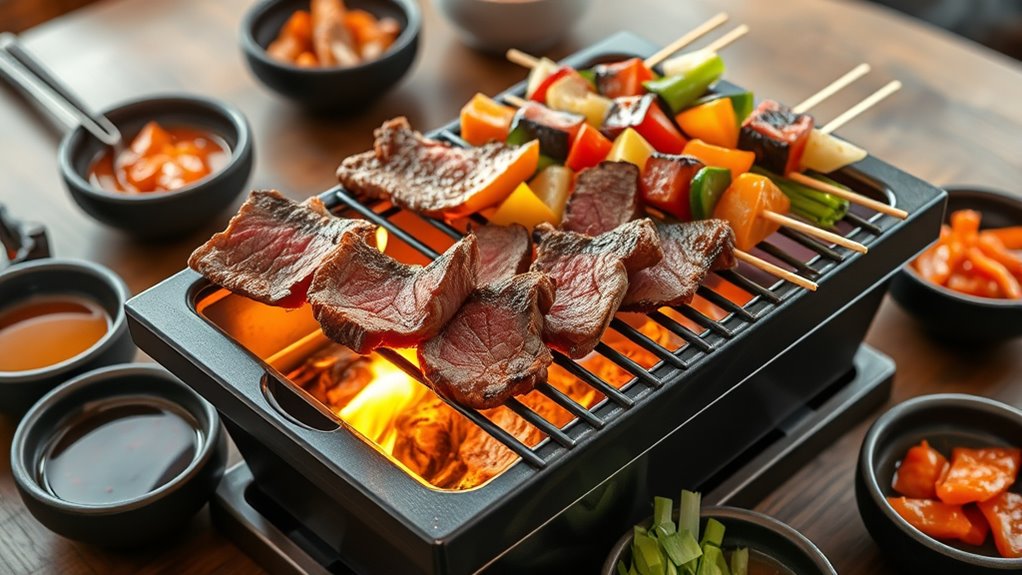

To recreate Korean barbecue at home, start by preparing flavorful marinades using soy sauce, garlic, sesame oil, and a touch of sugar, adding ginger or gochujang for extra heat. Select the right grill—whether electric, cast-iron, or tabletop charcoal—and preheat well. Slice meats and vegetables thinly, marinate for at least 30 minutes, then cook evenly, turning often. Keep sauces and side dishes ready for an authentic experience—continue to explore for more expert tips and recipes.
Key Takeaways
- Prepare flavorful marinades using soy sauce, garlic, sesame oil, and optional ingredients like ginger or gochujang for authentic taste.
- Use thinly sliced meats and vegetables, marinate for at least 30 minutes, then preheat your grill for even cooking and flavor development.
- Choose appropriate grilling equipment such as a tabletop or electric grill, ensuring it heats evenly and is properly oiled to prevent sticking.
- Keep the grilling station organized with sliced meats, vegetables, and sauces ready for an interactive, communal dining experience.
- Enhance authenticity by serving side dishes like kimchi, rice, and dipping sauces, and encourage guests to cook and eat together.
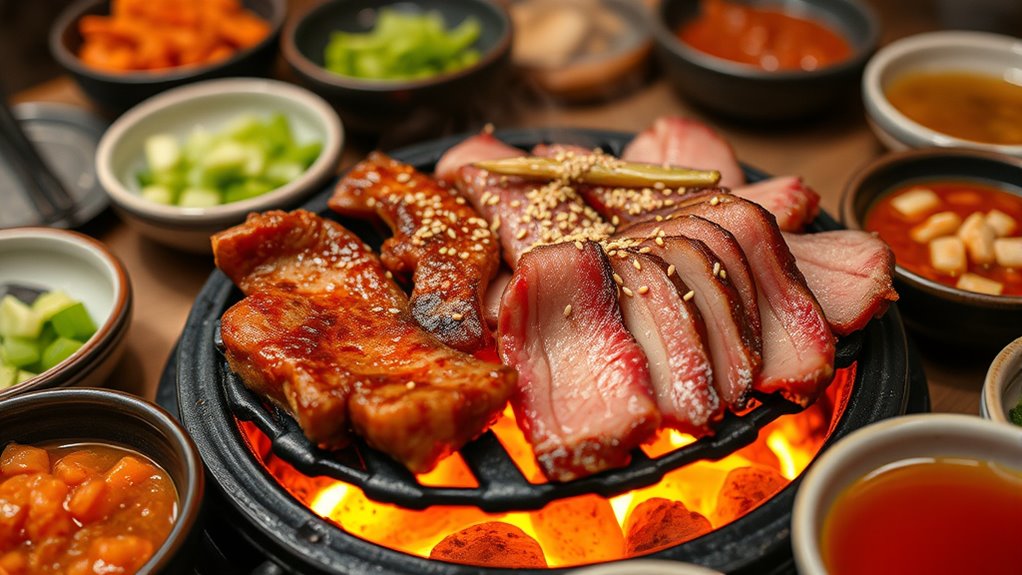
Hosting Korean barbecue at home is easier than you might think, and it offers a fun way to enjoy authentic flavors with friends and family. The key to a successful experience lies in choosing the right marinade recipes and having proper grilling equipment. Marinades are the heart of Korean barbecue; they infuse meats with rich, savory, and slightly sweet flavors that are essential to the dish’s appeal. You can keep things simple with classic recipes like soy sauce, garlic, sesame oil, sugar, and rice wine, or get more creative by adding ingredients like ginger, pear puree, or gochujang for heat. Whisk these ingredients together and marinate your proteins for at least 30 minutes, or up to overnight, to maximize flavor absorption. This step makes a significant difference and sets the stage for a delicious meal. Proper marinating not only enhances flavor but also can improve the food safety of your ingredients by reducing the risk of bacterial growth during storage.
Hosting Korean barbecue is easy with the right marinades and grilling gear for authentic flavors.
When it comes to grilling equipment, you don’t need an elaborate setup—though a tabletop grill or portable charcoal grill works best for authentic flavor and easy access. If you’re indoors, an electric grill or cast-iron skillet can work just as well. The important part is ensuring your grill heats evenly and maintains a high temperature to get that perfect sear. Preheat your grill thoroughly before cooking, and keep a spray bottle of water nearby to manage flare-ups. Proper grilling equipment helps you control the heat, prevents sticking, and produces those beautiful grill marks that make Korean barbecue so visually appealing.
Preparing your grill station is just as essential as the marinade recipes. Lay out your sliced meats—beef bulgogi, pork belly, chicken, or even seafood—alongside vegetables like mushrooms, peppers, and onions. Having all your ingredients sliced thin and ready to go streamlines the process and keeps the cooking quick and enjoyable. Remember to oil your grilling surface lightly before placing the meat on, which prevents sticking and helps develop a nice char. Turn the meat frequently to cook evenly and avoid burning. As you grill, provide your guests with an array of dipping sauces, kimchi, and rice to round out the meal.
Keep in mind that the key to a memorable Korean barbecue at home isn’t just the ingredients but also your preparation and equipment. With the right marinade recipes and suitable grilling equipment, you’ll be able to recreate that authentic experience effortlessly. It’s about creating a lively, interactive meal where everyone gets involved, making your home the perfect place for a flavorful, fun Korean barbecue feast.
Frequently Asked Questions
What Are Authentic Korean Barbecue Side Dishes?
You’ll want to serve a variety of authentic Korean barbecue side dishes, like different kimchi varieties—spicy napa, young radish, and cucumber kimchi—that add bold flavors. Don’t forget dipping sauces such as ssamjang, soy sauce, and sesame oil with salt and pepper, which enhance the grilled meats. These sides balance the smoky flavors and bring a traditional Korean touch to your barbecue experience, making every bite delicious and satisfying.
How Do I Control Smoke When Grilling Indoors?
To control smoke when grilling indoors, make certain good indoor ventilation by opening windows and turning on exhaust fans. Use smoke reducing techniques like placing a drip tray with water under the grill and avoiding overloading it with meat. You can also lower the heat to prevent excessive smoke, and consider using an electric grill, which produces less smoke than charcoal or gas options. These steps keep your space safer and cleaner.
What Is the Best Way to Marinate Korean Meats?
Did you know marinated meats absorb flavors up to 40% better with proper techniques? To get the best results, combine marinade ingredients like soy sauce, garlic, ginger, sesame oil, and sugar. Use marination techniques such as scoring the meat or using a zip-lock bag for even coverage. Let the meat marinate for at least 30 minutes to several hours, ensuring deep flavor penetration and tender results.
Are There Vegetarian Options for Korean Barbecue?
Yes, you can enjoy Korean barbecue with vegetarian proteins like tofu, tempeh, or mushrooms. To make them flavorful, use plant-based marinades with ingredients like soy sauce, sesame oil, garlic, and ginger. Marinate your vegetarian proteins for at least 30 minutes to absorb the flavors. Then, grill or pan-fry them just like traditional meats, and enjoy a delicious vegetarian Korean barbecue experience right at home.
How Do I Choose the Right Charcoal or Fuel?
You should choose charcoal types like lump charcoal or briquettes based on heat and flavor. Lump charcoal burns hotter and produces a smoky taste, ideal for Korean barbecue. If you prefer convenience, briquettes offer consistent heat. Alternatively, you can explore fuels like propane or electric grills for easier control. Consider your cooking style, flavor preference, and convenience when selecting the right charcoal or alternative fuel for your barbecue.
Conclusion
Now that you know how to perfect Korean barbecue at home, you’re ready to impress your friends and family. With a little practice, you’ll master the art of grilling flavorful meats and creating authentic dipping sauces. Did you know that Korean barbecue restaurants see a 20% increase in popularity each year? So why not bring that excitement home? Grab your grill, gather your ingredients, and enjoy delicious, sizzling Korean barbecue anytime you want!